
PFAS Transparency in cosmetic ingredients has become a practical label-reading issue, not just a regulatory topic. Many beauty shoppers want products that are cruelty-free, clearly labeled, and made with ingredients they can understand. The challenge is that per- and polyfluoroalkyl substances, often shortened to PFAS, may appear under technical ingredient names rather than a plain “PFAS” label. That makes cautious shopping harder, especially for makeup and leave-on products where performance claims such as smoothness, wear time, or water resistance can distract from the ingredient list.
As an ethical beauty advocate, I see this as a transparency problem first. A product can be marketed as clean, natural, ethical, or cruelty-free while still leaving shoppers with unanswered questions about synthetic processing aids, supplier data, and ingredient naming. If you’re interested in reading more about consumer policies or public-interest topics beyond beauty, you might find the site Daily California valuable, as it offers related coverage across our network. For skincare decisions that connect to irritation, allergies, pregnancy, medications, or a diagnosed condition, use this article as education only and ask a clinician for personal guidance.
Why PFAS Transparency Is Hard To Verify
PFAS Transparency Starts With Ingredient Names
The first barrier is language. PFAS is a family term, while labels usually list specific ingredients. A shopper may see names such as PTFE or other fluorinated ingredients without knowing whether they fall within the PFAS group. The FDA’s report released on December 29, 2025, under the Modernization of Cosmetics Regulation Act of 2022 identified 51 PFAS intentionally used across 1,744 cosmetic formulations in the United States FDA report. That figure does not mean every cosmetic contains PFAS; it shows why ingredient naming can matter.
This is why PFAS Transparency cannot rely only on a shopper recognizing one obvious word. Some ingredient names may contain clues, while others may not be clear without a regulatory or chemistry reference. The FDA report also stated that PTFE was used in 28.1% of PFAS-containing cosmetic products listed. Other commonly reported PFAS included perfluorononyl dimethicone and trifluoroacetyl tripeptide-2. These names are technical, and many consumers would not reasonably be expected to identify them without extra help.
Supply Chains Add Another Layer
Beauty brands may depend on ingredient suppliers for raw material information. If supplier data are incomplete, a finished product label may not tell the full story a consumer wants to know. The supported evidence points to uncertainty rather than a simple yes-or-no test at the shelf. Even where PFAS are intentionally added and disclosed in a listing system, labels do not necessarily explain why they are used, what concentration is present, or whether a non-PFAS alternative was considered.
That distinction matters for ethical shopping. A cruelty-free claim addresses animal testing policies; it does not answer every chemical transparency question. A natural-positioned product may still contain synthetic ingredients, and a minimalist label may still leave out context about sourcing or concentration. For a broader label-reading frame, see our discussion of ingredient disclosure in ethical beauty.
PFAS Transparency In Cosmetic Labels
What MoCRA Changed
The Modernization of Cosmetics Regulation Act of 2022 created new federal cosmetic listing obligations. The cosmetic product listing requirement took effect on December 18, 2023, and FDA enforcement began on July 1, 2024, according to the FDA report. As of August 30, 2024, PFAS-containing products represented 0.41% of all cosmetic products listed under the new system. That percentage may sound small, yet it still covered many formulations, and the figure depended on what was submitted and identified through the listing framework.
Federal cosmetic law also added label-related duties. Under 21 U.S.C. § 364e, added by MoCRA on December 29, 2022, cosmetic labels must include items such as fragrance allergen disclosure rules, domestic contact information, and relevant usage warnings 21 U.S.C. § 364e. This helps explain why labels are gaining more structure, but it does not mean PFAS are automatically highlighted in plain language for shoppers.
Where Labels Still Fall Short
MoCRA requires companies to list ingredients in product submissions, but the FDA report states that companies are not required to report ingredient concentrations for cosmetics submitted to the FDA’s product listing system. Proprietary protection is one reason cited for the lack of concentration reporting. For consumers, this creates a practical gap: a label or listing may identify an ingredient without clarifying how much is present or how that amount compares with a safety assessment.
There was no federal ban on intentionally added PFAS in cosmetics as of August 27, 2026, based on the research provided. State rules have moved faster in some places. At least 11 U.S. states enacted laws prohibiting intentionally added PFAS in cosmetics, with effective dates ranging from January 1, 2025, to January 1, 2028, depending on the state. California’s AB 2771, signed in October 2022, prohibited the manufacture, sale, or offering of cosmetic products containing intentionally added PFAS effective January 1, 2025.
What PFAS Transparency Does Not Yet Answer
Safety Data Are Not Complete
The FDA report found that toxicological data were incomplete or unavailable for the majority of the 25 most commonly used PFAS, which represented about 96% of PFAS intentionally added to cosmetics. The same report said only five PFAS showed low safety concern, while one showed potential concern with significant uncertainty. A cautious reading is appropriate: the report did not provide a simple finding that every PFAS-containing cosmetic is unsafe, and it also did not remove the data gaps shoppers may care about.
For wellness readers, uncertainty should not be translated into a personal medical decision without support. If you have a skin condition, are pregnant, are trying to identify a possible irritant, or use products near the eyes or lips, discuss your routine with a clinician. A dermatologist, allergist, obstetric clinician, or primary care clinician may help you think through your own risk factors without relying on marketing language.
Product Categories Matter
The FDA report identified product types with the highest shares of PFAS-containing cosmetics as eye shadows, leave-on face and neck products, eyeliners, face powders, and foundations. Together, those categories made up about 56% of PFAS-containing products in the report. That does not mean every eye shadow or foundation contains PFAS. It does suggest that makeup shoppers may have more reason to read labels carefully than someone looking only at rinse-off products.
Leave-on use also affects how people think about exposure, but this article should not be read as medical advice or as a claim that a given product will cause harm. The better-supported point is narrower: ingredient disclosure, concentration reporting, and toxicology data are not yet complete enough to answer every consumer question with confidence.
How Shoppers Can Read Labels Cautiously
Practical Checks Before Buying
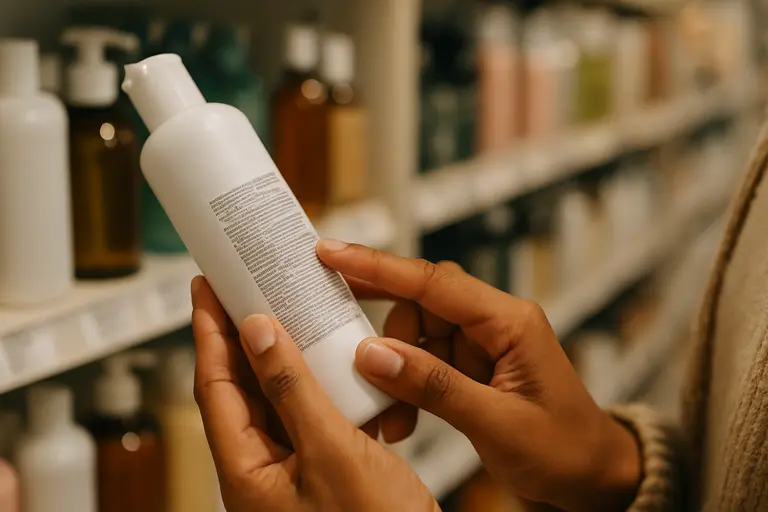
Label reading is imperfect, but it can still reduce confusion. Start with the full ingredient list rather than front-label claims. Words such as clean, natural, conscious, or ethical do not have to mean PFAS-free. If avoiding intentionally added PFAS is a priority for you, look for ingredient names identified by reliable regulatory sources and ask the brand for written clarification rather than relying on social posts or sales copy.
- Check whether the brand publishes full ingredient lists for each shade, not just one version of a product.
- Ask whether any intentionally added PFAS are used in the formula or supplied raw materials.
- Ask whether the brand verifies supplier information through documentation or testing.
- Be cautious with vague “free-from” claims that do not define the substance group being excluded.
- Keep ingredient concerns separate from cruelty-free claims, since they answer different ethical questions.
DIY beauty recipes may sound like a simpler alternative, but they also require care. Homemade cosmetics usually lack preservative testing, stability data, and performance testing. A simple oil blend or powder mixture may be appropriate for some non-medical cosmetic uses, but DIY should not be framed as safer by default. If you have sensitive skin, acne-prone skin, eczema, allergies, or a history of reactions, ask a clinician before using new homemade products on the face, lips, or eye area.
PFAS Transparency Questions For Your Clinician
Turning Label Concerns Into Better Conversations
Use PFAS Transparency as a starting point for better questions, not a reason for fear-based shopping. The evidence available as of August 27, 2026, supports a measured view: federal reporting has improved, state bans vary, and major data gaps remain. Consumers can ask brands for clearer ingredient information while recognizing that a label may not answer concentration, supplier, or testing questions.
If you are making personal health decisions, bring your actual products or ingredient lists to a clinician. Useful questions include:
- Are any products in my routine more likely to irritate my skin or eyes based on my health history?
- Should I avoid certain cosmetic categories during pregnancy, treatment, or while managing a skin condition?
- Would patch testing, allergy evaluation, or a dermatologist visit be appropriate for repeated reactions?
- How should I weigh ingredient uncertainty against product need, comfort, and skin tolerance?
Clearer cosmetic disclosure helps shoppers make choices aligned with ethics, comfort, and personal values. It does not replace medical advice. For any concern tied to symptoms, pregnancy, medications, allergies, or diagnosed conditions, consult a clinician who can consider your individual situation.