
DIY Natural Sunscreen became a more complicated topic after the U.S. Food and Drug Administration added bemotrizinol to the over-the-counter sunscreen monograph. For people who love ingredient transparency, natural skincare, and cruelty-free routines, the change is worth understanding carefully. The FDA action affects what manufacturers may legally use in sunscreen products; it does not mean a homemade SPF recipe has been tested, labeled, or shown to perform like a finished commercial sunscreen.
As an ethical beauty advocate, I see this as a chance to separate ingredient curiosity from overconfident DIY claims. Bemotrizinol may broaden future sunscreen options in the United States, but sunscreen performance depends on the finished formula, testing, stability, labeling, and how a product is used. For information on consumer health and to inform your personal decisions about sun exposure, HealthScope provides relevant resources that should be discussed with a clinician, especially regarding sensitive skin, infants, pregnancy, medication use, or skin conditions.
What Changed For DIY Natural Sunscreen
The FDA Order Was About A Permitted Active Ingredient
On June 9, 2026, the FDA issued a final administrative order adding bemotrizinol as a permitted active ingredient in the OTC sunscreen monograph, with allowed concentrations up to 6% in sunscreen formulations. The agency described bemotrizinol as providing broad-spectrum UVA and UVB protection and having low levels of systemic absorption through the skin, and the approval applies to sunscreen products for adults and children aged 6 months and older, according to the FDA announcement.
That regulatory wording matters. A permitted active ingredient is not the same as permission to assume any kitchen-made sunscreen will have a reliable SPF. Sunscreen is an OTC drug category in the United States, so the finished product carries responsibilities that go beyond mixing oils, waxes, minerals, or UV filters in a jar. If a product is sold or shared as sunscreen, labeling and performance expectations become part of the picture.
Why DIY Natural Sunscreen Is Different From A Tested Product
DIY Natural Sunscreen often starts with a reasonable motivation: people want to know what touches their skin, avoid unnecessary fragrance, and choose products aligned with their ethics. Those values are valid. The risk is that SPF is not visible to the eye. A smooth texture, white cast, or thick feel does not prove broad-spectrum coverage, water resistance, or stability under heat and sunlight.
The FDA order makes bemotrizinol legally available for manufacturers under the monograph conditions, but it does not assign an SPF value to a homemade mixture. A formula still needs accurate dispersion, compatible ingredients, stability data, and SPF testing. Without that testing, a DIY recipe is better understood as an experiment in cosmetic formulation education, not as a verified replacement for a labeled sunscreen product.
What Bemotrizinol Adds To The Ingredient Conversation
Broad-Spectrum Interest Does Not Remove Testing Needs
Bemotrizinol is not new globally. The clinical overview submitted in the FDA process states that it has been used in Europe since about 2000, where cosmetic regulation permits concentrations up to 10% in sunscreen products, as described in the clinical overview. In the United States, the approved monograph concentration is up to 6%, so international product habits should not be copied without attention to U.S. rules.
For ingredient-conscious shoppers, the appeal is clear: a broad-spectrum filter with a history of use outside the United States may lead to formulas that feel different from older options. Still, the meaningful comparison is not “natural” versus “chemical.” All sunscreen ingredients are chemicals in the scientific sense, including zinc oxide, titanium dioxide, and bemotrizinol. A more useful question is whether the finished product is tested, properly labeled, stable, pleasant enough to apply as directed, and suitable for the individual user.
Availability Did Not Become Instant On August 9, 2026
The modified sunscreen monograph with bemotrizinol went into effect on August 9, 2026, based on the research record supplied for this article. That date marked the earliest point at which manufacturers could legally market sunscreen products containing bemotrizinol under the updated framework. It did not mean shelves filled overnight. Formulation work, compliant labels, testing, manufacturing schedules, and ingredient supply can all affect how quickly products reach consumers.
For readers tracking product releases, a related ingredient-transparency discussion on bemotrizinol and natural sunscreen language looks at why the old natural-versus-chemical divide can confuse more than it clarifies.
How To Think About Homemade SPF Recipes
Recipe Precision Is Not The Same As SPF Proof
A gram scale, clean tools, and careful notes are useful for cosmetic DIY work, but they do not replace laboratory testing. DIY Natural Sunscreen makers may be tempted to add bemotrizinol to familiar bases such as butters, oils, waxes, or mineral powders. The problem is that UV filters must be evenly distributed and compatible with the full formula. Clumping, settling, phase separation, heat exposure, or inconsistent spreading can change how much active ingredient reaches the skin in different areas.
There is also a labeling issue. A homemade jar may say “SPF” only if that claim is supported by the kind of evidence expected for sunscreen products. The FDA approval of bemotrizinol did not create a shortcut for home testing. If a person enjoys DIY beauty, a more cautious use of formulation curiosity would be to make non-SPF products, such as simple moisturizers or after-sun comfort creams, while relying on properly labeled sunscreen for UV protection.
Natural Ingredients Can Help Texture, Not Verify Protection
Plant oils, butters, waxes, and botanical extracts can affect slip, scent, feel, and skin comfort. They should not be treated as proof of UV protection unless the finished sunscreen product has been tested for that purpose. “Natural” language can also distract from common tolerance questions. Fragrance components, essential oils, and botanical extracts may be unwanted by some people with reactive skin, even when the ingredient list looks simple or plant-based.
Cruelty-free values and transparency still matter. A careful buyer can ask whether a brand explains its active ingredients, states water-resistance directions clearly, avoids exaggerated claims, and provides a full ingredient list. Those checks support ethical purchasing without assuming that homemade or natural automatically means safer, gentler, or more effective.
Practical Routine Choices After Bemotrizinol
Use The FDA Change As A Label-Reading Prompt
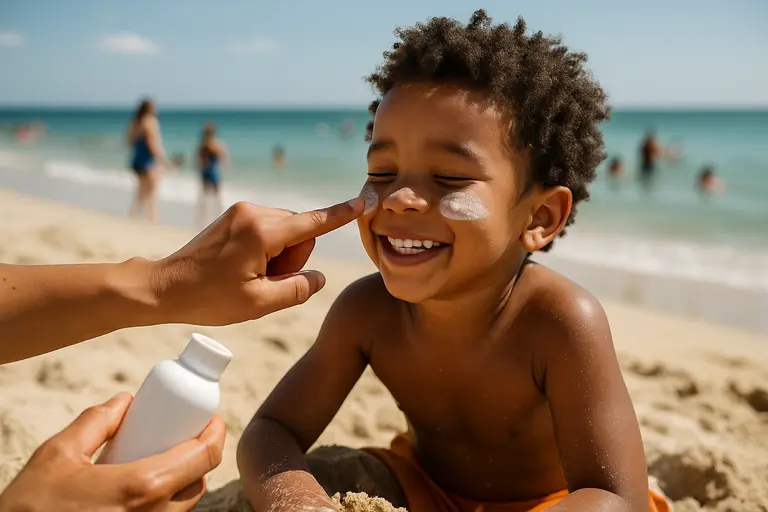
DIY Natural Sunscreen is a label-reading and testing problem more than a recipe trend. After bemotrizinol’s approval, consumers may begin seeing new U.S. sunscreen products that use this active ingredient. A careful routine still starts with basics: look for an OTC sunscreen label, broad-spectrum wording, directions for use, age-related instructions, and any water-resistance statement if sweating or swimming is expected.
For people who prefer mineral sunscreens, bemotrizinol does not make zinc oxide or titanium dioxide obsolete. For people who dislike heavy textures or visible residue, future formulas may offer different options. Skin tone, sensitivity, budget, climate, activity level, and personal ethics all affect what is realistic to use consistently. No ingredient approval can answer those individual questions alone.
Children, Sensitive Skin, And Medical Context Deserve Extra Care
The FDA approval described products for adults and children aged 6 months and older, but family use still calls for caution. Infants, children, people with a history of irritation, and people using medications that affect sun sensitivity may need individualized guidance. A clinician can help place sunscreen choices within a broader care plan, especially if there is eczema, allergy concern, recent procedures, pregnancy, or a history of unusual reactions.
Testing a new finished product on a small area before relying on it for a long outdoor day can help identify obvious irritation, though it cannot prove SPF. If irritation occurs, stop using that product and seek medical guidance when appropriate. For urgent or severe reactions, professional care is the right step.
DIY Natural Sunscreen Questions For Your Clinician
Bemotrizinol’s U.S. approval was a meaningful regulatory update, but it should make home formulators more careful, not more casual. The safest interpretation is narrow: bemotrizinol became a permitted active ingredient for OTC sunscreen products under specified monograph conditions. Homemade mixtures still lack the testing that gives sunscreen labels their practical meaning.
If you enjoy DIY beauty, consider keeping SPF claims out of home recipes unless proper testing and regulatory requirements are addressed. Use your ingredient curiosity to ask better questions of brands: What are the active ingredients? Is the product broad spectrum? What concentration is disclosed where appropriate? Does the label give clear directions? Is there water-resistance information? Are the claims realistic?
Before changing a sun-care routine, especially for a child, pregnancy, photosensitive medication use, sensitive skin, or a diagnosed skin condition, discuss your plan with a clinician. Useful questions include: Is this sunscreen category appropriate for my skin? Are there ingredients I should avoid? How should I combine sunscreen with shade, clothing, and timing outdoors? That conversation can keep ingredient enthusiasm grounded in personal health needs.