
PFAS safety cosmetics concerns became more concrete after the FDA released its congressionally mandated report on December 29, 2025, under the Modernization of Cosmetics Regulation Act of 2022. The report did not give shoppers a simple yes-or-no answer. Instead, it showed a narrow but meaningful use of intentionally added PFAS in listed cosmetic formulations, paired with major data gaps that make ingredient transparency harder for consumers to judge.
What The FDA Report Says About PFAS Safety Cosmetics
The FDA report, titled Report on the Use of PFAS in Cosmetic Products and Associated Risks, evaluated PFAS use and safety questions in cosmetics. The agency said it had insufficient data to determine the safety of PFAS in cosmetic products, based on incomplete toxicology and exposure information for many ingredients FDA report notice.
Why PFAS Safety Cosmetics Data Remains Limited
The key transparency issue is not simply whether a product contains a PFAS ingredient. The FDA reported that toxicological data for most PFAS used in cosmetics are incomplete or unavailable. For many PFAS, public dermal or oral absorption data were not available, dermal toxicity data were missing, and real-use exposure information was limited. That makes it difficult to compare risk across product categories such as lotions, color cosmetics, and other leave-on formulas.
As of August 30, 2024, the FDA identified 51 different PFAS intentionally used in 1,744 cosmetic product formulations in the United States. Those formulations represented about 0.41% of all cosmetic products listed with the FDA under MoCRA as of August 2024. This suggests intentionally added PFAS were not common across the full listed cosmetics market, but they were present in enough products to raise practical label-reading questions.
What The Product Counts Show
The FDA evaluated the 25 most frequently used PFAS out of the 51 identified. Those 25 accounted for about 96% of intentionally added PFAS use in cosmetic products by usage volume. PTFE, or polytetrafluoroethylene, was the most common PFAS listed, appearing in 490 products, equal to about 28.1% of PFAS-containing cosmetics. Other frequently listed PFAS included perfluorononyl dimethicone in 232 products, trifluoroacetyl tripeptide-2 in 164 products, tetradecyl aminobutyroylvalylaminobutyric urea trifluoroacetate in 156 products, and perfluorohexylethyl triethoxysilane in 124 products.
| FDA Report Finding | What It Means For Shoppers |
|---|---|
| 51 PFAS intentionally used in 1,744 formulations as of August 30, 2024 | PFAS ingredients appeared in a small share of listed cosmetics, but not zero. |
| PFAS-containing formulations were about 0.41% of listed cosmetics | Most listed cosmetics did not report intentional PFAS use. |
| 25 PFAS accounted for about 96% of intentional PFAS use by volume | A limited group of ingredients drove most reported PFAS use. |
| Most toxicological data were incomplete or unavailable | Absence of clear evidence is not the same as clear safety confirmation. |
Ingredient Transparency Limits Under MoCRA
MoCRA changed cosmetic oversight in meaningful ways. Cosmetic facility registration and product listing, including ingredients, became mandatory beginning December 18, 2023, with FDA enforcement beginning July 1, 2024. That structure gave regulators a clearer view of listed cosmetic products than they had before. Still, it did not solve every disclosure gap consumers care about.
Why Ingredient Lists Still Have Gaps
Manufacturers are not required under MoCRA to disclose concentration levels of ingredients, including PFAS. A label or product listing may indicate that a PFAS ingredient is present, but that does not necessarily tell consumers how much is used, how exposure differs by product type, or whether the use level resembles the scenarios FDA evaluated.
This matters because the FDA’s safety discussion was not the same for every PFAS. Out of the 25 PFAS evaluated, five appeared to present low safety concerns under their intended uses. One PFAS, perfluorohexylethyl triethoxysilane, was flagged as having a potential safety concern when used at high concentration in body lotion. Without concentration disclosure, consumers cannot easily match a label to that kind of use-specific assessment.
Legal Status Is Not The Same As Consumer Clarity
The report also showed how legal and practical transparency can differ. The presence of PFAS as cosmetic ingredients does not automatically make a product misbranded or adulterated under current U.S. federal law, according to legal analysis of the FDA report Covington analysis. For consumers, that means a product can be legally marketed while still raising unanswered questions about ingredient purpose, concentration, exposure, or long-term data.
For a deeper label-reading perspective, our related resource on PFAS transparency in cosmetic ingredients explains why supplier data, product listings, and marketing claims may not always provide the same level of clarity. Readers tracking broader consumer and state policy coverage across the same publishing network may also find related insights in publications like Daily California, which offers useful regional context.
How To Read PFAS Ingredient Claims Carefully
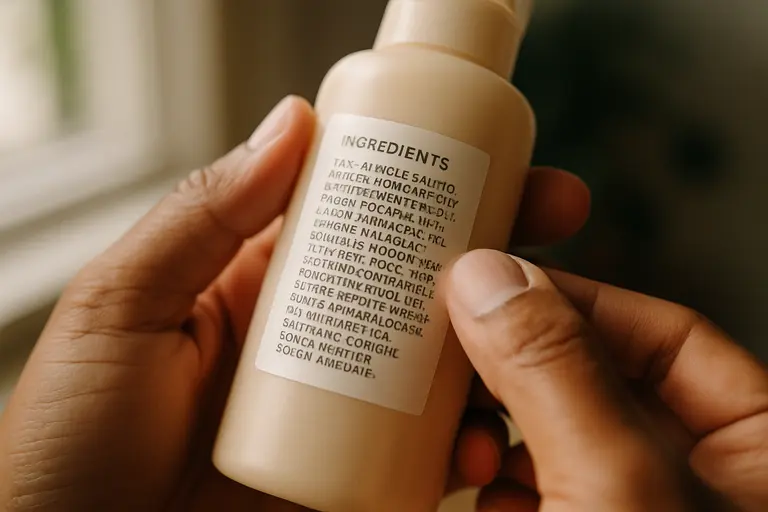
PFAS safety cosmetics discussions can quickly become overly broad. PFAS refers to a large group of substances, and the FDA report focused on intentionally used PFAS identified through cosmetic product listings. It did not establish that every cosmetic containing a PFAS ingredient presents the same concern, and it did not prove that every PFAS-free marketing claim gives a complete safety picture.
Start With The Ingredient Name
Consumers who want more transparency can begin by looking for specific ingredient names identified in the report, including PTFE, perfluorononyl dimethicone, trifluoroacetyl tripeptide-2, tetradecyl aminobutyroylvalylaminobutyric urea trifluoroacetate, and perfluorohexylethyl triethoxysilane. Ingredient names are not always easy to interpret, so the practical question is not only “Is this present?” but also “What is its function in the formula, and is enough information available to assess real-use exposure?”
Use Marketing Terms With Caution
Terms such as “clean,” “natural,” or “free from” can be helpful starting points only if they are backed by clear ingredient disclosure. The FDA report supports a cautious reading: a product without intentionally added PFAS may still need ordinary evaluation for allergens, fragrance ingredients, preservatives, irritation potential, and personal tolerance. A product with a PFAS ingredient is not automatically illegal or proven unsafe based on the FDA report alone, but the data gaps are relevant for shoppers who prioritize transparency.
- Check the full ingredient list rather than relying only on front-label claims.
- Look for specific PFAS names if that is a personal avoidance priority.
- Recognize that ingredient presence does not reveal concentration.
- Ask brands whether PFAS are intentionally added and whether supplier documentation supports the answer.
- Discuss personal concerns with a clinician, especially during pregnancy, while managing skin conditions, or if you have a history of reactions.
PFAS Safety Cosmetics Questions For Clinicians
The FDA’s December 29, 2025 report did not settle every consumer question. It gave a clearer count of intentionally used PFAS in listed cosmetics, identified the most frequently reported PFAS, and showed that many safety assessments remain limited by missing toxicology, absorption, concentration, and real-use exposure data. For ingredient-conscious shoppers, that points toward careful comparison rather than fear-based decisions.
If PFAS safety cosmetics concerns affect your product choices, bring the specific product name, ingredient list, use pattern, and any skin symptoms or exposure concerns to a clinician. Helpful questions may include whether a leave-on product is appropriate for your skin, whether pregnancy or a medical condition changes your risk discussion, and how to evaluate irritation or allergy concerns without relying only on marketing claims. This educational information cannot replace personal medical advice.