
Natural cleansers by skin type sound simple until your face feels tight, shiny, itchy, or somehow all three by lunchtime. The real test is not whether a cleanser looks clean on the label, but whether it removes the day without making your skin behave like it has been personally offended.
That choice matters because cleansing sets the mood for everything that follows. A serum cannot do much peacekeeping if the first step has already stripped the barrier, and a moisturizer works harder when the skin has been over-washed. A smarter natural skincare routine starts with the product most people rinse off fastest: the cleanser.
A good cleanser has one main job: remove sweat, sunscreen, makeup, excess oil, and daily buildup without leaving skin raw. That does not mean the strongest foam wins. In skincare, the squeaky-clean feeling is often a warning bell wearing a spa robe.
The right match depends on your skin’s oil level, sensitivity, climate, makeup use, and how your face feels after washing. If your cheeks feel tight within minutes, the cleanser may be too aggressive. If your T-zone looks greasy soon after, the formula may be too rich or not cleansing enough.
Dermatology guidance favors gentle, non-abrasive cleansing, lukewarm water, and avoiding alcohol-heavy formulas that can irritate skin. That basic gentle cleanser guidance is especially useful in natural beauty, where “plant-based” can still mean fragrant, active, or too stimulating for daily use.
The goal is clean but comfortable. If your face feels calmer after washing than before, you are closer to the right product.
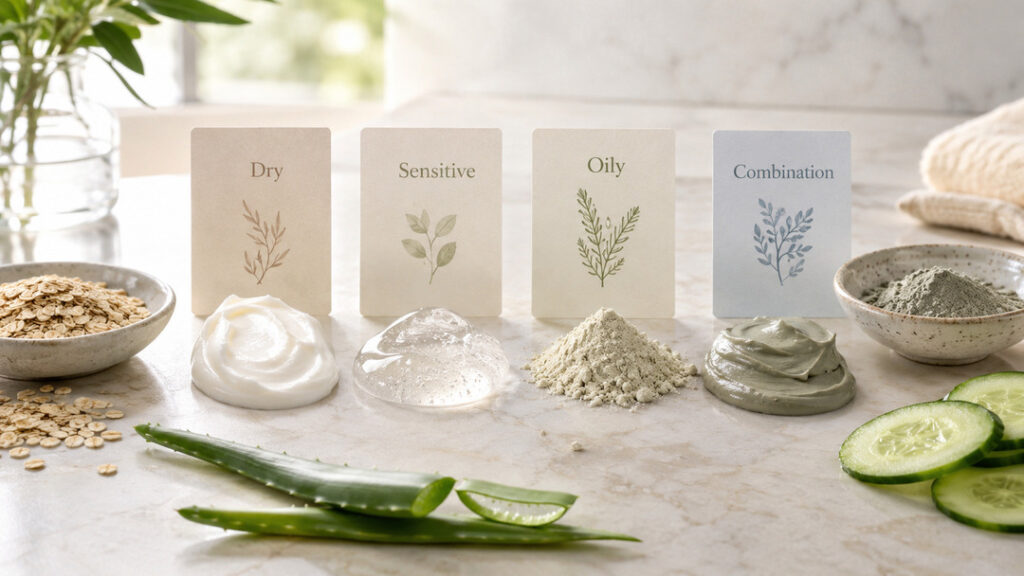
Gel, Cream, Balm, Oil, and Powder Cleansers Are Not Interchangeable
Cleanser texture matters because texture changes how the product behaves on skin. A gel cleanser often suits oily or combination skin because it can feel fresh without leaving much residue. A cream cleanser usually feels better for dry or mature skin because it cushions the wash and reduces that pulled-tight feeling.
Balms and oils are best understood as makeup, sunscreen, and long-wear-product removers. They can be excellent first cleansers, especially at night, but some people still prefer following with a mild water-based cleanser. Powder cleansers are different again: they activate with water and can feel elegant, but formulas with gritty particles or exfoliating acids may be too much for frequent use.
Here is a simple way to narrow the field before buying.
| Skin type or concern | Better cleanser direction | What to be careful with |
|---|---|---|
| Dry skin | Cream, milk, or hydrating gel cleanser | Strong foaming agents and alcohol-heavy formulas |
| Oily skin | Gel, low-lather foam, or light powder cleanser | Over-cleansing that triggers more shine |
| Combination skin | Balanced gel or cream-to-gel cleanser | Using one harsh product for the whole face |
| Sensitive skin | Fragrance-free cream or gentle gel cleanser | Essential oils, scrubs, and “tingle” claims |
| Makeup or sunscreen use | Balm or oil first, gentle cleanser second | Heavy residue that clogs or irritates |
| Dull or congested skin | Occasional mild exfoliating cleanser | Daily acids, rough grains, or aggressive polishing |
The table is not a law. It is a shopping filter. Skin changes with weather, age, medication, stress, and hormones, so a cleanser that worked in August may feel rude in January.
Dry and Sensitive Skin Need Barrier Support, Not Drama
Dry and sensitive skin often gets treated like it needs a miracle. Most of the time, it needs fewer provocations. A cleanser for this category should feel soft, rinse cleanly, and avoid leaving the skin tight or flushed.
Look for humectants and barrier-friendly ingredients such as glycerin, aloe, oat, panthenol, or ceramide-supportive formulas. These do not turn a cleanser into a moisturizer, but they can make washing less disruptive.
The bigger issue is fragrance. Natural beauty shoppers sometimes assume essential oils are automatically gentler than synthetic fragrance. Skin does not always care where the scent came from. The FDA lists fragrances among common cosmetic allergens, along with preservatives, dyes, metals, and natural rubber.
That does not mean every scented cleanser is bad. It means reactive skin should treat fragrance as a decision, not decoration. For sensitive faces, fragrance-free beats fancy more often than the label admits.
Oily and Combination Skin Should Not Be Punished Into Balance
Oily skin can tempt people into using the skincare equivalent of dish soap with better branding. That approach may remove shine for an hour, but it can also leave the skin irritated, dehydrated, and louder than before.
A better oily-skin cleanser removes excess oil without turning the face into a desert. Gel cleansers, gentle foams, and light clay or powder formulas can work well, but the finish matters. The skin should feel fresh, not stretched.
Combination skin needs even more restraint. The forehead and nose may enjoy a gel cleanser, while the cheeks complain immediately. If that happens, use less product on dry areas, shorten contact time, or switch to a gentler formula rather than escalating to stronger cleansing.
The most useful test is the 10-minute test. Wash, pat dry, and wait before applying anything else. If your skin feels tight, hot, itchy, or shiny-fast, the cleanser is giving you feedback. Do not negotiate with your face like it is a difficult roommate.
Ingredient Lists Reveal More Than Front-Label Promises
“Natural,” “clean,” “botanical,” and “non-toxic” can be helpful signals, but they are not complete safety checks. A cleanser still needs a full ingredient review, especially for people prone to dryness, breakouts, rosacea-like flushing, or eczema-type sensitivity.
Watch for harsh surfactants if your skin gets stripped easily. Be cautious with high levels of drying alcohols, heavy fragrance blends, citrus oils, peppermint, menthol, and scrub particles. A product can look earthy and still be too stimulating.
Also check how many jobs the cleanser is trying to do. A daily cleanser that cleans, exfoliates, brightens, resurfaces, detoxifies, and “polishes” may be asking your barrier to sign a contract it never read. For most routines, boring is often better.
If you want actives, consider whether they belong in a leave-on product instead. Cleansers do not stay on skin long, yet strong active formulas can still irritate during repeated use. Gentle daily cleansing plus targeted treatment is usually easier to control.
The Next Cleanser Shift Is About Simpler, Smarter Buying
The best natural cleanser is not the one with the prettiest botanical story. It is the one your skin can use repeatedly without protest. That is why the next smart shopping move is less about chasing product categories and more about reading how the formula behaves.
Start with your skin’s most common complaint. If it is tightness, move toward creamier and fragrance-free formulas. If it is oil, choose a balanced gel instead of a stripping foam. If it is sensitivity, reduce scent, exfoliation, and “cooling” sensations. If it is sunscreen or makeup removal, add a balm or oil step rather than scrubbing harder.
Natural cleansers by skin type work best when the label, texture, and after-feel all point in the same direction. The pressure point is not finding the most natural-sounding cleanser on the shelf. It is choosing the one that lets your skin stay clean, calm, and ready for the rest of the routine.
FAQ’s
What type of natural cleanser is best for dry skin?
Dry skin usually does best with cream, milk, or hydrating gel cleansers. Look for gentle formulas with ingredients like glycerin, aloe, oat, or panthenol, and avoid cleansers that leave skin tight.
Should oily skin use a foaming natural cleanser?
Oily skin can use a gentle foam or gel cleanser, but it should not feel harsh or drying. If the skin feels tight after washing, the formula may be too aggressive.
Are essential oils safe in natural cleansers?
Essential oils are not automatically unsafe, but they can irritate sensitive skin. If your skin reacts easily, fragrance-free cleansers are usually a safer starting point than scented botanical formulas.