
The dewy glow is more than a trend. It shows healthy, well-nourished skin. To get it, you need to know that your skin’s moisture comes from two places.
Internal hydration feeds your skin cells from the inside. It needs enough water and electrolytes. Transepidermal water loss (TEWL) is when moisture leaves your skin and goes into the air.
Understanding this is key. Many just use surface products for a quick glow. But for real results, you must work on both sides. This is why beauty starts with hydration.
This article will share science-backed tips. You’ll learn to support your skin’s natural rhythm and balance moisture from the inside. Aim for a radiant, strong complexion that shines from within.
Daily water + electrolyte tips (non‑sugary options)
Forget the eight-glasses-a-day rule; true cellular hydration requires a strategic approach to both water and electrolytes. Plain water might pass through you without hydrating your skin cells. The goal is to improve your water intake quality, not just volume.
Electrolytes like sodium, potassium, and magnesium act like magnets for water. They help keep water inside your cells, including skin cells, for a dewy look. Without them, water can’t fully hydrate your skin’s moisture barrier.
This table breaks down common hydration sources, highlighting the smart, non-sugary choices for your daily routine.
| Source | Electrolyte Content | Sugar Content | Best For |
|---|---|---|---|
| Tap / Filtered Water | Very Low (Varies) | Zero | Base fluid for all-day sipping. |
| Commercial Sports Drink | High | Very High | Avoid for daily hydration. |
| Natural Coconut Water | High in Potassium | Moderate (Natural) | Post-workout or occasional natural boost. |
| Mineral-Rich Spring Water (e.g., Gerolsteiner, San Pellegrino) | Naturally High in Calcium & Magnesium | Zero | Daily quality water intake to passively boost minerals. |
| Homemade Electrolyte Drink | Fully Customizable | Zero or Low (from fruit) | Optimal control for daily, sugar-free hydration. |
For busy professionals, integrating these strategies is about seamless habits, not complex rituals.
- Start Smart: Drink 16 oz of water with a pinch of sea salt and lemon juice first thing in the morning. This replenishes minerals lost overnight and kickstarts hydration.
- Use Tools: Keep a large infuser bottle at your desk. Add cucumber slices and a sprig of mint for a subtle electrolyte infusion without sugar.
- Choose Your Water Wisely: Rotate in a glass of naturally sparkling mineral water with lunch. It’s an effortless way to add magnesium and calcium to your daily water routine.
- Leverage Powders: Keep a tub of unflavored electrolyte powder (like LMNT or Ultima) in your office drawer. A quick scoop in your afternoon water fights the 3 PM slump better than coffee.
The key is consistency. Your fluid intake should support your body’s natural rhythms. Sip steadily throughout the day, not all at once. This keeps your skin and cells hydrated.
By focusing on what’s in your water, you transform a basic habit into a powerful inside-out moisturizing strategy. Your skin’s glow will thank you for the upgraded water intake protocol.
Humectants vs emollients vs occlusives—build your moisturizer stack by climate/skin type
Creating a good moisturizing routine means mixing humectants, emollients, and occlusives. They work together like a team to keep your skin hydrated. A single cream can’t meet everyone’s needs because of different environments and skin types.
Humectants attract moisture. Ingredients like hyaluronic acid and glycerin draw water to your skin’s surface. They give your skin a plump, dewy look.
Emollients make your skin smooth. They fill in skin cracks with oils, butters, and lipids. This softens your skin and stops moisture loss.
Occlusives seal in moisture. Think of petrolatum, heavy oils, or waxes. They lock in moisture drawn in by humectants and smoothed by emollients.
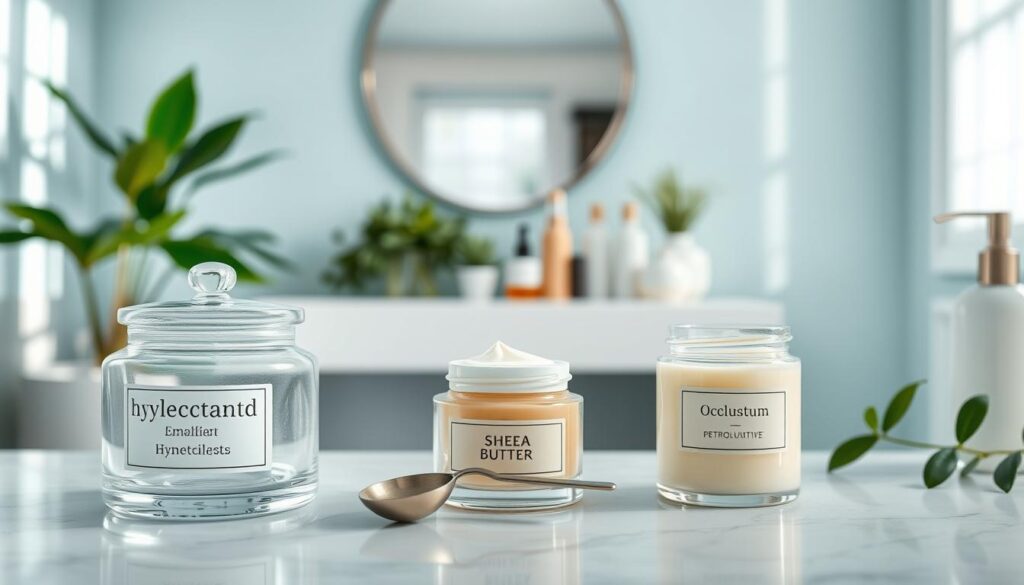
- Humectant: Draws water in. (e.g., Hyaluronic Acid, Glycerin, Aloe Vera)
- Emollient: Smooths and softens. (e.g., Squalane, Jojoba Oil, Ceramides)
- Occlusive: Locks moisture in. (e.g., Shea Butter, Petrolatum, Dimethicone)
Your climate and skin type guide how to layer these ingredients. The right order boosts their benefits.
| Climate / Skin Type | Recommended Stack (Order of Application) | Key Focus |
|---|---|---|
| Humid Climate / Oily Skin | Light humectant serum → Light emollient lotion | Avoid heavy occlusives. Focus on hydration without adding grease. |
| Dry Climate / Dry Skin | Humectant serum (with hyaluronic acid) → Rich emollient cream → Light occlusive balm | Pull in moisture and seal it aggressively to combat arid air. |
| Variable Climate / Combination Skin | Humectant toner → Emollient serum on dry areas → Light occlusive moisturizer on cheeks only | Customize application by zone. Keep the T-zone lighter. |
Why can’t one moisturizer work for everyone? Most formulas try to do too much in one bottle. In dry places, a light lotion might not be enough. In humid areas, a thick cream can be too much. Your stack should be as dynamic as your day.
Begin with a hydrating toner or serum on damp skin. Then, use an emollient that suits your skin’s oiliness. If needed, add an occlusive where you’re driest. This layered method gives you control and keeps your skin dewy.
Shower/Sauna Habits That Help (and Hurt) Your Barrier
Changing your shower habits can help your skin. It’s all about knowing a few simple rules. Your daily routines can either harm or help your skin’s health.
First, the shower. Avoid using water that’s too hot. Hot water can secretly strip your skin of its natural oils. This weakens your skin’s barrier.
To fix this, use lukewarm water and keep showers short. This helps preserve your skin’s essential lipids and keeps it healthy.
Choosing the right cleanser is also key. Avoid harsh, alkaline soaps or gels with sulfates. They can harm your skin’s pH and dissolve its protective oils. Instead, use gentle, hydrating cleansers with glycerin. Glycerin helps keep your skin hydrated and prevents dryness.
If you love saunas and steam rooms, you need to protect and recover your skin. The heat is great for circulation and detox, but it also makes your skin lose moisture. Apply a light occlusive, like shea butter or a balm, before you go in. This helps keep moisture in.
After your session, rehydrate your skin. Pat it dry and apply a moisturizer or hydrating mist. This step helps replace lost water and keeps it in.
Here’s a quick comparison of good and bad habits:
| Barrier-Helpful Habits | Barrier-Harming Habits |
|---|---|
| Showering with lukewarm water | Using very hot water for long periods |
| Using a gentle, hydrating cleanser with glycerin | Cleansing with harsh, drying soaps |
| Applying a light occlusive before sauna use | Entering a sauna with bare, unprotected skin |
| Rehydrating skin immediately after heat exposure | Waiting to moisturize after cooling down |
Your skin’s barrier needs informed care, not coddling. By adjusting your shower habits, choosing the right cleanser, and preparing for heat, you support your skin. Consistency with these habits will make your skin stronger and more hydrated.
Night strategies: sleep humidity, barrier repair, lip and hand care
Turning your bedroom into a skin-repair sanctuary starts with knowing how sleep affects your skin. Nighttime is a perfect time for your skin to heal and replenish itself. This nightly routine makes your sleep hours count.
The air you sleep in is key. Dry air from heating or air conditioning can harm your skin by making it lose moisture. This makes your skin feel tight and dry by morning.
Use a bedroom humidifier to fight this. Keep the humidity between 40% and 60%. This helps your skin stay moist without making the room feel wet.
With the right environment, your nighttime products work better. This is the best time for barrier-repair treatments. Your skin’s lipid matrix needs to be replenished.
Ingredients like ceramides, fatty acids, and cholesterol are essential. They help repair your skin’s protective wall. A weak barrier can cause sensitivity, redness, and dryness.
At night, ceramide-rich products are very effective. They help your skin hold onto moisture. Look for these in night creams, sleeping masks, or serums.
Don’t overlook high-TEWL zones like your lips and hands. They lose moisture fast and show aging signs quickly.
For your lips, use a thick balm with nourishing butters or hyaluronic acid. This keeps moisture in for hours. Avoid products with irritating flavors or menthol if your lips are dry.
Your hands also need care at night. Apply a rich hand cream or facial night cream after washing. Wearing cotton gloves helps keep the cream on and prevents stains on your sheets.
Here is a quick-reference table for building your nightly repair routine:
| Focus Area | Tool or Product | Key Benefit |
|---|---|---|
| Sleep Environment | Cool-mist humidifier | Prevents overnight moisture loss from dry air |
| Facial Barrier | Night cream with ceramides | Replenishes skin’s lipid matrix for stronger defense |
| Lip Care | Occlusive treatment balm | Seals in hydration on thin, vulnerable skin |
| Hand Care | Rich cream + cotton gloves | Intensive repair for high-use areas |
Sticking to these night strategies will show results. You’ll wake up with skin that feels softer, calmer, and stronger. Think of sleep as your skin’s most productive time.
Travel routine: flights, desert climates, gym bag minis
Air travel, dry climates, and busy lives can dry out your skin. To keep your skin moist, you need a portable hydration plan. This guide offers tips for three common situations to keep your skin hydrated anywhere.
Airplane cabins are very dry, with humidity below 20%. This dry air takes moisture from your skin. To fight this, you need a strong plan.
Drink more water before and during flights. For long flights, add electrolytes to your water. This helps your body keep the water better than plain water.
Use a multi-step skincare routine. Apply a hydrating serum before flying. Carry a facial mist for quick spritzes during the flight. Finish with a thick balm on your cheeks and under your eyes to lock in moisture.
Adapting Your Routine for Desert or Dry Climates
Hot, dry places need a different moisturizer strategy. You want to keep moisture in with a strong barrier.
Use thicker creams instead of light lotions. Apply a serum, then a cream, and finish with an occlusive. Use petroleum jelly or a heavy sleeping mask at night.
Also, keep your body’s electrolytes balanced. Drink water all day and eat foods rich in minerals.
The Essential Gym Bag or Carry-On Minis
Your travel kit should have everything you need without being too big. Here are the must-haves:
- Micellar Water Wipes or Pads: For quick, waterless cleansing after a workout or before a flight.
- Hydrating Serum Ampoule: Single-use vials are perfect for a potent moisture hit anywhere.
- Facial Mist with Hyaluronic Acid: A travel-sized spray to refresh and plump skin instantly.
- Occlusive Balm Stick: A solid formula for lips, cuticles, and dry patches; TSA-friendly.
- Mini Broad-Spectrum Sunscreen: Sun protection is non-negotiable, even in transit.
Put these items in a clear, zip-top bag for easy access. The key is to keep your routine consistent, even when it’s short. By preparing for travel’s hydration challenges, you can keep your skin healthy anywhere.
Quick troubleshooting for tight/flaky skin
Even the most dedicated routine can hit a snag. Your skin might suddenly feel tight or show flaky patches. Don’t see this as a failure. It’s your skin’s way of asking for a change.
First, figure out what’s causing it. Is it from over-cleansing or harsh products? Or maybe you’re not drinking enough water with electrolytes? Or is the air too dry?
For a stressed barrier, simplify your routine for a few days. Use a gentle cleanser and a moisturizer rich in ceramides and fatty acids. Stay away from exfoliants until your skin is strong again.
If you think it’s about hydration, check your water and electrolyte intake. Sometimes, your skin shows signs of dehydration before you feel thirsty.
Low humidity, like in winter or desert climates, can also be a problem. A cool-mist humidifier in your bedroom adds moisture to the air. This helps keep your skin hydrated overnight. Using a humidifier regularly can greatly improve tight, flaky skin.
Lastly, review your products. In dry environments, you might need a thicker occlusive or more hyaluronic acid. Your skin’s needs change with the seasons and where you live.
See tight or flaky skin as a puzzle to solve. Use these steps to find the problem and fix it. Your journey to a soft, dewy complexion is about listening to and responding to your skin’s needs.