
Ever notice a breakout after a stressful week or puffiness when you’re feeling overwhelmed? It’s not just a coincidence. A field called psychodermatology explores the strong connection between your mind and skin.
Your body’s largest organ talks to your inner state directly. Feeling tense triggers the release of hormones like cortisol. This can cause inflammation, clog pores, and lead to stress and acne.
This connection is even deeper. Tension can get trapped in facial fascia and mess with your lymphatic system. This often shows up as swelling or sensitivity.
Getting to know this biological loop is key to clearer skin. Your outer layer is a sensory organ linked to your nervous system. So, taking care of your emotional wellbeing is essential for any effective skincare routine.
Common pathways: cortisol, sleep loss, picking cycles, diet shifts
When emotions are high, your skin is affected. Hormones, behaviors, and lifestyle changes all play a part. Understanding these is key to taking back control.
Cortisol is the main stress hormone in this battle. When you’re stressed, your body makes more cortisol. This hormone speeds up aging and makes your skin more sensitive.
High cortisol weakens your skin’s defense. This lets in more irritants and makes your skin lose moisture. This is why your skin can get red or dry when you’re stressed.
Sleep loss is also important. Your skin repairs itself at night. Not getting enough sleep slows down this repair work.
This leads to a dull, tired look. It’s why they call it “beauty sleep.” Without it, your skin can’t fix itself from daily damage.
Behavioral responses are another pathway. Stress can make you pick at your skin or rub it. These actions can cause physical damage and slow healing.
These actions create wounds and can lead to scars. They turn emotional pain into visible skin problems.
Diet changes during stress are also key. Stress often makes you eat sugary foods or skip meals. This takes away important vitamins and antioxidants from your skin.
This can make your skin worse, leading to more problems. It’s one of the ways what causes sensitive skin when you’re stressed.
| Pathway | Biological Mechanism | Primary Skin Effect |
|---|---|---|
| Cortisol Spike | Stress hormone release increases inflammation, breaks down collagen, and weakens the skin barrier. | Accelerated aging, heightened sensitivity, and redness. |
| Sleep Loss | Disrupts nightly cellular repair, reduces collagen synthesis, and limits skin blood flow. | Dull complexion, poor texture, and delayed healing. |
| Picking Cycles | Fight-or-flight activation leads to compulsive touching, picking, or rubbing of the skin. | Physical lesions, potentially scarring, and prolonged inflammation. |
| Diet Shifts | Emotional eating or loss of appetite alters intake of key nutrients and antioxidants. | Increased oxidative stress, imbalance, and vulnerability to irritants. |
These pathways show why your skin can react during hard times. It’s not just in your mind; it’s a complex process. Knowing this helps you support your skin’s health from the inside out.
Identify triggers: caffeine, heat, spicy foods, conflict, screens—create a personal log
Every person has their own special triggers that make their skin worse. You’re like a detective searching for clues. Your goal is to find out what makes your skin break out.
This isn’t about blaming anyone. It’s about gaining control through knowledge. Studies show that knowing the causes of skin problems is key. These causes can be inside you or outside.
There are common things that can make your skin worse. Knowing these can help you start your investigation.
Dietary & Chemical: What you eat can really affect your skin. Caffeine and alcohol can make your blood vessels expand. Spicy foods and foods high in histamine can also cause problems.
Environmental: Things outside of you can also hurt your skin. Too much sun and heat are big rosacea triggers. Cold, wind, and dry air can also damage your skin’s protective layer.
Emotional & Social: Your feelings can also affect your skin. Stress, work pressure, or feeling anxious can make your skin turn red or break out.
Lifestyle & Digital: Too much screen time can be bad for your skin. It can cause eye strain and stress. Skipping your skincare routine when you’re tired is another thing that can trigger problems.

The best tool for finding your triggers is a Skin-Emotion Log. It’s a simple journal to track your skin’s daily changes. It can show patterns you might not see right away.
Here’s how to start your log:
- Choose Your Format: Pick a notes app, a notebook, or a digital spreadsheet.
- Record Daily: Write down your observations at the same time each day, like in the evening.
- Note Key Details: Track your skin, what you ate, your surroundings, and how you feel.
- Look for Patterns: After 2-4 weeks, look back at your log. See if certain foods, stress, or lack of sleep cause problems.
Let’s make this real with an example of what your log might look like:
| Date | Skin Condition | Potential Trigger | Emotional State | Notes |
|---|---|---|---|---|
| 10/24 | Mild redness on cheeks, calm | Oatmeal breakfast, 30-min walk | Focused, relaxed | Used gentle cleanser. Slept 8 hours. |
| 10/25 | Noticeable flushing, warm feeling | Double espresso, spicy lunch, heated team call | Stressed, agitated | Forgot AM moisturizer. Felt rushed. |
| 10/26 | Dry, sensitive patches | Long hours on computer, windy weather | Fatigued, distracted | Drank less water. Skipped evening routine. |
| 10/27 | Improved calm, less redness | Herbal tea, light yoga, early night | Calm, restored | Applied barrier balm. Conflict resolved. |
This log turns vague feelings into clear, useful information. You might find out that caffeine and stress are your main rosacea triggers, not spicy food. With this knowledge, you can start managing your skin better.
With your triggers identified, you can now find ways to calm your skin before it flares up.
Calming practices: breathwork, mindful walks, grounding; when to seek therapy/support groups
Learning to manage your emotions is key. It helps stop stress before it harms your skin. This section offers tools backed by science. These methods do more than just offer quick fixes. They change how your body reacts to stress.
Deep breathing calms your stress response. Slow, deep breaths tell your body to relax. This lowers stress hormones almost right away.
Your skin benefits in two ways. Less stress means less inflammation and fewer skin problems. Deep breathing also helps your skin cells renew. Try this simple method:
- Inhale slowly for a count of four.
- Hold your breath for a count of four.
- Exhale completely for a count of six.
- Repeat for five cycles, when you’re feeling tense.
Mindful Movement and Grounding
When your mind is racing, focus on now. A mindful walk helps you notice the world around you. Pay attention to your feet, the air, and sounds.
This breaks the cycle of worry. Grounding exercises are also powerful. The “5-4-3-2-1” technique uses your senses to stop anxiety:
- Name five things you can see.
- Identify four things you can touch.
- Acknowledge three things you can hear.
- Notice two things you can smell.
- Recognize one thing you can taste.
Holistic Rituals for Direct Calm
Add calming rituals to your skincare routine for extra benefits. Gentle facial massage can release tension. This may improve blood flow and reduce tightness.
Aromatherapy uses calming scents like lavender. Apply a few drops to your wrists or use a diffuser. Add a few minutes of meditation for emotional release.
Knowing When to Seek Professional Support
While self-care is powerful, some issues need expert help. Looking for therapy or support groups is a sign of strength. It’s a key step for managing ongoing stress or conditions like dermatillomania.
Cognitive Behavioral Therapy (CBT) is very effective. It helps change thought and behavior patterns that cause stress and skin-picking. A therapist gives you strategies that fit your needs.
Support groups offer community and understanding. Sharing with others who face similar challenges reduces feelings of isolation. It gives you support and shared wisdom.
Consider professional help if:
- Stress or skin-focused behaviors feel out of control.
- They greatly affect your daily life or self-esteem.
- Self-management methods don’t bring enough relief.
Building a wide range of support—from daily mindfulness to professional care—builds resilience. Your skin’s health shows this all-around commitment to your well-being.
Skin‑friendly coping kit: barrier balm, cooling mist, SPF, gentle routines during flares
Your skincare routine should feel like a warm hug, not a hassle. When stress or skin issues rise, focus on soothing and nourishing. It’s about giving your skin the support it needs.
Keep it simple. A barrier-focused routine is easy and effective. It’s like a first-aid kit for your skin.
Here are three essential items for your kit:
- Barrier Repair Balm: A balm with ceramides or oatmeal protects and heals. It’s key for eczema flares.
- Calming Cooling Mist: A spray with aloe or centella asiatica cools and hydrates. It’s great for setting makeup or refreshing your skin.
- Daily SPF (Mineral-Based): A zinc-oxide sunscreen protects without irritating. It’s perfect for sensitive skin.
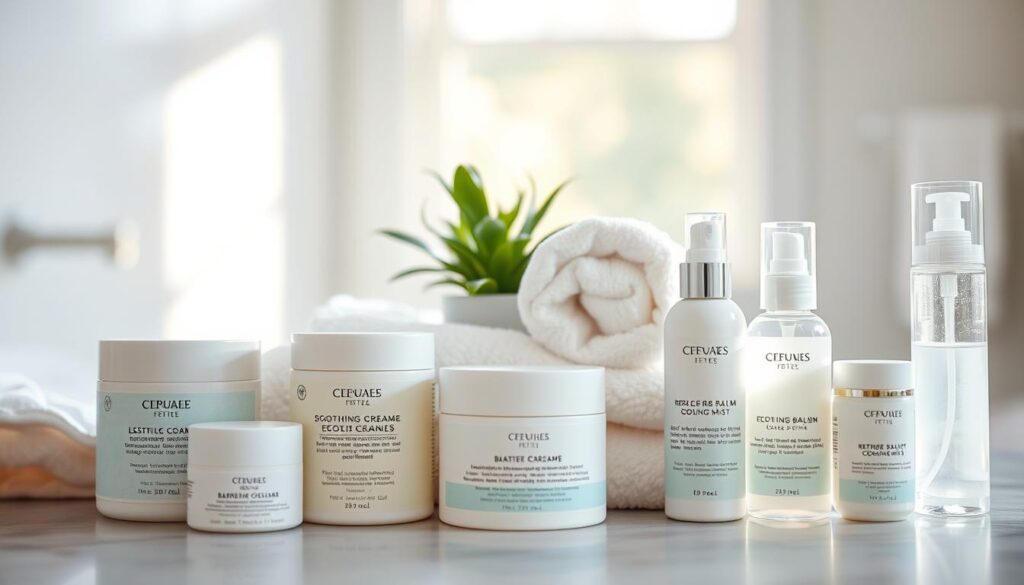
Use these items for a simple morning and evening routine. Start with a gentle cleanser. Then, apply a barrier-strengthening essence if your skin can handle it. Finish with the repairing balm on damp skin. Topicrem’s DA PROTECT line is great for this.
This approach reduces stress and helps your skin. It turns skincare into a self-care act. For more on skin and emotions, check out our guide on understanding acne naturally.
Creating this kit is about making a simple, reliable skincare plan. It brings comfort and control when you need it most.
Talking with your dermatologist/SLP?—co‑care with licensed pros
Managing the mind-skin connection often needs a team effort. Your dermatologist is key in this team. Bring your personal trigger log to your visit. It turns your self-observation into a powerful tool for your doctor.
Talk about how your skin condition affects you. Share how it impacts your work and social life. Dermatologists recommend brands like CeraVe and La Roche-Posay for professional care. They can help create a plan just for you.
If you have habits like picking at your mouth, see a speech-language pathologist. An SLP can help with the muscle habits that lead to picking. When stress gets too much, getting therapy is a smart move.
A therapist can teach you CBT tips to handle anxiety that causes skin issues. Cognitive behavioral therapy helps break the cycle of stress and response. Each professional brings their own skills to the table.
Co-care combines your insights with expert advice. This partnership helps create a lasting plan for your skin and emotional well-being.