The Sephora Diversity Report gives ethical beauty shoppers useful information about representation, supplier diversity, packaging materials, and sourcing systems. It also shows a boundary that cruelty-free shoppers should not overlook: diversity and impact reporting can improve visibility into who benefits from beauty retail, yet still leave animal-testing standards and brand-level cruelty-free certification unclear.
As an ethical beauty advocate, I read reports like this with two questions in mind. First, what does the company measure in a way that shoppers can verify? Second, what is missing from the public data? That distinction matters for people choosing skincare, haircare, makeup, or DIY-inspired routines based on values such as labor ethics, inclusive access, lower-waste packaging, vegan preferences, or cruelty-free standards.
What The Sephora Diversity Report Measures
Representation In Brand Assortment
Sephora’s August 2026 DE&I Heart Journey reporting states that the retailer has tripled the number of Black-owned brands in its assortment since 2020 and that spend with underrepresented suppliers has increased to over 10%, according to the company’s racial bias and DE&I reporting. These are clear business-facing indicators. They speak to assortment access, supplier opportunity, and the visibility of founders who have often been underrepresented in prestige beauty retail.
The 2023 Global Impact and Progress Report, released in October 2024 with data through 2023, adds longer-range context. Sephora reported taking the 15 Percent Pledge in June 2020 and said the number of Black-owned brands at Sephora in the United States rose from 8 in 2020 to 28 by 2023; it also reported reaching 15% in the prestige haircare category by 2023, as described in its 2023 impact report. For shoppers, those details are meaningful because they move beyond general inclusion language and name measurable changes.
Materials, Packaging, And Supplier Systems
The same reporting also covers raw materials and supplier-screening systems. Sephora reported purchasing and consuming 5,011 tonnes of raw materials in 2023. Of that amount, 79% was packaging directed at customers, with 29% plastic and 62% paper or cardboard. The report also says 81.3% of paper and cardboard packaging materials were FSC-certified, with 19.2% FSC-mix, and that 82% of raw materials were virgin while 18% were recycled.
On suppliers, Sephora says it communicates the LVMH Supplier Code of Conduct to all suppliers, with requirements tied to labor, environmental, and business ethics. The report also states that suppliers are screened for ethical, social, and environmental performance, and that EcoVadis assessments are used for indirect suppliers. As of 2023, Sephora reported that 95% of strategic purchases among indirect suppliers were engaged in EcoVadis assessment.
Supplier Diversity Versus Cruelty-Free Proof
Different Ethical Questions Need Different Evidence
Supplier diversity and cruelty-free status are both ethical concerns, but they are not the same type of evidence. A retailer can expand Black-owned brand representation, screen suppliers for labor and environmental standards, and still leave shoppers without a clear count of which brands avoid animal testing across all markets. The Sephora Diversity Report is useful for understanding inclusion and supplier participation, but it should not be read as a complete animal-welfare disclosure.
This distinction protects shoppers from over-reading a report. “Ethical sourcing” can refer to labor rules, environmental screening, raw-material certifications, packaging changes, supplier ownership, and business conduct. “Cruelty-free,” by contrast, usually requires a specific policy on finished-product testing, ingredient testing, supplier testing, third-party testing, and market rules that may trigger animal testing. Without those details, cruelty-free shoppers still need brand-by-brand confirmation.
| Report Area | What It Shows | What It Does Not Fully Show |
|---|---|---|
| DE&I assortment | Growth in Black-owned brands and underrepresented supplier spend | Whether each included brand is certified cruelty-free |
| Packaging materials | Reported use of paper, cardboard, plastic, recycled content, and certification | Animal-testing policies for products inside the packaging |
| Supplier screening | Use of supplier codes and EcoVadis assessment for indirect suppliers | A public numerical breakdown of animal-testing compliance by brand |
For ingredient-conscious shoppers, this is also where label literacy matters. A product can be plant-based, fragrance-free, vegan-positioned, or packaged in certified paperboard and still need separate verification for animal-testing policy. If you compare labels often, a focused resource on ingredient transparency in ethical beauty can help separate formulation claims from sourcing and certification claims.
Cruelty-Free Gaps In The Sephora Diversity Report
Sephora Diversity Report Limits For Cruelty-Free Shoppers
The main limitation is not that the report lacks value. It is that the public data does not give cruelty-free shoppers a numerical map of which brands avoid animal testing globally. The 2023 impact report discusses supplier conduct, materials, environmental screening, and social responsibility. It does not provide detailed metrics showing how many Sephora brands, Clean-labeled products, or 15 Percent Pledge brands are certified cruelty-free.
That gap matters because beauty ethics often gets compressed into a single shopping label. “Clean,” “conscious,” “planet positive,” “inclusive,” “vegan,” and “cruelty-free” can overlap, but none automatically proves the others. A Sephora Diversity Report can show progress on representation and supplier engagement while still leaving a shopper to ask whether a brand permits testing where required by law, uses suppliers with animal-testing exposure, or sells in markets with different requirements.
For people who buy skincare because of sensitive skin, allergies, pregnancy-related caution, medication use, or a history of irritation, this is also a reminder to keep ethics and personal skin needs separate. Cruelty-free status does not prove a product will suit your skin. Natural extracts, essential oils, exfoliating acids, preservatives, and fragrance components may be well tolerated by some people and irritating for others. Personal health questions belong with a qualified clinician.
How Ethical Beauty Shoppers Can Read The Data
Use Reports As A Starting Point, Not A Full Label
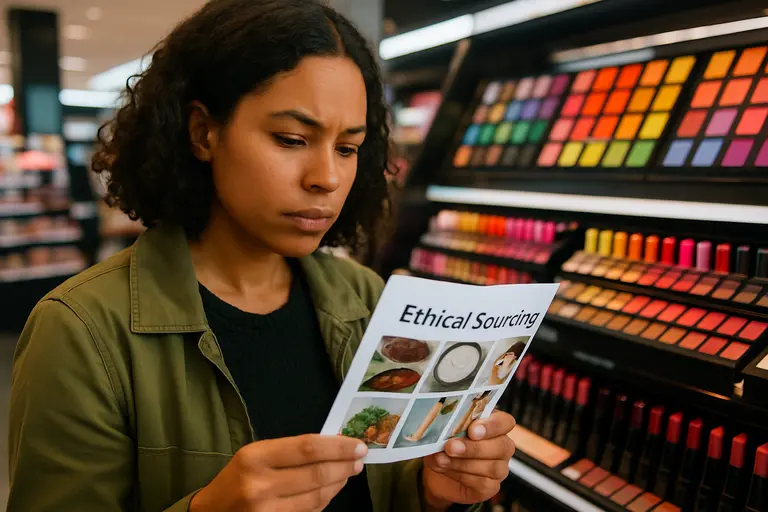
Reports are most helpful when they are treated as a starting point for questions. Sephora’s data can help a shopper see where the retailer is putting attention: founder representation, underrepresented supplier spend, packaging inputs, raw-material tracking, and supplier assessment systems. Those are meaningful corporate signals. They do not replace the smaller product-level checks that cruelty-free, vegan, allergy-aware, or low-waste shoppers often need.
In practice, I would separate the shopping decision into a few layers:
- Representation: Is the brand founder, ownership structure, or supplier relationship part of an underrepresented group that the retailer has disclosed?
- Animal testing: Does the brand publish a clear cruelty-free policy covering finished products, ingredients, suppliers, third parties, and markets where testing may be required?
- Ingredients: Does the label disclose fragrance, key actives, allergens of concern, and use instructions clearly enough for your needs?
- Packaging: Does the brand explain recycled content, refill options, FSC certification, or other material claims without vague wording?
- Skin fit: Have you checked whether the product type is appropriate for your skin history with a clinician if you have medical concerns?
Ethical buying is also connected to community wellness. Access, representation, and trust affect how people experience beauty spaces, health education, and retail services. For readers interested in broader community health, the community wellness education initiative offers insights into public support and inclusion efforts.
Sephora Diversity Report Questions For Better Buying
The Sephora Diversity Report helps shoppers see measurable movement on Black-owned brand assortment, underrepresented supplier spend, packaging materials, and supplier-screening processes. That is valuable, especially in an industry where ethical language can be vague. The report also shows why cruelty-free shoppers need more specific disclosure than diversity and sourcing reports usually provide.
Before buying, ask brands direct questions: Is the finished product tested on animals? Are ingredients tested on animals by suppliers or third parties? Does the brand sell in markets where animal testing may be required? Is there an independent cruelty-free certification, and what does that certification actually cover? If a product is marketed as clean, vegan, natural, or plant-based, ask whether those terms are defined on the brand’s site or only used as marketing language.
For skincare decisions tied to irritation, acne, eczema-prone skin, pregnancy, medication use, allergies, or any diagnosed condition, speak with a dermatologist, pharmacist, or other qualified clinician. Ethical labels can support values-based shopping, but they do not replace personal medical advice or a clinician’s assessment of what is appropriate for your skin.