Remember when beauty was just about the latest lipstick shade? Those days are as gone as dial-up internet.
We’re in a new era. Your moisturizer is now a political statement. Your shampoo bottle is a ballot. A quiet revolution has reshaped what it means to care about how we look.
It’s no longer a superficial pursuit. The fundamental shift is toward choices that resonate with our conscience. This is about aligning your values with your vanity.
Think of it this way: every purchase is a tiny act of rebellion. Or, perhaps, compliance. Who really benefits from the old way of doing things?
This new framework turns core principles into tools for real change. We’re talking about supply chains that read less like a mystery novel and more like a manifesto. It starts with simple questions. What’s in this? Who made it?
That’s where true power lies. This is the heart of modern consumer advocacy. It’s empowerment, one thoughtful choice at a time.
The Power of Consumer Voice
The beauty industry’s most powerful regulator is not a government agency. It’s the collective whisper of consumer preference. Think of it as a daily, decentralized democracy. Your wallet is your ballot. Every purchase is a vote for the kind of world you want to live in.
This is the essence of beauty activism. It’s not just about buying “good” products. It’s a strategic, analytical campaign waged in plain sight.
Consider the Leaping Bunny logo. It’s not merely a cute sticker. It’s a hard-won certification that signals a brand’s commitment to ending animal testing. Decades ago, such a standard was a niche concern. Today, demand has made it a market imperative.
How does this quiet pressure work? It’s simple economics, dressed in ethical clothing. When a critical mass of shoppers consistently chooses cruelty-free or transparently sourced items, billion-dollar conglomerates notice. Their R&D budgets shift. Their marketing narratives pivot. Supply bends to meet demand.
This form of ethical consumerism has tangible results. Brands have reformulated iconic products to remove controversial ingredients. Major corporations have abandoned animal testing for good. New sustainability pledges—some genuine, some less so—appear weekly.
Let’s not be naive, though. For every authentic shift, there’s a wave of greenwashing. Slapping a leafy graphic on a bottle does not an environmentalist make. This is where the activist consumer gets savvy. We move beyond the packaging and read the fine print.
Why does supporting cruelty-free brands matter? The data is compelling. Advanced in-vitro testing methods are now more accurate and humane than outdated animal tests. The environmental footprint of a brand committed to ethical sourcing is often significantly lower. Your purchase supports this progress.
It’s like a silent, persistent lobby. Imagine a “Beauty Industrial Complex.” Our collective spending habits are the check on its power.
The mechanisms of this activism are varied and powerful. Here’s how different consumer actions directly influence corporate behavior:
| Activism Tool | How It Works | Direct Impact |
|---|---|---|
| Certification Support (e.g., Leaping Bunny) | Consumers prioritize products with trusted third-party logos. | Brands pay fees to get certified and reformulate supply chains to qualify. |
| Transparency Demands | Shoppers research ingredients and sourcing before buying. | Companies publish detailed sourcing maps and ingredient lists to build trust. |
| Selective Boycotts | Consumers avoid brands with poor ethical records. | Targeted brands see lagging sales and often announce new ethical policies. |
| Positive Reinforcement | Shoppers actively promote and repurchase from ethical brands. | Small, mission-driven companies gain market share, proving ethics can be profitable. |
The table isn’t theoretical. Each row represents a real lever of change pulled by people just choosing a different shampoo. This is beauty activism in its most practical form.
So, is it all just feel-good symbolism? Hardly. The cumulative effect is a market that looks radically different than it did twenty years ago. Vegan formulas are now mainstream. Refill stations are popping up. These weren’t boardroom brainstorms. They were consumer requests, delivered via receipt tape.
Your voice, expressed through your spending, is a quiet megaphone. It tells an entire industry what you value. And recently, the message is clear: ethics aren’t optional anymore.
Social Media & Brand Accountability
If a brand makes a mistake and no one talks about it online, does it matter? Today, the answer is no. Social media platforms like Instagram, TikTok, and X are where reputations rise and fall fast. This is the new world of consumer advocacy.
Think of your social media feed as a crime scene. A bad ingredient, a shady supplier, or a vague claim can be clues. Social media lets us connect the dots and share our findings. Remember that beauty company caught in a scandal? The hashtag wasn’t just anger; it was a group investigation.

Now, every shopper can be a detective. But with so many “clean” beauty and eco-friendly labels, how do we know what’s real? Welcome to CSI: Cosmetic Shelf. Your first task is spotting greenwashing—when a brand’s claims are only skin-deep.
True transparency is detailed and sometimes hard to find. A brand really committed to cruelty-free will name its certifying body (Leaping Bunny, PETA). It will also share its supply chain audits, not just say “ethically sourced.” It knows that real consumer advocacy needs facts, not just feelings.
To be a detective, start with the brand’s website. Is their “sustainability” page full of vague words and pictures of leaves? Or does it offer real data, third-party logos, and clear explanations? The latter shows a brand that knows it’s being watched.
| Hallmark of Genuine Commitment | Greenwashing Red Flag |
|---|---|
| Specific Claims: “Certified Vegan by Vegan Action” or “Leaping Bunny Certified.” | Vague Language: “Botanical,” “Natural,” “Eco-Conscious” without proof. |
| Supply Chain Transparency: Names factories or sourcing regions; discusses audit processes. | Opaque Origins: Phrases like “responsibly sourced” with no further details. |
| Third-Party Certifications: Displays recognized logos from independent organizations. | Self-Awarded Badges: Creates its own “green” seal or “clean” icon. |
| Full Ingredient Disclosure: Lists all components, including fragrances and preservatives. | “Fragrance” as an Ingredient: Hides a cocktail of chemicals under one term. |
| Engages with Criticism: Responds to questions about ethics publicly and substantively. | Deletes or Ignores: Removes critical comments or gives generic, copy-pasted replies. |
This table isn’t just a checklist; it’s your magnifying glass. An informed consumer is the most dangerous to a brand that cuts corners. Your comments, shares, and questions are the digital town hall in action. It’s how social media is shaping the next wave of vegan and cruelty-free, pushing for accountability.
This isn’t about creating a culture of call-outs. It’s about setting a higher standard. When we demand proof online, we vote with our attention and money. We push the whole industry toward transparency as the only strategy that works.
Building Ethical Shopping Habits
Changing your beauty cabinet to be ethical is a big task. It’s like trying to make a Netflix documentary about paint drying. The excitement of beauty activism might lead you to throw away everything at once. But, real change comes from making small, smart choices.
This guide is here to help you make changes without feeling judged. We’re talking about making small, smart changes. For example, switching to a glass moisturizer or using a reusable makeup remover pad. These small actions can add up to make a big difference.
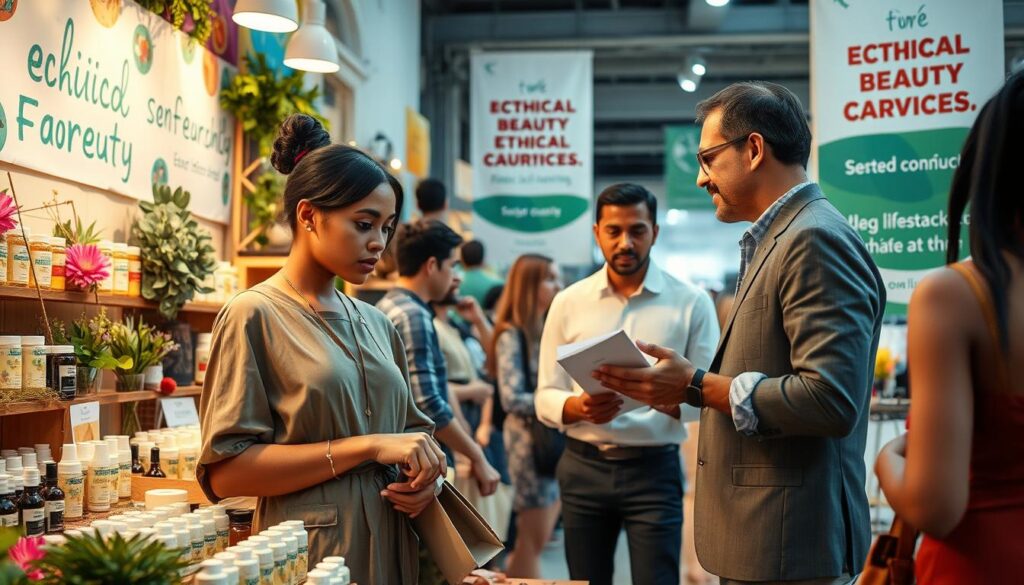
My own journey wasn’t easy. I had to learn about ingredients and find out that some “clean” brands aren’t as clean as they seem. I started by doing research on each product I bought.
Science shows that big changes don’t usually last. Our brains like small, consistent steps. This is how we make lasting changes, one small step at a time.
To start making ethical choices, learn to read labels carefully. Look for certifications like Leaping Bunny or Fair Trade. Also, watch out for greenwashing, when products claim to be natural but aren’t.
Is your beauty routine fast and furious or slow and mindful? Fast routines are about quick buys and instant satisfaction. Slow routines are about choosing products that match your values. Building ethical habits is like watching slow TV.
Here are some ways to start beauty activism in your daily life:
- The One-for-One Swap: When a product runs out, find a more ethical one. Look for brands that offer refillable packaging or are transparent about their sources.
- Ingredient Interrogation: Choose an ingredient you use often and learn about its impact. Knowing the facts is the first step to making a change.
- Support a Niche Brand: Choose independent, values-driven brands over big corporations. Your money can make a difference.
- Embrace the “Secondhand” for Tools: Buy makeup brushes or hair tools from resale sites. It helps reduce waste and supports sustainable practices.
This journey isn’t about being perfect. It’s about making better choices and connecting with what you buy. Every mindful purchase is a way to stand up against waste and hidden practices.
Your path in beauty activism is made up of small, thoughtful decisions. It’s about finding products that do good and work well. This is how we build lasting habits and movements.
Everyday Actions That Make a Difference
What if changing the world started with changing your mind about what’s in your shower? The journey from advocacy to habit ends right here, in the quiet hum of your morning routine.
Asking a brand on Instagram about its vegan policy is a quiet act of consumer advocacy. Sharing a list of cruelty-free products with a friend is a quiet act of consumer advocacy. Choosing a lipstick from Lush over a conventional brand is a profound, mundane vote. These are the threads that weave systemic change.
Forget the grand manifesto. Real impact looks like reading a label. It’s the butterfly effect of beauty, where a single purchase sends ripples through supply chains. This isn’t slacktivism—it’s smarter.
The data connects your personal ritual to global well-being. Your informed choice, repeated daily, builds the market for ethical brands like The Body Shop and Dr. Bronner’s. Empowerment isn’t a rally cry. It’s the simple, revolutionary idea that in a world of curated perfection, the most beautiful choice you can make is an informed one.