
DIY natural wellness felt especially relevant after two Florida wellness gatherings in October 2026 placed education, product sampling, and whole-person care in the same conversation. On October 17, 2026, Advent Health Day of Wholeness took place from 12:00 PM to 6:00 PM at Circle Park in Sebring, with free health screenings and education listed by the Sebring city calendar. A week earlier, on October 10–11, 2026, the Holistic Health Expo Central Florida was held at the Hilton Orlando/Altamonte Springs, where the event page described product sampling, workshops, and natural wellness education through its expo attendance page. Those events offer a useful prompt for simple beauty recipes, as long as we keep the claims modest and the safety habits clear.
Why DIY Natural Wellness Fit The Florida Events
Wellness fairs can make natural beauty feel social, creative, and approachable. Still, a kitchen mask is not the same as a tested cosmetic formula, and a pleasant self-care ritual should not be framed as treatment for a skin condition. I like to treat these recipes as sensory routines: soft textures, gentle rinsing, short contact time, and ingredient awareness.
The Florida events were not only about beauty. They placed screenings, education, workshops, and product sampling near each other, which is a helpful reminder that skincare sits inside broader personal context. Skin needs can vary with age, allergies, medications, pregnancy, climate, work exposure, and medical history. If you have eczema, acne, rosacea, open skin, a history of allergic reactions, or any medical concern, ask a clinician before trying new skin mixtures.
DIY Natural Wellness As A Practical Beauty Ritual
A practical ritual begins with restraint. Use short ingredient lists, mix fresh, and avoid assuming that “natural” means automatically gentle. Oats, honey, yoghurt, kefir, clay, apple, and dried lavender can all be appealing in beauty recipes, yet each can irritate some skin. That is why patch testing matters: apply a small amount to the inner arm, wait 24 hours, and skip full-face use if redness, itching, burning, or swelling appears.
For readers who enjoy ingredient education, I also like comparing pantry recipes with label literacy. The same curiosity that helps you choose fresh oats or unsweetened yoghurt can help you read cosmetic labels, save batch notes, and think about contamination risk. For a related discussion, see this piece on DIY natural beauty label habits.
Four Event-Inspired Face Recipes To Mix Fresh
These recipes are inspired by themes often seen at wellness gatherings: simplicity, rest, and hands-on learning. They are not intended to diagnose, treat, cure, or prevent any condition. Use them on intact skin only, avoid the eye area, and rinse earlier than suggested if the mixture feels uncomfortable.
Honey, Oat, And Yoghurt Softening Mask
Mix about 2 tablespoons finely ground oats with about 1 tablespoon raw honey and about 1 tablespoon plain whole-milk yoghurt. Apply a thin layer to clean skin for 10 to 15 minutes, then rinse with lukewarm water. The texture is creamy and cushioning, which makes it a good teaching recipe for people who are new to fresh masks. Choose plain, unsweetened yoghurt, and avoid flavored versions because added fragrance-like flavor compounds and sugars add no real cosmetic value.
For DIY natural wellness routines, this mask shows why ingredient form matters. Finely ground oats feel less scratchy than coarse flakes. A thin layer is easier to remove than a thick paste. Fresh yoghurt introduces moisture and acidity, so do not save leftovers for another day unless you have a strict refrigeration plan and a very short storage window. My preference: mix only what you will use, then discard the rest.
Clay And Oat Dry-Mix Mask
For normal to oily-feeling skin, combine 2 tablespoons kaolin or another gentle clay with 2 tablespoons finely ground oats and store the blend dry in a clean, closed container. At use time, place about 1 teaspoon of the dry blend in a small bowl and add about 1/2 teaspoon water, tea, or rose water to form a paste. Apply for up to 20 minutes or until dry, then soften with damp fingertips before rinsing.
Dry storage is the smarter part of this recipe. Once water is added, the mixture becomes more vulnerable to microbial growth, so the wet portion should be single-use. If clay leaves your skin tight or uncomfortable, shorten the wear time or choose a different recipe. A mask does not need to dry to a cracking shell to feel like self-care.
Ingredient Selection With A Beauty-Guru Eye
As Sofia, my first rule is this: buy the plainest version of each ingredient, then let texture and freshness do the work. Choose oats that can be ground into a soft powder. Pick honey with a texture you can spread without tugging. Use plain yoghurt or kefir, not sweetened or flavored types. Select kaolin if you want a gentler clay option, and be cautious with stronger clays if your skin is dry or reactive.
If you enjoy comparing beauty education across related sites, Petra Class is part of the same network and may be useful for readers who like adjacent learning resources. Keep the same cautious filter wherever you read: prefer clear sourcing, modest language, and advice that does not replace professional care.
Apple, Honey, And Oat Polishing Mask
Puree 1 organic apple, then blend it with 1 tablespoon raw honey and 1.5 to 2 tablespoons ground oats. Apply to clean skin for about 15 minutes, then rinse well. Apple brings a naturally acidic fruit element, while oats add a soft physical texture. This is not a scrub for aggressive rubbing. Let the mixture sit, then remove with gentle circular motions only if your skin tolerates that touch.
Because fresh apple browns and breaks down quickly, this recipe should be made right before use. Do not jar it as a gift, do not keep it on a bathroom shelf, and do not use it on irritated or broken skin. Fresh recipes are charming, but they lack the preservation systems that make commercial products more stable.
Clay, Oatmeal, Honey, Kefir, And Lavender Mask
For a more aromatic version, combine 1 tablespoon clay, 1 tablespoon ground oatmeal, and 1/2 teaspoon dried lavender blossoms as a dry base. At use time, add about 1/2 to 1 tablespoon raw honey and 1 to 2 tablespoons kefir to create a paste. Apply for about 10 minutes, then rinse carefully so lavender particles do not scratch the skin.
This recipe is pretty in the bowl, but lavender deserves caution. Botanicals can trigger sensitivities, and dried particles can be too textured for some faces. If you are prone to irritation, skip the lavender and keep the formula simpler. Fragrance-free is often the wiser choice for reactive skin, even in homemade recipes.
Fresh-Mix Safety And Storage Boundaries
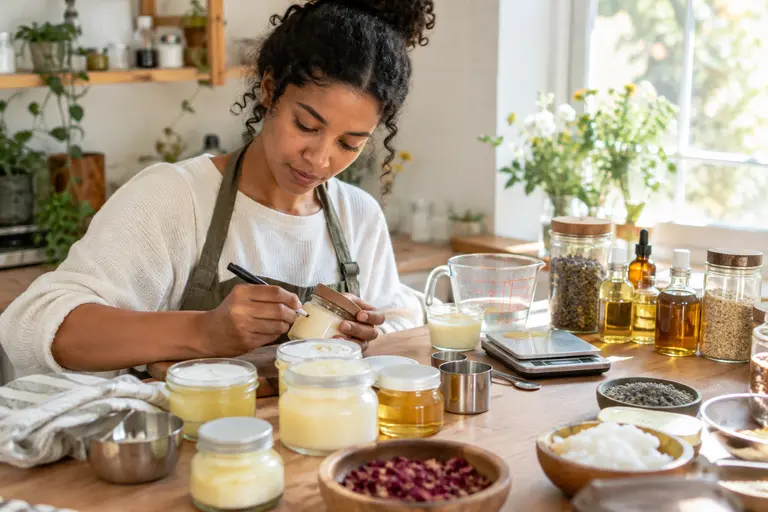
The biggest difference between a fresh mask and a manufactured cosmetic is preservation. Water, yoghurt, kefir, fruit puree, and handling can introduce conditions that make storage risky. A cautious home routine should treat wet mixtures as immediate-use products. Clean your bowl and spoon before mixing, wash your hands, and do not dip used fingers back into a stored jar.
- Patch-test every new mixture on the inner arm and wait 24 hours before facial use.
- Mix small amounts, use immediately, and discard leftovers from wet recipes.
- Avoid the eye area, lips, broken skin, and freshly shaved or waxed skin.
- Stop use and rinse right away if stinging, burning, swelling, or strong itching occurs.
- Ask a clinician first if you are pregnant, immunocompromised, using prescription skin products, or managing a skin condition.
Contact time matters too. Longer is not better. Ten to 20 minutes is enough for these recipe styles, based on the preparation notes above, and many people will prefer the shorter end. If a mask dries uncomfortably, remove it rather than trying to “push through.” Beauty rituals should not require discomfort to feel valid.
DIY Natural Wellness Safety Questions
DIY natural wellness can be a thoughtful way to practice ingredient awareness after community events such as the Florida wellness gatherings, but personal skin decisions deserve context. Before trying these recipes, consider what your skin is already exposed to: retinoids, exfoliating acids, acne products, prescription creams, workplace irritants, sun exposure, or recent procedures. Layering a fresh acidic or textured mask over an active routine may be too much for some people.
For personal health decisions, consult a qualified clinician. Useful questions include: Is my skin barrier ready for a fresh mask? Should I avoid lactic-acid ingredients such as yoghurt or kefir with my current routine? Are honey, oats, clay, apple, or lavender reasonable for my allergy history? If I have a rash, persistent acne, rosacea-like flushing, or open areas, should I skip home recipes until I am assessed? Those answers will make your beauty ritual safer, calmer, and better matched to your real needs.