My skincare journey began with a simple change: I stopped eating certain foods. But my skin broke out in a big way. It taught me that the products I used were like margarine—appealing but harmful.
We’re caught in a skincare paradox. We seek quick fixes but ignore the harm of synthetic ingredients. If it’s bad for you to eat, is it okay to put it on your skin?
Research shows a stark difference. Products with chemicals can lead to serious health issues. But natural ingredients work with our bodies, not against them. It’s not just about avoiding redness.
Seeing non-toxic skincare as a luxury is wrong. It’s essential for anyone with a body. True skin health comes from what you don’t apply. Let’s debunk myths and create a better skincare plan.
Why Non-Toxic Matters
Think of your skincare as a daily talk with your body’s biggest organ. “Non-toxic” is more than just a label. It’s about using products that are safe for your skin and the planet.
Biocompatibility means your skin can understand the ingredients. It’s like speaking its own language. This is key for sensitive skin, which may react to unknown substances.
Ecological intelligence looks at where ingredients come from and how they affect the environment. It’s about choosing products that are good for the planet. This helps reduce harm to our ecosystem.
Using non-toxic products can greatly improve your skin. It reduces inflammation and exposure to harmful chemicals. It also helps protect the environment. It’s about treating your skin as a living, breathing part of you, not just a surface to cover.
| Aspect | Conventional Approach | Non-Toxic Approach |
|---|---|---|
| Core Philosophy | Cosmetic correction; mask symptoms. | Biological support; build resilience. |
| Ingredient Relationship | Skin is a barrier; ingredients sit on top or force change. | Skin is an organ; ingredients work in harmony with biology. |
| Environmental Impact | High; synthetic chemicals, non-biodegradable, resource-intensive. | Low; sustainably sourced, biodegradable, low-impact production. |
| Long-term Goal | Immediate visual result, often with hidden long-term cost. | Sustained skin health and systemic wellness. |
This shift is the core of a healthy beauty routine. It’s not just about avoiding rashes. It’s about building strong skin for the future.
So, why does non-toxic matter? It matters because your skincare choices are a form of environmental activism. It’s a way to care for yourself and the planet at the same time. The outcome is not just a glow, but integrity.
The “Dirty Dozen” to Avoid
Let’s uncover the beauty industry’s hidden list. Ingredients that are more ‘crime scene’ than ‘clean scene.’ Turning a skincare label into a readable map is your first step. This is your guide to the usual suspects.
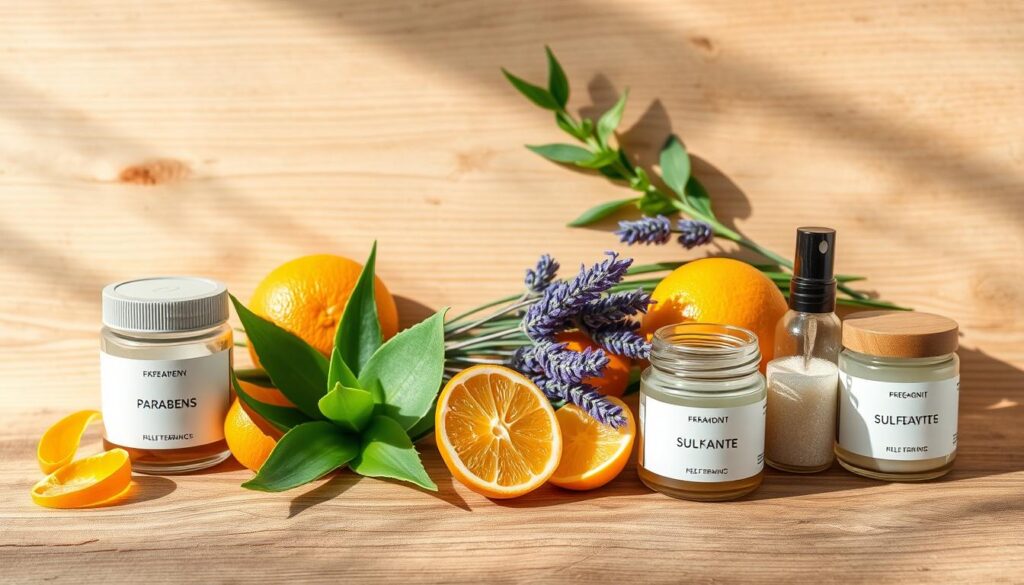
Here’s our curated “Dirty Dozen.” Remember them. Your bathroom cabinet will thank you.
- Parabens: These preservatives cling to your products like unwanted guests. They prevent mold but may mimic estrogen, causing hormonal disruptions. Think of them as the uninvited plus-one in your non-toxic skincare routine.
- Silicones (Dimethicone): That silky-smooth feel? It’s often a plastic polymer creating a superficial seal over your skin. It’s like wrapping your face in plastic wrap—great for a temporary illusion, terrible for long-term breathability.
- Mineral Oils (Paraffinum Liquidum): A petroleum derivative. Yes, you’re potentially moisturizing with a refined byproduct of the same stuff that fuels your car. It sits on the skin, often clogging pores, while giving zero nutritional value.
- Synthetic Fragrances/Phthalates: The term “fragrance” is the black box of the ingredient list. It can hide dozens of chemicals, including phthalates, which are plasticizers linked to endocrine issues. That “French meadow” scent? It’s more likely from a lab than a field.
- Petroleum & Petrolatum: Crude oil’s close cousins. They create a barrier that can trap dirt and bacteria along with moisture. Using them is like trying to clean your floor with a layer of wax.
- GMOs (in topical products): Genetically modified organisms, often in the form of oils like soybean or corn. The long-term dermal effects are a gray area, and their cultivation raises environmental red flags.
- Formaldehyde-Releasing Agents: Ingredients like DMDM hydantoin or quaternium-15 that slowly release formaldehyde, a known carcinogen, to preserve shelf life. It’s like having a tiny, toxic time-release capsule in your cream.
- Sulfates (SLS/SLES): The aggressive foaming agents in cleansers and shampoos. They strip natural oils, often leading to dryness and irritation. That satisfying lather might be a sign your skin’s barrier is under attack.
- Triclosan: An antibacterial agent common in cleansers. It’s overkill for daily use and may contribute to antibiotic resistance. Your face isn’t a surgical instrument; it doesn’t need that level of sterilization.
- Oxybenzone: A chemical sunscreen filter absorbed into the bloodstream. It’s a common allergen and a possible endocrine disruptor. Protecting your skin shouldn’t come with a side of internal chemistry experiment.
- Artificial Colors (FD&C, D&C): Those pretty pinks and blues? They’re derived from coal tar and are purely cosmetic, adding zero benefit while posing irritation and toxicity risks. Your skincare shouldn’t need food coloring.
- “Greenwashing” Itself: This isn’t an ingredient but the ultimate sleight of hand. It’s the practice of using buzzwords like “natural” or “green” on packaging filled with the offenders above. It’s the wolf in sheep’s moisturizer.
With this list, you’re no longer a passive consumer. You’re an informed investigator. Decoding a label becomes a act of defiance against vague marketing and questionable chemistry. True non-toxic skincare starts with knowing what you’re really putting on your skin.
Essential Steps (Cleanser, Moisturizer, SPF)
Building a skincare fortress doesn’t need an army of bottles. It’s about three key steps. Forget the twelve-step K-beauty hype. A healthy beauty routine is simple and smart.
The Cleanser: Your Master Key, Not a Crowbar. For years, we thought squeaky-clean skin was best. But it’s a myth. Harsh soaps and sulfates harm your skin’s pH and strip its oils.
Instead, use gentle, oil-based cleansers. They dissolve makeup and sunscreen without harming your skin. This approach is backed by herbalists and dermatologists. Start with a calming cleanse, not a harsh chemical.
The Moisturizer: Intelligence Over Grease. Many routines go wrong here. Heavy creams aren’t the best. They should attract and seal in water, not just sit on top.
Lighter oils like squalane are better. They’re non-comedogenic and mimic your skin’s natural oils. This keeps your skin hydrated without clogging pores. A healthy beauty routine uses moisturizer wisely, not as a heavy blanket.
SPF: The Non-Negotiable Guardian. Sun protection is key. It prevents wrinkles and cellular damage. But not all sunscreens are the same.
Mineral sunscreens, like those with zinc oxide, reflect UV rays. Chemical filters absorb UV rays and can irritate. Zinc oxide is the best choice for a non-toxic barrier. Products like Plumscreen offer both mineral SPF and skincare benefits. Protect your skin every day, rain or shine.
These three steps form a complete system. They cleanse, hydrate, and protect without harm. This minimalist approach is at the heart of every healthy beauty routine. Everything else is extra.
Effective Cruelty-Free Product Picks
Forget the endless scroll through reviews. This is your edited shortlist, vetted by someone who’s already wasted money on the duds. It’s a wise selection, blending practical finds with clinically-backed heroes. The focus? Cruelty-free ethics and radical transparency.
Let’s start with the gateway drugs. The budget-friendly tier proves you don’t need a trust fund for good non-toxic skincare.
Acure’s Seriously Soothing Cleanser is a cult-favorite gel that removes the day without stripping your skin. It’s the smart choice over pricey foams. Then there’s Cocokind’s Chia Facial Oil. This little bottle is a masterclass in simplicity. Chia seed oil delivers omega-3s to your face. It’s affordable, effective, and doesn’t play games.
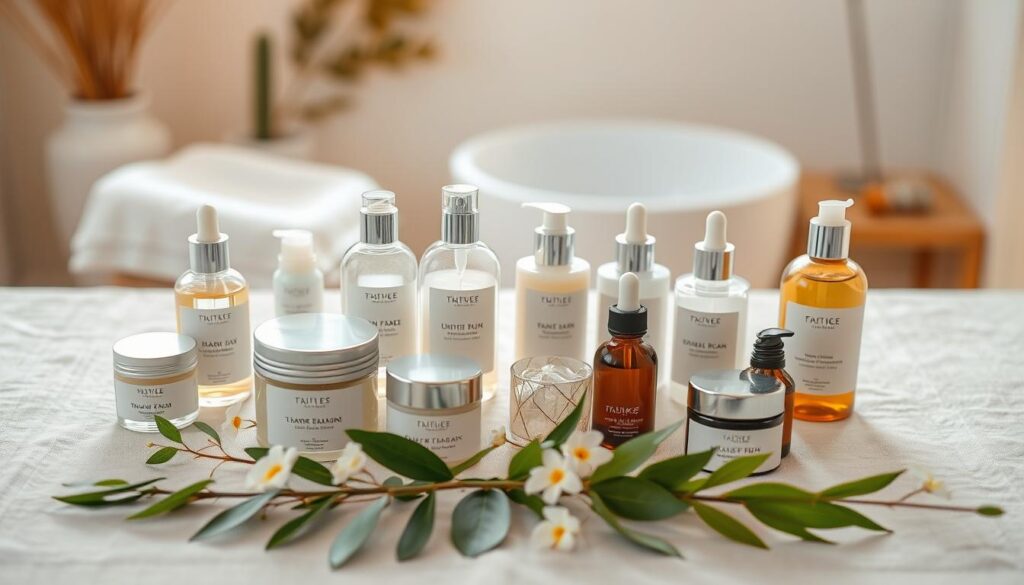
Ready to invest a bit more? The mid-range is where science meets botanicals. One Love Organics makes a Vitamin D Serum that feels like liquid gold for your complexion. Luminance offers serums so pure, you can almost taste the integrity. These brands offer serious efficacy without the luxury markup.
Now, for the commitment. The high-end tier is for when you want clinical results wrapped in ethical packaging. Marie Veronique isn’t just a brand; it’s a probiotic mist for your soul. Their formulations are backed by real science. True Botanicals creates radiance oils that make you look like you’ve had eight hours of sleep and a week at a spa.
And we must bow to the antioxidant juggernaut from our third source: Le Prunier’s Plum Beauty Oil. This isn’t just another oil. It’s a single-ingredient powerhouse from heirloom plums. Its companion, Plumscreen, is a mineral sunscreen that feels like a second skin. This is clean beauty with a PhD.
Don’t overlook the smartest trick in the book: sampling. Services like The Detox Market are the intellectual’s way to test-drive luxury. Why buy the whole bottle when you can audition the star first?
Here’s a quick breakdown to help you navigate the landscape:
| Tier | Brand Examples | Hero Product | Key Benefit | Price Point |
|---|---|---|---|---|
| Budget-Friendly | Acure, Cocokind | Cocokind Chia Facial Oil | Affordable hydration & barrier support | $10 – $25 |
| Mid-Range Investment | Luminance, One Love Organics | One Love Organics Vitamin D Serum | Targeted treatment with clean actives | $30 – $80 |
| Luxury Splurge | OSEA, Marie Veronique, True Botanicals | Le Prunier Plum Beauty Oil | Clinical-grade, single-ingredient potency | $90+ |
The common thread? Every brand here has sworn off animal testing. Their ingredient lists read like a manifesto for transparency. Your non-toxic skincare routine shouldn’t be a compromise. It should be a curation of intelligence, efficacy, and conscience. Start where you are, but start with intention.
Common Myths Debunked
Creating a healthy beauty routine means questioning everything. The skincare world is full of myths disguised as facts. Let’s look at these myths with a critical eye and solid evidence.
The most common myths sound like this:
- “Putting oil on oily skin? Are you mad?“
- “Natural products are just feel-good fluff that doesn’t work.”
- “Clean, non-toxic skincare is a luxury I can’t afford.”
- “If the bottle has a leaf on it, it must be good for me.”
Do these sound familiar? Let’s debunk them.
Myth 1: Oil Cleansers Clog Pores and Cause Breakouts. This myth is like fighting fire with fire and missing the point. The science is simple: like dissolves like. Your skin’s oils and impurities are oils. A good oil cleanser works like a diplomat, removing dirt without stripping your skin.
Myth 2: Natural Ingredients Aren’t as Effective. Polyphenols in plants like plum oil can outperform argan oil in antioxidants. The idea that “natural” means “weak” is a marketing trick. Nature’s chemistry is powerful, and a healthy beauty routine can use it without synthetic additives.
Myth 3: Non-Toxic Skincare is Too Expensive. This is about value, not sticker shock. A good serum can last months, giving more value than cheap products. Using multi-tasking products and DIY ingredients like raw honey and aloe vera can also save money.
Myth 4: “Green” Packaging Means a Clean Formula. This is greenwashing. It’s when companies use fake eco-friendly labels on chemical products. Always check the ingredients list, not the marketing. If a “natural” brand has chemicals like phenoxyethanol, it’s not what it seems.
For a radiant healthy beauty routine, make informed choices, not follow myths. Be wise, not gullible. Your skin will appreciate it.
Sample Routines
We’ve explored the world of skincare ingredients and debunked myths. Now, let’s create a skincare plan. Think of it as a wardrobe with daily basics and special items.
Your “Lean & Mean” daily look includes cleanse, moisturize, and SPF in the morning. Cleanse and moisturize again at night. Start with Glossier Milky Jelly, a good moisturizer, and you’re set. This is the base of healthy beauty routines.
For a fancier look, try the “Elevated & Indulgent” weekly routine. Add serums like The Ordinary Buffet, exfoliation, and a mask like The Body Shop’s Himalayan Charcoal. It’s your weekend skincare.
Our cruelty-free picks fit perfectly into these routines. Make sure to check products with tools like the Leaping Bunny app. Guides on cruelty-free skincare and haircare routines help you shop wisely.
Your healthy beauty routines should reflect your unique style. It’s not hard. It’s just about smarter skincare.