
Community mental health is often discussed as if it were only a clinical access issue, but BEAM’s work points to a wider question: how do people find support that respects identity, culture, family, work, and lived experience? The Black Emotional and Mental Health Collective, known as BEAM, describes itself as a national 501(c)(3) organization dedicated to the healing, wellness, and liberation of Black and marginalized communities on its BEAM about page. That framing does not replace therapy, crisis care, or medical treatment. It does offer a useful educational lens for wellness practitioners, beauty professionals, community organizers, and readers who want support spaces to be more thoughtful and less extractive.
As someone who often looks at wellness through the practical lens of lifestyle choices and ingredient knowledge, I find BEAM’s model useful because it asks people to examine what is actually inside a program. In skincare, a front-label claim is not enough; the ingredient list, use instructions, and skin tolerance matter. In mental well-being spaces, the same kind of careful reading can apply: who is centered, what training exists, what the boundaries are, and when professional care is needed.
What Community Mental Health Means In BEAM’s Model
Community Mental Health And Cultural Context
BEAM’s approach to community mental health is grounded in healing justice, a framework the organization links to work developed by Cara Page and the Kindred Healing Justice Collective. Based on the available research, the framework is described as a way to respond more fully to generational trauma and violence while considering race, gender, class, sexuality, and other lived realities. For wellness practices, that matters because “access” is not only about whether a service exists. It is also about whether people can enter that space without having to set aside key parts of who they are.
This has implications beyond mental health organizations. A yoga studio, skincare clinic, salon, nutrition workshop, or workplace wellness event may not be offering clinical care, but each still makes choices about language, cost, privacy, representation, and referral pathways. A community-centered model encourages providers to ask whether their environment feels usable for people with different histories and support needs, rather than assuming one format works for everyone.
Healing Justice Is Not A Product Claim
A cautious reading is necessary. Healing justice language can be meaningful, but it should not be turned into a marketing promise. No circle, class, product, or lifestyle routine should be presented as a substitute for diagnosis, therapy, medication management, emergency support, or other clinician-directed care. The educational value of BEAM’s model is in its attention to systems, identity, and peer support. Its use in general wellness should stay within safe boundaries.
Training, Peer Support, And Practical Access
What The Reported Programs Include
According to Our Weekly, BEAM has trained more than 15,000 people in community-based mental health care, including crisis response and peer support, and has distributed more than $600,000 to Black-led grassroots organizations plus $200,000 in direct financial support to families facing mental health challenges through reported efforts reported by Our Weekly. The same reporting describes Heart Space healing circles in cities including Los Angeles and Atlanta, a Black Masculinity (Re)imagined program for Black men and masculine people, and training for workplace leaders through Healing Justice in HR.
Those facts suggest several practical themes: training can extend support beyond formal clinic walls; peer support may help people identify needs earlier; and financial stress can be part of emotional distress. Still, the research provided does not establish that every participant experiences the same outcome, nor does it show that community support replaces individualized care. That distinction is central for any responsible wellness discussion.
Why Peer Support Needs Boundaries
Peer support can be valuable because people may feel safer speaking with someone who shares cultural understanding or lived experience. Yet peers are not automatically clinicians. A careful program should be clear about scope: emotional support, reflection, resource sharing, and community connection are different from diagnosis or treatment. For readers interested in these distinctions, this related discussion of trauma-informed care looks at community wellness access with a similar cautious frame.
Wellness Practice Lessons Beyond The Program
Ingredient Transparency As A Useful Analogy
Community mental health work can teach beauty and wellness spaces to be more transparent. In skincare, I advise people to look beyond words like natural, clean, calming, or restorative. Those terms are not enough without ingredient details, patch testing, and realistic expectations. In wellness programming, comparable questions include: Who designed the session? What training do facilitators have? Are participants told what the space can and cannot provide? Is there a clear referral plan if someone needs clinical support?
This is where inclusive practice becomes concrete. A brand or practitioner does not need to claim expertise in everything. In fact, safer wellness spaces often start by naming limits. A facial treatment may support relaxation for some people, but it should not be described as mental health treatment. A group breathwork session may feel grounding for some participants, but it may not be appropriate for everyone. Needs can vary based on trauma history, pregnancy, medications, disability, current symptoms, and medical background.
Access Includes Cost, Culture, And Trust
BEAM’s reported focus on grassroots funding, healing circles, masculinity programming, and workplace policy points to a broad definition of access. Cost matters, but so do social norms and trust. For example, a wellness practice that wants to serve Black and marginalized communities may need to examine scheduling, pricing, intake forms, privacy expectations, staff training, and whether its images and language feel respectful rather than performative.
Readers comparing community wellness coverage across regions may also find related reporting networks such as Daily California useful for seeing how local issues can shape public conversations. For beauty and health settings, a parallel resource on inclusive wellness discusses why representation and access should be treated as practice standards, not decorative language.
Boundaries For Safe Wellness Conversations
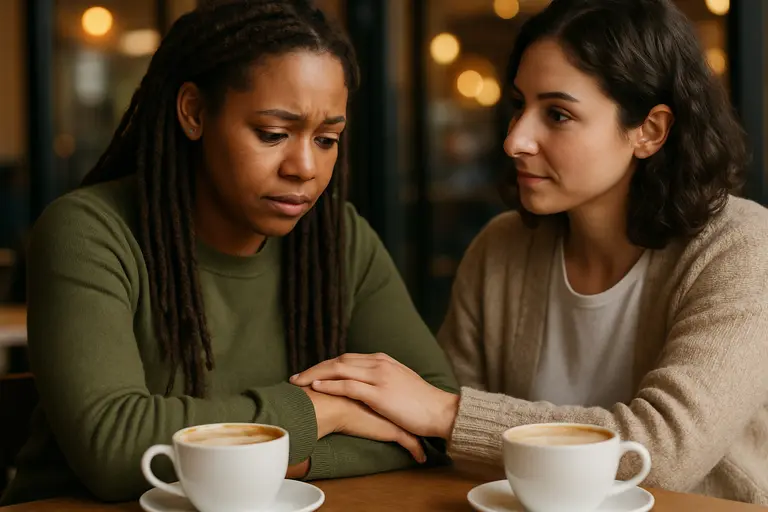
What Wellness Spaces Can Say Carefully
Wellness practitioners can speak responsibly about stress awareness, community care, rest routines, social support, and referral options. They can create calmer environments, use respectful intake questions, and avoid shaming language. They can also explain that some people may benefit from speaking with a licensed mental health professional, primary care clinician, or crisis service depending on their situation.
What they should avoid is just as clear. A skincare product, meditation class, nutrition plan, supplement, or community circle should not be presented as a cure or guaranteed answer for anxiety, depression, trauma, sleep difficulty, or family stress. The research notes shared for this topic include reported program features and organizational goals, but they do not support sweeping claims for unrelated wellness services.
A Simple Review Checklist
Before joining or recommending a wellness-centered support space, consider a few grounded questions:
- Does the program explain who facilitates it and what training they have?
- Does it clearly separate peer support from clinical care?
- Does it offer referrals or guidance for urgent mental health needs?
- Does it respect race, gender, class, sexuality, disability, and family context?
- Does it avoid promises of guaranteed emotional or physical results?
These questions do not replace professional screening. They simply help readers assess whether a space is being honest about its purpose.
Community Mental Health Questions For A Clinician
How To Personalize The Decision
Community mental health resources may support connection and reflection, but personal decisions should be discussed with a qualified clinician, especially if symptoms are intense, ongoing, worsening, or affecting sleep, work, caregiving, safety, or daily functioning. A clinician can help clarify whether peer support, therapy, medication, crisis services, family support, workplace accommodations, or another option may fit a person’s needs.
Helpful questions to ask include: What type of support is appropriate for my current situation? Are group spaces suitable for me right now? How should I respond if a wellness session brings up difficult emotions? Are there medications, diagnoses, pregnancy-related factors, or health conditions that should shape my choices? BEAM’s model offers a thoughtful example of community-centered care, but the safest wellness practice is one that pairs cultural awareness with clear limits and clinician-informed decisions.