Beauty shoppers are about to see a sharper line between environmental storytelling and environmental proof. From September 27, 2026, new EU beauty greenwashing rules will make vague claims such as “eco-friendly” and “green” much harder to use unless the environmental performance behind them can be demonstrated.
That shift matters because beauty packaging often combines ingredient language, nature imagery, sustainability badges, and ethical positioning in the same small space. A product can disclose ingredients clearly and still make an environmental claim that needs separate support, which is why understanding natural beauty claims no longer answers the whole transparency question.
Beauty Greenwashing Rules Change the Standard on September 27
Directive (EU) 2024/825, often called the Empowering Consumers for the Green Transition Directive, applies from September 27, 2026. It amends EU consumer-protection rules rather than cosmetic formulation law, and its new anti-greenwashing provisions target how products and businesses are presented to consumers.
That distinction is central. The rules do not decide whether a moisturizer, shampoo, lipstick, or body oil contains the “right” ingredients. They regulate business-to-consumer marketing practices, including environmental claims, sustainability labels, and some claims about future environmental performance.
For beauty brands, the front of the package, product page, campaign creative, and even certain brand or product names can matter. “Green” is no longer just a branding mood when the overall presentation leads consumers to expect an environmental benefit.
Ingredient Transparency and Environmental Transparency Are Different
Ingredient transparency asks what is in a formula and how clearly its composition is disclosed. Environmental-claim transparency asks something else: what exactly makes the product, package, process, or company environmentally preferable?
A face cream may publish a full ingredient list and still use an unsupported “eco-friendly” claim. A shampoo may use certified organic ingredients while making a separate claim about recyclable packaging that needs its own factual basis.
That is why clear ingredients are not enough to settle an environmental marketing question. Shoppers should separate formula facts from lifecycle, packaging, energy, sourcing, emissions, and waste claims instead of treating them as one package of proof.
The same caution works in reverse. A specific environmental claim does not establish that a cosmetic is safer, better tolerated, or suitable for every person.
“Eco-Friendly” and “Green” Need More Than Good Intentions
The directive identifies generic environmental claims such as “environmentally friendly,” “eco-friendly,” “green,” “ecological,” “climate friendly,” “biodegradable,” and similar broad wording. These claims are prohibited when a trader cannot demonstrate recognized excellent environmental performance relevant to the claim.
Specificity changes the analysis. A broad phrase such as “climate-friendly packaging” can be treated as generic when it is not clearly explained. A precise statement describing the environmental feature may fall outside that particular prohibition, although it still must be truthful and supported.

For shoppers, the practical shift is from mood words to claim-level evidence.
| Beauty marketing element | What shoppers should ask |
|---|---|
| “Eco-friendly” or “green” | What recognized environmental performance supports the claim? |
| “Sustainable” | What environmental or social characteristics does the word refer to? |
| Recycled-packaging claim | Does it describe the package, the product, or both? |
| Climate-neutral language | Is it based on product lifecycle impact or external offsetting? |
| Environmental badge or seal | Is it based on a qualifying certification scheme or public authority? |
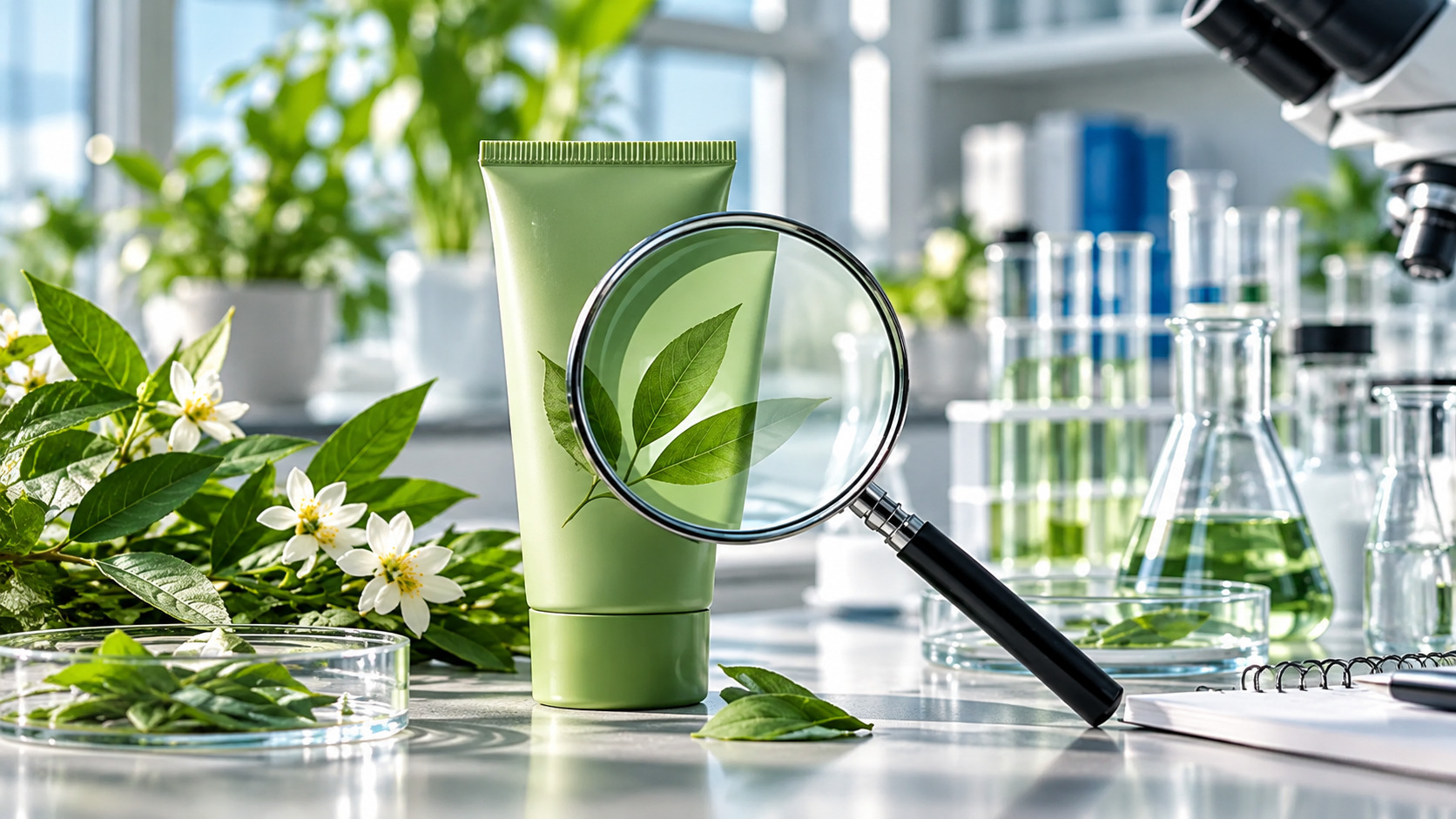
A product does not become noncompliant merely because its design uses green tones or botanical imagery. Context matters. But imagery combined with sustainability wording, logos, or trust-mark-style graphics can contribute to the environmental message consumers receive.
Sustainability Labels Face Their Own Credibility Test
The rules also target sustainability labels. Voluntary labels generally need to be based on a qualifying certification scheme or established by a public authority. That puts pressure on self-created badges that resemble independent verification but are really brand-controlled marketing.
This matters in beauty, where small icons can suggest “planet safe,” “responsibly made,” or similar ideas without explaining who set the standard or checks compliance. The European Commission’s September implementation guidance also warns that leaves, water drops, and other nature-related symbols can become part of the overall environmental impression.
“Vegan” or “vegetarian” wording is more context-dependent. The Commission says these labels may fall within the sustainability-label framework when they imply environmental or social benefits, including animal-welfare associations.
Old Stock Does Not Receive an Automatic Pass
September 27 is not limited to newly manufactured beauty products. The rules apply to business-to-consumer environmental claims and sustainability labels on existing products as well, including packaging already produced, ordered, distributed, or placed on shelves before the application date.
That does not mean every older package must instantly be destroyed. The Commission describes options such as correcting claims with stickers or adding supplementary information near affected products. National authorities may also consider proportionality and reasonable compliance efforts.
For shoppers, this means shelf changes may be uneven at first. Some brands may redesign packaging, others may qualify claims more precisely, and retailers may use temporary corrections while older stock moves through distribution.

The Next Pressure Point Is Specificity, Not More Green Language
The most revealing change to watch is whether beauty marketing becomes more precise. Claims such as “made with 50% recycled plastic packaging” or a clearly defined production-energy statement tell consumers what is being measured. A floating “better for the planet” message asks consumers to supply the meaning themselves.
Brands also face pressure to keep claims aligned across packaging, product pages, social campaigns, and retailer listings. A careful label can still be undermined by a broader unsupported claim elsewhere in the marketing.
For shoppers, the strongest signal will be specificity that can be checked: what part of the product is covered, what standard applies, who verifies it, and whether the claim describes the formula, packaging, process, or company.
Beauty Claims Are Moving From Mood to Proof
The new beauty greenwashing rules do not turn every green bottle, leaf illustration, or sustainability message into a violation. They do raise the cost of vague environmental positioning by demanding clearer boundaries between broad impressions and supportable claims.
That is a useful shift for beauty consumers. Ingredient transparency can tell you what is in a product, while environmental-claim transparency tells you what a brand can substantiate about its wider impact. From September 27, the strongest beauty marketing will need to make those two forms of transparency easier to distinguish rather than blending them together.
Frequently asked questions
Are “eco-friendly” beauty claims banned in the EU?
Not automatically in every circumstance. Generic environmental claims such as “eco-friendly” require recognized excellent environmental performance relevant to the claim. More specific environmental statements still need to be accurate and adequately supported.
Do the new rules change cosmetic ingredient lists?
No. The September 2026 changes primarily address consumer marketing practices rather than cosmetic composition. Ingredient disclosure and environmental claims are separate transparency questions governed by different requirements.
Can beauty brands still use sustainability seals?
Yes, but voluntary sustainability labels generally need to come from a qualifying certification scheme or be established by a public authority. Brand-created badges that resemble independent verification face greater scrutiny.