
DIY hair care is appealing because it gives people more control over ingredients, animal-testing values, fragrance choices, and waste. After newer PFAS rules and reports, that control also comes with a practical responsibility: recipe creators need to understand what is known, what remains uncertain, and where homemade formulas still require caution.
PFAS are not a single cosmetic ingredient. They are a broad chemical group that may appear under technical names, and they have been used in some cosmetics for effects such as conditioning, shine, water resistance, or texture. The FDA’s December 29, 2025 report under MoCRA described these uses while also pointing to major gaps in exposure, absorption, toxicity, and real-world use data for cosmetics, according to the FDA PFAS cosmetics report. For home formulators, the cautious response is not panic; it is better sourcing, clearer notes, and less reliance on mystery blends.
Why DIY Hair Care Needs PFAS Awareness
DIY Hair Care Ingredient Lists Are Not Always Simple
Many homemade hair recipes start with familiar materials: oils, butters, clays, aloe preparations, plant hydrosols, waxes, starches, or gentle surfactants. Those ingredients can look straightforward, but the supply chain can become more technical when a recipe uses pre-made conditioner bases, silicone blends, styling polymers, treated powders, emulsifiers, or shine-enhancing additives. A supplier may list a trade name while the underlying composition requires a specification sheet or safety data sheet to understand more clearly.
PFAS-related names listed in the research include PTFE, perfluorononyl dimethicone, perfluorohexylethyl triethoxysilane, and trifluoropropyldimethyl/trimethylsiloxysilicate. These are not the kinds of names most people expect in a kitchen-style recipe, yet they may appear in cosmetic supply catalogs or in finished products that DIY creators use as bases. A practical first step is to avoid raw materials where the full ingredient identity is unclear, especially if the product promises unusually strong water resistance, slip, shine, or long-wear performance without explaining the chemistry.
Regulation Does Not Remove Every Question
Regulation can improve accountability, but it does not automatically answer every consumer question. The research notes that FDA cosmetic product listing requirements under MoCRA require ingredient listing, yet they do not require manufacturers to report PFAS concentration in finished products. That matters because concentration data may remain proprietary, and ingredient names alone may not explain exposure level, frequency of use, or absorption.
France took a more restrictive approach through Law No. 2025-188, passed on February 27, 2025. From January 1, 2026, France prohibited the manufacture, import, export, or marketing of cosmetics, ski waxes, and textiles containing PFAS above specified thresholds, including targeted PFAS at 25 ppb or higher, sum of targeted PFAS at 250 ppb or higher, and PFAS including polymers at 50 ppm or higher, as described in the French PFAS notification. For anyone selling or gifting formulas across borders, location matters.
What The New PFAS Rules Mean For Recipes
Substitution Is More Than A Swap
For DIY hair care creators, the safer-sounding replacement is not always a one-for-one substitute. The research notes that PFAS alternatives are widely available for many cosmetic functions, including conditioning, emulsification, water resistance, and stabilizing. It also notes that replacement often requires full reformulation rather than dropping in a single alternative. That is especially relevant for hair products, where texture, preservation, pH, rinse-off behavior, and scalp tolerance can change when one ingredient changes.
A homemade smoothing balm, for example, may rely on oils and waxes for slip. A conditioner may rely on emulsifiers, fatty alcohols, and cationic conditioning ingredients. A styling cream may depend on polymers for hold. Choosing a PFAS-free direction can be reasonable, but the finished formula still needs to be stable, labeled accurately, and used with realistic expectations. Natural ingredients may support cosmetic feel, but they do not make a formula automatically safer or suitable for every scalp.
Functions To Review Before Reformulating
Recipe creators can begin by asking what each ingredient is supposed to do. This keeps the conversation focused on function rather than marketing labels. A “shine” ingredient, for instance, may be a plant oil, a silicone, a polymer, or a treated powder. A “water-resistant” claim may involve chemistry that deserves closer scrutiny. A “conditioning” base may include several components hidden under a supplier blend.
| Recipe Function | Cautious Review Point | Lower-Complexity Direction |
|---|---|---|
| Shine | Check for fluorinated silicone or polymer names | Use clearly identified plant oils in modest amounts |
| Slip | Request full INCI details for blends | Choose transparent conditioner-base suppliers |
| Hold | Review styling polymers and treated powders | Test simple gels or non-fluorinated film formers |
| Water resistance | Treat strong water-repellent claims as a sourcing flag | Avoid making performance claims without testing |
This table is not a safety rating. It is a screening tool. A full safety assessment depends on the exact ingredient, grade, concentration, preservation system, use pattern, and user needs.
Ingredient Transparency For Small-Batch Makers
Ask Suppliers Better Questions
Small-batch formulators often have less technical support than large cosmetic companies, so supplier communication becomes part of the safety process. Before buying a specialty ingredient, ask for the INCI name, full component disclosure where available, a safety data sheet, allergen information, recommended use range, storage instructions, and whether the material contains intentionally added PFAS. If a supplier cannot answer basic questions, that uncertainty should be documented or the ingredient should be replaced with a better-disclosed option.
For a comprehensive understanding of ingredient transparency, related ingredient literacy resources at Petraclass provide valuable insights. They emphasize that a familiar label word may not tell the whole formulation story. The same caution applies to cruelty-free beauty: an ethical product choice should consider animal-testing policies, supplier transparency, ingredient identity, and realistic use instructions.
Labeling Matters Even For Gifts
If a recipe is shared with friends, family, clients, or community groups, clear labeling becomes more than a professional habit. List ingredients plainly, note potential allergens when known, include the date made, describe storage needs, and avoid overstating performance. If you distribute products, research the rules that apply where you live and where the product goes. The research provided for this article notes that MoCRA places responsibility on makers for safety substantiation and proper labeling, and state or international requirements may add further limits.
- Keep batch notes with supplier names, lot numbers, and ingredient documents.
- Avoid claims that a homemade product treats scalp conditions, stops shedding, or changes hair growth.
- Patch-test cautiously where appropriate, and stop use if irritation occurs.
- Use preserved, water-containing formulas only when preservation has been properly considered.
- Discuss scalp symptoms, allergies, pregnancy-related concerns, or medication-related questions with a clinician.
Building PFAS-Conscious Hair Recipes
Start With Simple, Disclosed Materials
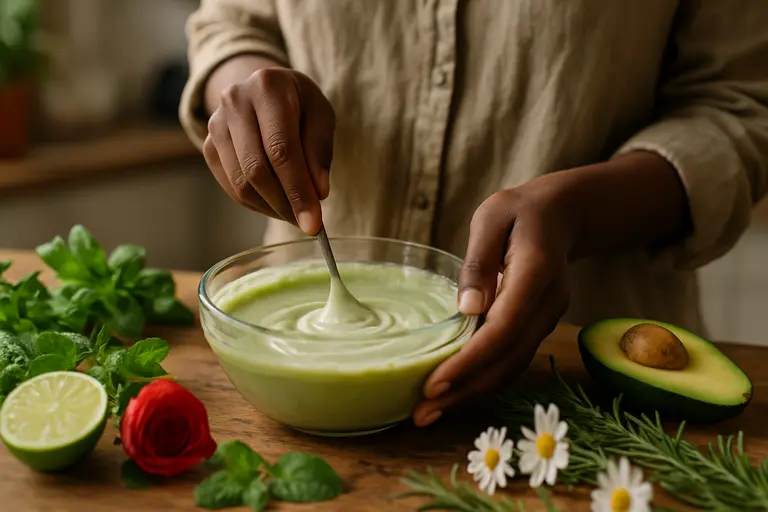
DIY hair care can reduce reliance on opaque finished products, but homemade does not equal risk-free. Simple oil blends, anhydrous balms, or rinse-off preparations may be easier to document than advanced styling creams with multiple specialty additives. For recipe creators who want a practical next step, this related piece on DIY alternatives after PFAS findings pairs well with a careful review of ingredient limits and sourcing records.
Plant oils, butters, beeswax, clays, and non-fluorinated stabilizers may fit some recipes, but they have limits. Oils can weigh down fine hair, waxes can build up, clays can feel drying, and botanicals can irritate some users. Preservation is also a frequent weak point in DIY beauty. Water, aloe juice, tea, hydrosols, and emulsions can support microbial growth if the formula is not preserved correctly. That issue is separate from PFAS, but it is just as relevant to responsible recipe design.
Use Claims That Match The Evidence
Words such as “clean,” “natural,” and “non-toxic” are not precise enough for careful formulation. A better label says what is actually in the product and what the product is intended to do cosmetically, such as soften the feel of hair, reduce a dry appearance, or add temporary shine. Avoid claims that suggest a recipe can diagnose, treat, or prevent scalp disease, hair loss, dermatitis, or any medical condition. Those questions belong with a qualified clinician.
For creators selling small batches, the post-regulation period should be treated as a prompt to raise documentation standards. Save supplier emails, keep formulas current, update labels when a supplier changes a material, and avoid ingredients with unclear fluorinated chemistry. If an ingredient name contains “fluoro,” “perfluoro,” “PTFE,” or related PFAS terms from regulatory materials, pause and verify before using it.
DIY Hair Care Decisions After PFAS Rules
What To Ask Before Your Next Batch
Before making the next batch, ask whether every ingredient has a clear identity, whether the supplier can support PFAS-free claims, whether the recipe needs preservation, and whether the product is being kept for personal use or distributed. A personal-use oil blend carries a different documentation burden than a conditioner sold online, but both benefit from accurate records.
The newer PFAS rules and reports do not mean every homemade recipe is automatically better than a commercial product. They do mean that transparency has become harder to ignore. A cautious, cruelty-free approach favors disclosed ingredients, modest cosmetic claims, and respect for individual scalp needs. If you have persistent itching, burning, scaling, sudden shedding, known allergies, pregnancy-related concerns, or questions about how a product may fit with a medical condition or medication, discuss those details with a clinician before relying on a DIY formula.