
PFAS In Cosmetics laws have moved from a technical policy issue into a practical label-reading concern for skincare and makeup shoppers. As of September 14, 2026, several state restrictions were already in effect, while other states had set future compliance dates. The clearest consumer takeaway is not that every cosmetic contains PFAS, or that one label term can answer every safety question. It is that state rules, federal data gaps, and product-category differences now matter when comparing foundations, powders, eyeliners, eyeshadows, and leave-on face products.
For cruelty-free and ingredient-conscious shoppers, this topic also shows why transparency has to be more specific than broad “clean” or “natural” claims. A product can be marketed with botanical ingredients and still require careful review of the full ingredient list, brand disclosures, and the state where it is sold. Educational resources, including relevant community wellness insights available at CPCWA, can help consumers frame questions more clearly, but personal health decisions should be discussed with a clinician.
PFAS In Cosmetics Law Changes By State
Why PFAS In Cosmetics Appeared On Labels
PFAS are per- and polyfluoroalkyl substances, a group of synthetic chemicals. In cosmetics, research notes describe them as being used for qualities such as water-repellency, durability, shine, or texture in products including lipstick, foundation, eyeshadow, eyeliner, face powder, and other formulas. The FDA explains PFAS use in cosmetics and notes that the agency has been assessing the issue under federal cosmetics law on its PFAS cosmetics page.
The available federal data does not suggest that PFAS are present in most cosmetics reported to FDA. As of August 30, 2024, FDA data identified 51 PFAS intentionally added in 1,744 cosmetic product formulations, about 0.41% of total products reported under mandatory listing rules. The same research summary noted that eyeshadow, face and neck leave-on products, eyeliners, face powders, and foundations accounted for about 56% of PFAS-containing cosmetic products. Those categories deserve closer attention, but that does not mean every item in those categories contains PFAS.
What FDA Reported In 2025
The Modernization of Cosmetics Regulation Act of 2022 required FDA to assess PFAS use in cosmetics and publish a report by December 29, 2025. On that date, FDA released its report and found major uncertainty for most PFAS used in cosmetics. The research notes state that insufficient toxicological, dermal exposure, ingestion exposure, and mechanistic data limited the agency’s ability to determine safety for most PFAS used in cosmetic products. Five PFAS were described as low concern under intended uses, one had a potential safety concern, and most remained unclear.
That uncertainty matters for consumer communication. It does not support alarmist claims, but it also does not support blanket reassurance. PFAS In Cosmetics sits in a space where regulation is moving faster at the state level than at the federal level. As of the research provided, there was no federal ban specifically covering PFAS in cosmetics, even though several states had enacted or begun enforcing restrictions.
State Dates Already Affecting Shelves
Bans In Effect By September 14, 2026
State law timing is central because the rules do not all start on the same date. Colorado’s sale ban for cosmetics with intentionally added PFAS took effect on January 1, 2024. California’s ban took effect on January 1, 2025. Vermont, Maine, and Minnesota each had cosmetics PFAS restrictions that took effect on January 1, 2026. Connecticut’s labeling and notification requirements began on July 1, 2026, while its full cosmetics PFAS ban was set for January 1, 2028. New Mexico’s ban was set for January 1, 2028, and New Jersey’s was set for January 12, 2028, according to a state effective-date tracker from Reference Source.
| State | Date Status On September 14, 2026 | Consumer Meaning |
|---|---|---|
| Colorado | Effective January 1, 2024 | Covered cosmetics with intentionally added PFAS were already restricted. |
| California | Effective January 1, 2025 | Cosmetics sold in the state had to meet the state ban. |
| Vermont, Maine, Minnesota | Effective January 1, 2026 | State restrictions were already active by September 14, 2026. |
| Connecticut | Labeling and notification began July 1, 2026; full ban set for January 1, 2028 | Disclosure rules had begun, with a later full ban date. |
| New Mexico and New Jersey | Ban dates set for January 2028 | Shoppers were still in a pre-ban period in those states. |
Rules Set For 2028
The 2028 dates create a transition period. A product that was no longer allowed in one state could still be legal in another state until that state’s own ban started. The research also notes that products sold to stores before bans might still appear on shelves after effective dates, depending on state law details and inventory provisions. For consumers, this means a shelf claim alone may not reflect the full compliance picture.
The phrase “intentionally added PFAS” is also central. Most state laws described in the research focus on PFAS that are deliberately included in a product for a functional purpose. Unintentional presence from impurities or breakdown may be treated differently, depending on state thresholds and definitions. This distinction can frustrate shoppers who want simple yes-or-no answers, but it is the way many laws are written.
How To Read Labels Without Overreading Them
Ingredient Names Consumers May Notice
U.S. cosmetic ingredient lists are meant to list ingredients in descending order of predominance. The research notes examples of PFAS-related ingredient names that may appear, including PTFE and perfluorononyl dimethicone. If a shopper sees a PFAS-related ingredient in a cosmetic sold in a state with an active ban, that product may warrant a direct question to the brand or retailer about reformulation, sell-through rules, and state compliance.
Label reading still has limits. Ingredient lists can help identify intentionally added ingredients, but they may not reveal every supply-chain issue. A formula could have been reformulated before packaging changed, or a brand’s public disclosure could lag behind state compliance work. For a deeper discussion of disclosure gaps, our related piece on PFAS transparency in cosmetic ingredients explains why shoppers may need more than a front-label claim.
Why Intentionally Added Matters
PFAS In Cosmetics policy often turns on legal wording rather than consumer-facing marketing language. A “PFAS-free” claim may be useful if a company can support it with supplier documentation and testing practices, but the research provided does not establish one universal verification standard across all states. A “natural” or “clean” claim is even less specific because it does not directly state whether PFAS were intentionally added.
For ethical beauty decisions, I favor questions that a brand can answer plainly: Does the product contain intentionally added PFAS? Has the formula changed for California, Colorado, Maine, Minnesota, Vermont, or Connecticut requirements? Are the same formulas sold across states, or are phase-outs happening state by state? Those questions do not require shoppers to become chemists, but they do encourage evidence-based purchasing.
Routine Choices For Cautious Shoppers
Makeup Categories To Check First
Since FDA data highlighted eyeshadows, face and neck leave-on products, eyeliners, face powders, and foundations as making up about 56% of PFAS-containing cosmetic products in the research summary, those categories are practical starting points. This is especially relevant for products used often, applied near the eyes or lips, or layered across larger areas of the face. The point is not to fear makeup. It is to prioritize where label review and brand questions may be most useful.
For skincare routines, leave-on products deserve more attention than rinse-off steps simply because they remain on the skin longer in normal use. The research provided does not prove that cosmetic PFAS exposure causes a specific health outcome for an individual shopper, so it would be inappropriate to make personal risk claims from these data alone. Needs can vary based on age, skin condition, pregnancy, medication use, occupational exposure, and personal medical history.
What Transparency Can And Cannot Prove
PFAS In Cosmetics laws may encourage reformulation, but they do not make every label equally clear overnight. A shopper in California or Colorado may see different product availability than someone in a state with a 2028 ban date. A national retailer may choose to standardize formulas early, while another brand may phase changes by market. Both patterns can leave consumers with uneven information.
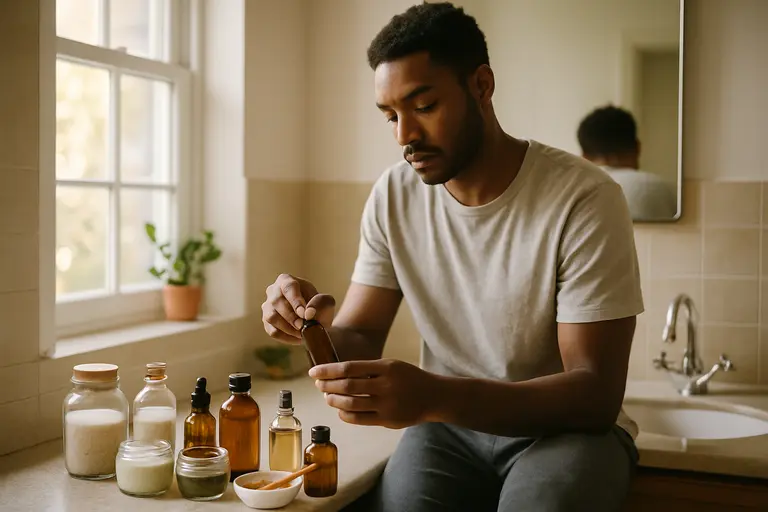
A cautious routine can be simple: identify your most-used cosmetics, check ingredient lists for PFAS-related names provided in the research, review whether your state has an active or future law, and ask brands direct questions about intentionally added PFAS. If you prefer DIY skincare, keep safety limits in mind. Homemade products can reduce reliance on some commercial formulas, but they do not replace preservative systems, stability testing, or professional guidance for irritated or reactive skin.
PFAS In Cosmetics Questions For Your Clinician
What To Discuss Before Personal Changes
State legislation has made cosmetic PFAS easier to question, but personal decisions should still be grounded in your own health context. If you are pregnant, managing a skin condition, using prescription skin treatments, or reacting to products, discuss cosmetic ingredient concerns with a clinician, dermatologist, or pharmacist. Bring the product label, the ingredient list, and any state-law questions you have.
Useful questions include whether a specific product is appropriate for your skin, whether irritation could be related to fragrance or another ingredient rather than PFAS, and how to simplify a routine without disrupting prescribed care. Educational label review can support better conversations, but it does not replace medical advice, diagnosis, or treatment planning from a qualified clinician.