Certified Safe Claims can make a skincare or personal care product feel easier to choose, especially for shoppers who read labels closely and care about daily exposure, ethics, and ingredient quality. As a wellness enthusiast, I see the appeal: a simple seal or safety rating can reduce decision fatigue. Yet the evidence available in 2026 suggests that these claims should be treated as one signal, not as complete consumer protection.
The concern is not that every certification is meaningless. The concern is that many claims rely heavily on ingredient lists, supplier paperwork, or brand documentation. If the finished product contains undisclosed contaminants, fragrance components, processing residues, or chemicals that were not captured on the label, a shopper may not see the full picture. For a broader view on health literacy in consumer protection, visit America’s Fair Healthcare to complement product-label education.
Why Certified Safe Claims Need Context
Certified Safe Claims And Ingredient Lists
A peer-reviewed study published on August 11, 2026, tested 113 personal care and cleaning products across 12 categories. The researchers reported that 98% of tested products contained at least one chemical not disclosed on the label, while 85% contained at least one chemical with known or suspected health hazards, according to the ACS study record. That finding does not prove that any one product will cause harm to a specific person. It does show why label-based certainty deserves caution.
The same study found that labels listed an average of 16 ingredients, while nontargeted chemical analysis detected an average of 51 chemical features per product. This gap matters because many shoppers assume that a visible ingredient list is close to a full accounting of what they are applying to skin, hair, or home surfaces. In practice, the listed ingredients may be only part of the chemical profile detected in a finished product.
What Testing Adds Beyond Paperwork
Certifications can be useful when they define clear standards and require documentation. Still, documentation is not the same as testing the final bottle, jar, wipe, cleanser, or spray. A certification may confirm that certain ingredients were disclosed or that a brand submitted information to a program. It may not identify every unintended contaminant or undisclosed compound. For shoppers, that distinction is the difference between trusting a claim and understanding what the claim was designed to measure.
This is where ingredient transparency becomes practical rather than abstract. If a product displays a safety seal, the next question is not only whether the seal exists. The better question is what the seal covers: ingredient review, manufacturing records, restricted substances, fragrance disclosure, supplier audits, finished-product testing, or some combination of these. A cautious routine asks for scope, not slogans.
How Certified Safe Claims Can Mislead
Free-From Language Is Not Full Disclosure
Free-from wording can help shoppers avoid ingredients they have been advised to avoid, but it can also create a wider impression of safety than the data support. In the August 2026 study, 26% of tested products made claims such as “phthalate-free,” “100% natural,” or “non-toxic,” yet contained chemicals that directly contradicted those claims. The study also reported that 59% of products with the highest label-based safety rating still had undisclosed harmful chemicals.
That does not mean Certified Safe Claims are useless. It means they may be incomplete when they depend on disclosed ingredients alone. A product can satisfy one program’s rules while still leaving unanswered questions about trace substances, contaminants, or undisclosed fragrance-related chemistry. A shopper who wants a low-irritation routine or a simpler ingredient profile may still benefit from comparing labels, but the comparison should stay modest in what it can prove.
Why Natural Does Not Automatically Mean Clear
Words such as natural, clean, green, safe, and non-toxic do not all have the same meaning across personal care products. Some are marketing terms. Some are tied to specific certification programs. Some may be defined differently depending on the product category. This makes it difficult for consumers to compare claims across brands without reading the criteria behind each seal.
For readers who want a deeper look at disclosure gaps, our discussion of personal care labeling transparency explains why undisclosed ingredients and broad wording can complicate everyday choices. The practical lesson is simple: a claim is only as useful as the standard behind it and the testing used to verify it.
What A Stronger Certification Would Show
Key Questions Behind A Seal
A stronger certification would make its criteria easy to find and easy to understand. It would explain whether the program reviews ingredient lists only, audits supplier documents, restricts certain substances, requires finished-product testing, or uses nontargeted chemical analysis. It would also clarify how often products are reviewed and what happens when a product fails to meet the standard.
Consumers do not need to become chemists to ask better questions. They can look for plain-language criteria and be cautious about seals that do not explain their methods. A short list of practical questions can make label reading more grounded:
- Does the certification explain exactly which substances are restricted or reviewed?
- Does the program test the finished product, or only review submitted ingredients?
- Are fragrance, contaminants, and processing-related residues addressed?
- Is the certifying group independent from the brand being certified?
- Does the brand provide a way to ask about undisclosed ingredients or claim criteria?
None of these questions can confirm that a product is suitable for every person. Skin tolerance varies, and needs may differ with allergies, pregnancy, medical conditions, medications, occupational exposure, or a clinician’s advice. Still, the questions can help shoppers separate a meaningful standard from a vague reassurance.
Organic Claims And Document Fraud
Verification Matters Beyond Marketing
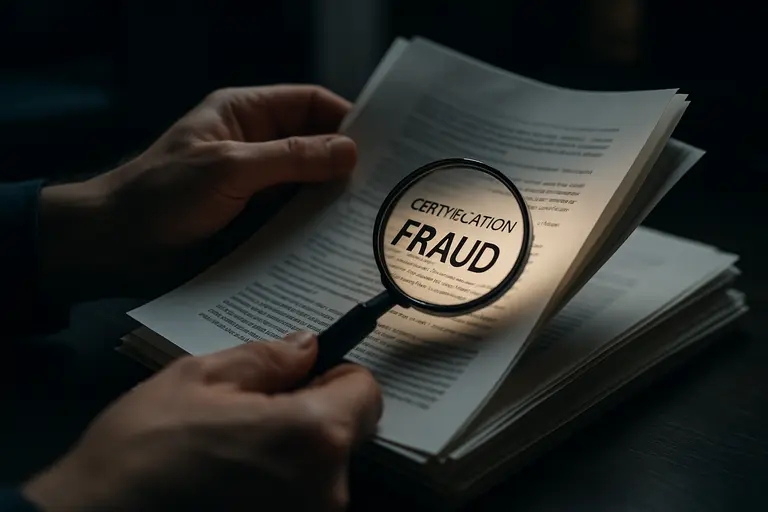
Organic language can be especially persuasive in skincare and personal care because many consumers connect it with farming practices, ingredient quality, and environmental values. The research notes for this topic point to low trust in some voluntary labels and rising concern about greenwashing. That concern is not limited to cosmetics. The USDA Agricultural Marketing Service states that fraudulent organic certificates are a legal concern and that falsely representing products as USDA Organic using fraudulent documents can lead to enforcement penalties under federal organic regulations; see the USDA page on fraudulent certificates.
This matters for personal care shoppers because it shows that label integrity depends on more than attractive packaging. Verification systems, document controls, enforcement, and clear standards all shape whether a claim can be trusted. Even then, an organic claim may speak to agricultural production methods rather than the full chemical profile of a finished skincare or cleaning product.
For ingredient-conscious routines, I prefer a layered view: read the ingredient list, check what the certification means, consider whether the brand explains fragrance and contaminants, and pay attention to how your own skin responds. Lifestyle choices such as patch testing a new cosmetic on a small area, avoiding unnecessary product stacking, and simplifying routines when irritation appears may support more informed conversations with a clinician, but they are not substitutes for medical advice.
Certified Safe Claims Questions For Personal Care
Certified Safe Claims work best when they start a more informed review rather than end the conversation. A seal may help narrow choices, but it should not replace transparency about testing, criteria, fragrance disclosure, contaminants, and finished-product verification. The 2026 product-testing findings show that undisclosed chemicals can appear even when labels look reassuring, which is why cautious shoppers should avoid treating any single claim as a guarantee.
If you have eczema, allergies, fragrance sensitivity, pregnancy-related concerns, occupational exposures, or a history of reactions to cosmetics, discuss product choices with a dermatologist, allergist, pharmacist, or another qualified clinician. Useful questions include: Which ingredients should I personally avoid? Should I patch test new products? Are fragrance-free or simpler formulas appropriate for me? Could any product interact with a treatment plan or medical condition? Personal care decisions are most reliable when label literacy and clinical guidance work together.