I used to pick beauty products by how they looked and smelled. But then I found out a shocking fact: our skin absorbs up to 60% of what we put on it. This made those pretty bottles seem more like chemical tests than self-care.
The beauty world is now split between organic skincare and regular brands. It’s like they’re two different political parties. We’re dealing with a $49.5 billion industry where marketing often beats science.
Now, nearly 70% of women aged 35-54 check labels like they’re solving puzzles. It’s not just about looking good. It’s about knowing what goes into our bodies through our skin.
The big question is: is the natural beauty trend really about wellness, or is it just a way for companies to look green? Let’s explore this together.
What ‘Organic’ Really Means in Beauty
Welcome to the beauty industry’s world of confusing words. It’s like watching Dancing with the Stars – lots of show, little substance. “Natural” skincare gets little oversight, but “organic” has strict rules.
The USDA is the strict parent in this world. For a product to be organic, it must have 95% certified organic ingredients. It’s like the beauty world’s top honor.
The “made with organic ingredients” group is like the 70% club. They have at least 70% organic content. But they can’t wear the USDA’s seal of approval.
Now, let’s talk about the 100% organic claim. It’s more like a myth. Water can’t be certified organic, and most products are water-based. So, when brands say “100% organic,” they might be mistaken or trying to trick you.
Let’s look at the different levels of certification:
- USDA Organic Seal: 95%+ organic ingredients
- “Made with organic ingredients”: 70%+ organic content
- “Natural” claims: About 0% oversight
The irony is that even poison ivy could be called “all-natural” today. The conventional beauty world uses different rules, focusing on science over nature.
Knowing the difference between natural vs organic skincare is key for those who care. It’s not just about words; it’s about what’s in your products.
So, when you see “organic” on a label, remember it’s more than just a claim. It’s a sign of a system that checks its products. In a world full of beauty claims, that’s a big deal.
Potential Benefits and Concerns
The organic skincare aisle is like a farmer’s market. It’s full of earthy promises and botanical bliss. But, there’s a complex landscape of trade-offs that would make even Solomon scratch his head.
Why do green brands attract conscious consumers? Their environmental credentials are impressive:
- Fewer synthetic chemicals leaching into ecosystems
- Often cruelty-free (no bunnies getting mascara tested)
- Generally avoid the chemical cocktail of parabens, sulfates, and phthalates
But, our botanical fairytale meets reality. A 2023 study found that 94% of “natural” products can trigger contact dermatitis. Your all-natural face cream might cause itching and redness.
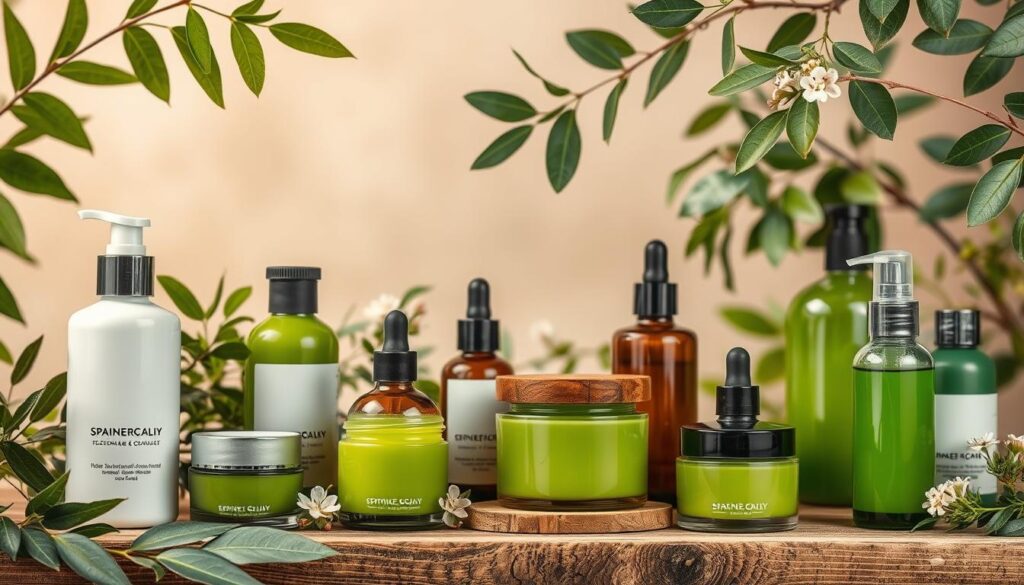
Fragrances are like the Trojan horses of skincare. They smell nice but can harm sensitive skin. And that “hypoallergenic” label? It’s not as reliable as a weather forecast in Florida.
So, what’s a conscientious consumer to do? You’re choosing between possible hormone disruptors and allergic reactions. It’s like picking your favorite child – if both might cause skin inflammation. For more on this, check out our analysis of natural skincare pros and cons.
The irony is clear: we’re trying to help the planet but might harm our skin. The real skincare revolution might be realizing “natural” doesn’t always mean “better.” It just means different challenges.
Brand Spotlights: Leading Organic and Conventional Choices
Let’s look beyond the marketing and see what really matters. We’re not just talking about looks or social media fame. We’re diving into what truly sets these brands apart.
Refresh Botanicals leads in organic skincare with total honesty. Their daily moisturizer is 99.7% natural and 83.7% organic. It’s like they’re counting every single molecule.
Eminence Organics takes organic skincare to a new level. Their Beyond Organic Collection uses Biodynamic ingredients, three times more nutrient-rich than regular organic. It’s like they’re catering to the most demanding skin types.
La Mer, Estée Lauder, and Olay are the big names in conventional beauty. They focus on science and sourcing, with budgets that could fund small countries. Their approach is all about research and quality.
Lilac St. finds a balance between ethics and affordability. They choose ethically sourced ingredients, without the need for organic labels. They’ve carved out their own niche in the beauty world.
| Brand Category | Key Players | Signature Approach | Price Range |
|---|---|---|---|
| Organic Skincare | Refresh Botanicals, Eminence Organics | Ingredient transparency, biodynamic sourcing | $30-150 |
| Conventional Beauty | La Mer, Estée Lauder, Olay | Scientific research, patented formulations | $20-500 |
| Ethical Middle Ground | Lilac St. | Source-conscious without certification focus | $25-80 |
The debate is no longer just about organic versus conventional. It’s about honesty, ethics, and value. Does that $300 cream really outshine its $30 rival? Often, it doesn’t.
Efficacy, Safety, and Cost Analysis
Let’s get real about what works on your face. The skincare aisle is filled with choices. Are you Team Laboratory or Team Farm-to-Face?
Organic skincare can cost 20-40% more than regular products. Those organic farms and ethical practices are pricey. But does more money mean better results? Not always.
Conventional beauty brands spend big on research and development. They do clinical trials and test for years. Organic brands often rely on traditional knowledge and smaller studies.
Safety is a tricky issue. Organic products avoid synthetic chemicals but can have strong natural allergens. Essential oils can cause reactions, just like synthetic preservatives.
The best thing to do? Always patch test, whether it’s lab-made or natural. Your skin doesn’t care about marketing.
Now, let’s look at some numbers. This table shows what you’re really paying for:
| Factor | Conventional Beauty | Organic Skincare | Reality Check |
|---|---|---|---|
| Average Price Point | $15-50 | $30-100 | Organic costs 2-3x more |
| R&D Investment | 8-12% of revenue | 2-5% of revenue | Big brands outspend |
| Clinical Testing | Rigorous trials | Limited studies | Evidence gap exists |
| Allergy Potentia | Synthetic preservatives | Natural allergens | Both can irritate |
| Shelf Life | 2-3 years | 6-12 months | Conventional lasts longer |
Here’s the hard truth: sometimes you’re paying for looks over results. That $100 organic serum might not be better than a $25 one from the drugstore.
A study found “natural” doesn’t always mean safe or effective. People often choose based on looks, not science.
In the end, what makes your skin happy is what matters. The best product isn’t always the most expensive or natural. It’s the one that works for you.
Reader Poll: What Worked Best?
Six out of ten women now check ingredients before buying. This is the new era of mindful shopping. We’ve moved from blind trust to carefully reading labels.
60% of us look for irritating ingredients before buying. This shift is more than just shopping. It’s about making smart, aware choices for our skin. Our bathrooms have turned into personal labs for testing products.
My friend Sarah, a lawyer, loves her French pharmacy retinoid. She calls it reliable and effective. Maya, an environmental activist, found her acne cleared with organic products. Her bathroom looks like a market.
Rachel, a dermatology resident, only uses green brands despite occasional reactions. She says it’s because of her conscience.
Skincare success stories are like dating profiles. What works for one might not work for another. Some get glass skin, while others face reactions. This collective trial is the world’s largest and most expensive.
| User Type | Prefers Green Brands | Key Concerns | Success Rate |
|---|---|---|---|
| Sensitive Skin Users | 85% preference | Irritating ingredients | High satisfaction |
| Environmental Advocates | 92% preference | Eco-impact | Mixed results |
| Clinical Results Seekers | 35% preference | Proven efficacy | Variable outcomes |
The biggest proof comes from our shared experiment. Whether you prefer French pharmacy or green brands, the key is awareness. Now, if only we could scrutinize our mortgages as much.
Expert Opinions
Sometimes, you need a doctor to cut through the marketing noise. Dr. Sandra Hong, an allergist, shares a truth bomb about organic skincare. She says, “Even natural products can cause allergic reactions.” Her warning is heard in dermatology offices across the country.
Her advice is straightforward. Avoid fragrances, as they are the top allergen in beauty products. Look for products with minimal ingredient lists. Remember, “hypoallergenic” claims are often just empty promises. The key to good organic skincare is reading labels, not believing marketing.
Other experts offer their views. Dermatologists say some synthetic ingredients are safer than natural ones. Cosmetic chemists explain how preservatives keep water-based formulas safe from germs. Environmental scientists discuss the real environmental impact of each choice.
The bottom line? There’s no one-size-fits-all answer in the organic skincare debate. Making informed choices is always better than following marketing hype. Now, I have to go test something on my skin.