Ever feel like you need a chemistry degree just to buy face cream? You’re not alone. Those ingredient lists might as well be written in hieroglyphics for most of us.
Here’s the uncomfortable truth: that tiny print is your only defense against marketing manipulation. I’ve seen products labeled “natural” with more synthetic compounds than a lab-grown diamond.
This isn’t about memorizing chemical names. It’s about understanding what truly matters in your cosmetic products. We’ll explore why ingredient lists aren’t the enemy – they’re more like that brutally honest friend we all need.
Consider this your backstage pass to decoding what really goes into your favorite natural formulations. Let’s pull back the curtain together.
Key Sections to Examine (and Why)
Think of a skincare label like a political campaign. The bold promises grab your attention, but the real details are hidden in the fine print. The front might say “with dragon’s blood extract!” but the back tells you what’s really in it.
Ingredient order matters more than your dating app algorithm. The first five ingredients make up 70-80% of your product. If that miracle ingredient is #15, you’ve bought a pricey bottle of hope with synthetic fillers.
Net weight information is not just for show. It’s like comparing political campaign budgets. A bigger number doesn’t always mean better value. Some companies use big packaging to trick you into thinking you’re getting more.
Ever wonder why storage instructions are important? They’re not just suggestions. Temperature-sensitive ingredients spoil faster than political promises. Proper storage keeps your product working right, not just looking good on a shelf.
Manufacturer details show more than just an address. They show accountability, like knowing who funds your favorite candidate. Reputable companies give clear contact info because they back their products.
Here’s what ingredient positioning really tells you:
| Position Range | Concentration Level | Practical Significance |
|---|---|---|
| 1-5 | 70-80% of formula | The real workhorses of your product |
| 6-10 | 15-20% of formula | Supporting actors with specific functions |
| 11+ | 1-5% or less | Mostly marketing ingredients (“ingredient theater”) |
This skincare labeling fundamentals guide shows why transparency is key. The concentration level tells you if an ingredient works or just looks good.
Usage instructions are not just for show. They’re like the user manual for your product. Using a vitamin C serum wrong is like misreading polls – you’ll get results, but not the ones you want.
True ingredient transparency means knowing what you’re putting on your skin. It’s the difference between real policy and empty promises.
Hidden Ingredients: What to Watch For
Welcome to the world of “Where’s Waldo?” in the beauty industry. But instead of Waldo, it’s irritating chemicals hiding in plain sight. The skincare aisle is like a political thriller, where ingredients try to get your attention while hiding their true intentions.
“Fragrance” or “parfum” could mean anything. Companies don’t have to tell you what’s inside. It’s like the skincare world’s version of the Patriot Act, where everything is secret for “proprietary reasons.”
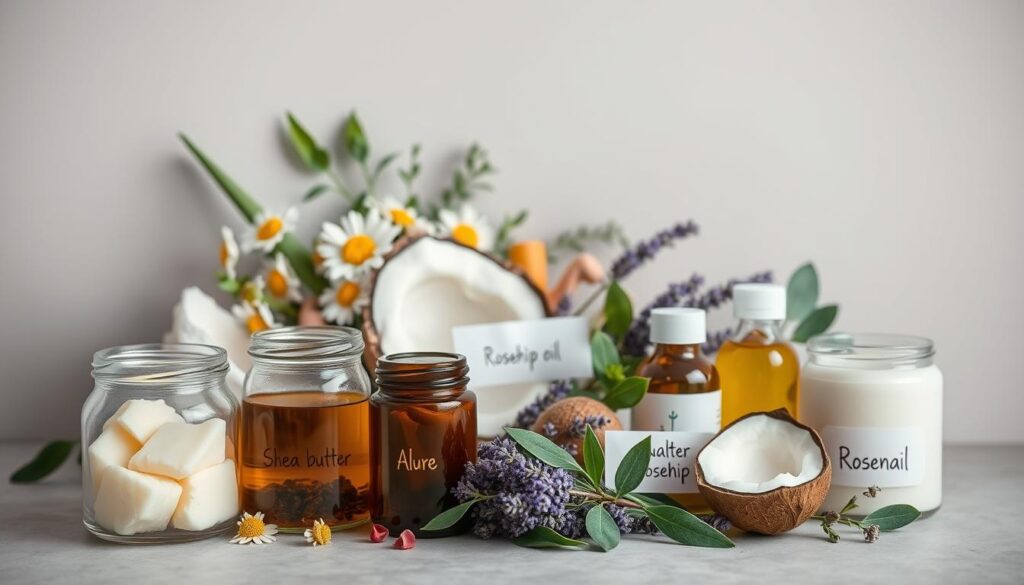
Let’s uncover the usual culprits. Parabens act like estrogen, while phthalates make fragrances last too long. Sulfates strip your skin’s natural oils, like lobbyists remove environmental rules.
These hidden ingredients can cause problems that go beyond just skin issues. Your skin might react right away or develop sensitivities over time. It’s like voting without knowing the candidate’s full platform.
The difference between “fragrance-free” and “unscented” is huge. “Fragrance-free” means no hidden agents or synthetic perfumes. “Unscented” might mean they added chemicals to hide the smell. It’s like putting lipstick on a pig.
For those with sensitive skin, these differences are critical. They can mean the difference between comfort and irritation. Between glowing skin and skin that reacts. That’s why reading labels is more than a habit; it’s a survival skill.
Creating a clean label routine means looking beyond what’s marketed. It’s knowing that “natural” doesn’t always mean “safe” and “synthetic” doesn’t always mean “dangerous.” The truth is in the details.
When checking out body products, watch out for these hidden ingredients. Many people find out what’s really in their products when they learn the truth. Starting a clean label routine begins with this awareness.
Your skin deserves better than playing chemical guessing games. It deserves honesty, transparency, and products that respect its natural balance. That’s the heart of true clean label beauty.
Certification Seals and What They Mean
Walking down the beauty aisle is like navigating a political convention. Every product has its endorsements and symbols. But which certifications are real, and which are just empty promises?
Let’s examine your skincare labels. That organic leaf symbol? It might be the USDA’s approval. Or it could be just a pretty symbol without real standards.
The real power in certification comes from strict standards and clear requirements. These are the established parties with real policies, not just catchy slogans.
The Heavy Hitters: Legitimate Certification Seals
These certifications actually mean something. They’ve done the policy work and earned their place on your skincare labels.
USDA Organic is the gold standard. It means at least 95% organic ingredients. No synthetic pesticides or GMOs.
Cosmos represents the European Union’s organic certification. It’s like the EU parliament of beauty standards, with strict guidelines.
Soil Association brings British rigor to the conversation. They’re the parliamentary system of certifications, committed to organic principles.
EcoCert focuses on natural and organic cosmetics with environmental responsibility. They’re the green party of certifications.
The Pretenders: Aspirational Labeling
Now for the political theater. Many companies create their own certification symbols. These symbols imply standards without any real verification.
These self-created seals are like campaign promises. They look official but answer to no one.
I’ve seen symbols that imply “natural” or “eco-friendly” without clear criteria. It’s political spin on skincare labels.
Always check if a symbol corresponds to an actual certification body. If you can’t find information, it’s probably marketing fiction.
Other Important Symbols
Beyond organic certifications, several other symbols matter on your skincare labels:
Recycling symbols tell you about packaging sustainability. The numbers inside the chasing arrows indicate resin types and recyclability.
Period-after-opening indications show how many months you can use the product after opening. This is product safety information, not just a suggestion.
For deeper insight into what these certifications actually require, check out this comprehensive guide to clean beauty certifications.
| Certification | What It Means | Rigor Level | Geographic Focus |
|---|---|---|---|
| USDA Organic | 95%+ organic ingredients, no synthetic pesticides | Very High | United States |
| Cosmos | International organic standards, environmental focus | Very High | European Union |
| Soil Association | UK organic standards, ethical sourcing requirements | High | United Kingdom |
| EcoCert | Natural cosmetics, environmental responsibility | High | International |
| Self-Created Symbols | Marketing claims without verification | None | Varies |
Reading skincare labels requires skepticism. Look beyond the symbols to the substance. Check for third-party verification. Demand transparency.
The best skincare labels tell the truth about what’s inside. In today’s beauty landscape, that’s revolutionary.
Ingredient Spotlights: Decoding Common Terms
Welcome to the world of skincare where ingredients sound scary but are harmless. We’ll cut through the marketing to find true ingredient transparency.
Tocopherol is just vitamin E in disguise. It’s a strong antioxidant that protects your skin from harm. It’s the unsung hero in your skincare.
Xanthan gum might sound like science fiction, but it’s a natural product. It keeps your skincare formula balanced, like a political mediator.
Skincare ingredients can be divided into three groups. Humectants, like hyaluronic acid, draw in moisture. They’re like politicians seeking votes.
Emollients, such as butters and oils, smooth out your skin. They make your skin feel soft and comfortable.
Occlusives, like silicones, act as a barrier. They keep moisture in and stressors out. They’re like the bouncers at a club.
The debate over alcohols in skincare is intense. “Bad” alcohols like ethanol dry out your skin fast. But “good” alcohols, like cetearyl alcohol, moisturize and spread formulas evenly.
Brands often list important ingredients last, making them seem less effective. True ingredient transparency means knowing the first five ingredients are the most important.
Don’t be fooled by ingredient names. Something that sounds scary might be safe, while something natural could irritate your skin. It’s about making informed choices and seeking ingredient transparency.
Real Label Examples
Let’s be detectives with real skincare labels. It’s like looking at political finance reports where the truth is in the fine print. That “organic argan oil” shampoo you’re interested in? The argan oil is #16, not very influential.
Boots’ “Naturally Radiant” shampoo seems great online, with kiwi fruit extract and shea butter highlighted. But the label shows sodium laureth sulfate is #2, ahead of those natural ingredients. It’s like comparing campaign promises to actual laws.
Neal’s Yard Remedies is very open. They use asterisks for allergens, like a clear warning. Mary Kay, on the other hand, lists “key ingredients” online but hides the full list. It’s like comparing a politician’s promises to their actual actions.
Here’s what makes clean label brands stand out:
- Ingredients are listed in order of how much is in them
- Allergens are marked clearly with asterisks or bold text
- Online and physical labels match
- Natural claims are supported by the ingredient list
That “natural” cream with marshmallow extract? It’s after three preservatives and two emulsifiers. It’s like promising healthcare but cutting Medicaid. The difference between what’s promised and what’s real is huge.
Physical labels are honest, unlike digital ones. They show the real story, not just what’s marketed. Next time, check the label, not just the website.
Building Confidence as a Shopper
You now know how to read skincare labels like a pro. You’re like a detective in the beauty aisle, armed with real facts.
Start by doing a patch test. It’s like a small poll to see how a product works. Always check the expiration dates. If it smells bad, throw it away.
Don’t trust the packaging. Big jars and natural colors might hide the truth. If it looks too good to be true, it probably is.
If you’re unsure, ask a dermatologist for help. Being skeptical is your strength. Question everything that sounds too good to be true.
Now, you can read skincare labels with ease. You’re the most informed shopper in the store. Shop with confidence, knowing you’re making smart choices.