Most commercial lip products are like fast food for your skin. They’re easy to find, but what’s in them?
That gooey stuff might look like it’s moisturizing, but it’s not. It’s more like a chemical mix-up. We’ve let big companies decide what’s good for us.
This guide is a wake-up call. It’s about taking back control. It’s a small way to fight back for your face.
Why rely on what companies say is good for you? You can make your own. It’s more than just mixing stuff. It’s about creating a philosophy.
We’ll start with a basic recipe. Then, we’ll learn about waxes and oils. You’ll also learn how to add safe scents. Your lips are worth better than what’s in store-bought products.
The best part? You’re in charge. No more unknown ingredients. You’ll save money too. And you’ll make something just right for you. It’s a small step towards taking care of yourself.
Understanding Lip Skin and Its Unique Needs
If your facial skin had a union, your lips would be the exploited interns. They work without benefits or proper equipment. They’re on permanent front-line duty with a design flaw.
While the rest of your skin has oil glands and a strong outer layer, your lips are exposed. They’re like naked diplomats in a harsh climate.
This biological oversight makes making the right homemade lip balm essential. Your lips lack sebaceous glands and have a thinner protective layer. They’re constantly moving and exposed, making them vulnerable to dehydration and temperature changes.
Understanding your lip skin’s anatomy is key to making effective homemade lip balm. It’s not just about applying a barrier. It’s about giving your lips real nourishment.
Commercial balms often only provide temporary relief. They create dependency without solving the problem.
Let’s look at the data. The table below shows why your lips need special care.
| Feature | Lip Skin | Regular Facial Skin |
|---|---|---|
| Sebaceous (Oil) Glands | None. Zero natural lubrication. | Abundant. Provides natural moisture barrier. |
| Stratum Corneum Thickness | Very thin (~3-5 cell layers). Highly permeable. | Thick (~15-20 cell layers). Protective barrier. |
| Melanin Protection | Less melanin. More susceptible to UV damage. | More melanin. Better natural sun protection. |
| Hydration Retention | Poor. Loses moisture 3-10x faster. | Good. Natural oils help seal in moisture. |
| Implications for Care | Needs constant, nourishing moisture and protection. Prone to chapping. | Needs balanced cleansing and occasional hydration. |
Some natural ingredients can actually make chapping worse. Coconut oil and cocoa butter can be occlusive. They sit on top of the skin without sealing in moisture. It’s like funding a police force without social services.
When you make your own lip balm, you’re in control. You choose ingredients that repair and attract moisture. You avoid irritants that can cause inflammation.
This knowledge changes how you make homemade lip balm. You’re no longer just applying a generic solution. You’re creating a formula that’s tailored to your lips’ needs. Your goal is to build resilient lip skin that can handle any challenge.
Essential Base Ingredients: Waxes and Oils
If your lip balm were a government, wax would be the constitution. It gives structure and stability. Oils would be the executive branch, bringing action and nourishment. This balance is key to your lip balm’s success.
The basic formula is called the “Three-One-One Coalition”: three parts oil, one part wax, one part butter. This balance ensures your lip balm works well. Too much wax makes it heavy, while too much oil offers no protection.
Beeswax is a classic choice, reliable and natural. It also preserves your balm without chemicals. For vegans or those allergic to bees, candelilla wax is a good alternative.
Carrier oils are the active ingredients. Each oil has its own benefits:
| Oil Type | Key Properties | Best For | Texture/Feel |
|---|---|---|---|
| Olive Oil | Rich in antioxidants, deeply moisturizing | Severely dry, cracked lips | Substantive, Mediterranean efficiency |
| Sweet Almond Oil | Lightweight, high in Vitamin E | Daily maintenance, sensitive skin | Diplomatic softness, fast absorption |
| Sunflower Oil | Balanced fatty acids, non-comedogenic | All skin types, budget-friendly option | Neutral, reliable workhorse |
| Coconut Oil | Antimicrobial, solid at room temperature | Tropical-inspired blends, added thickness | Luxurious, persuasive richness |
| Castor Oil | Exceptionally glossy, humectant properties | High-shine finishes, locking in moisture | Glossy, persuasive sheen |
| Jojoba Oil | Mimics skin’s natural sebum, stable | Balancing oil production, long shelf life | Silky, sophisticated penetration |
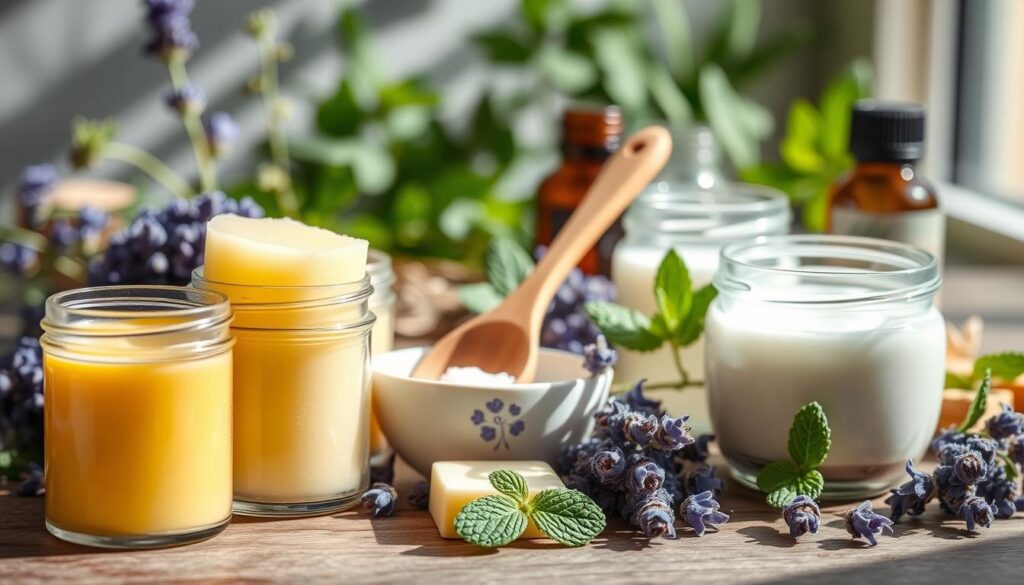
Each oil has its own benefits. Olive oil is for longevity, while castor oil is for shine. Jojoba oil is like your skin’s natural chemistry. Lips need external help because they lack oil glands.
Wax is a natural preservative. It keeps your balm safe from bacteria. Beeswax and candelilla wax are both effective.
Choosing the right oils is like forming a cabinet. You might choose olive oil for moisture or coconut oil for shine. DIY natural lip care lets you experiment until you find the perfect mix.
Compromise is key in this DIY world. Mixing oils like sweet almond and olive can create the best solution. Wax ensures everything works together, while oils provide benefits to your lips.
Natural Moisturizers and Healing Agents
Natural moisturizers are the heart of your lip balm. They add moisture, seal it in, and fix damage. They work with the waxes and oils to make your lip balm special.
Shea, mango, cocoa, and kokum butters are key players. Shea butter is rich in vitamins and fatty acids, making skin soft. Mango butter is lighter and absorbs fast. Cocoa butter is loved by some but not by all.
Cocoa butter can make dry skin worse for some. It’s like a politician who promises unity but divides. Always test it first.
Herb-infused oils are the smart choice. They add healing compounds to your lip balm. It’s like getting advice from experts, not just reading about it.
Calendula soothes skin, while chamomile calms irritation. Plantain heals skin like a natural Band-Aid. Adding these makes your lip balm a skin therapy.
Shea and mango butter make your lip balm creamy. Kokum butter is firmer, and cocoa butter has a chocolate scent. Each adds its own touch.
By mixing these ingredients well, you create advanced skin care. Your organic lip balm recipes become tailored treatments. DIY is about making something that works with your body.
Safe Colorants and Natural Tinting Options
Choosing a colorant is key for your homemade lip balm. It’s like voting in an election. You can pick synthetic dyes or natural ingredients. Natural options are better for your skin.
Forget harsh dyes. Nature has a wide range of safe colors. Each one adds character to your lip balm.
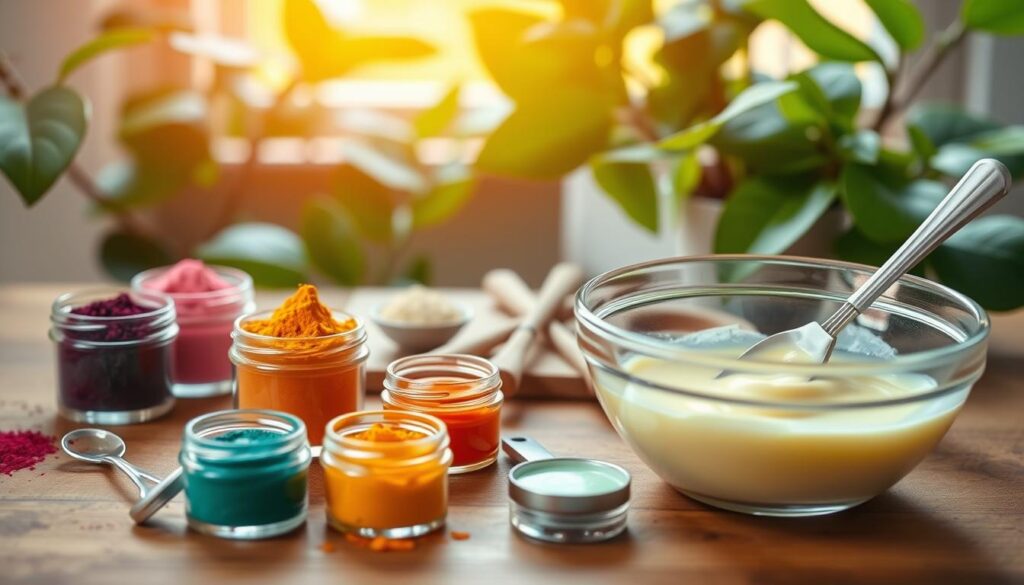
Alkanet root is a classic choice. It turns into soft pink to deep red when infused in oil. It’s quiet but effective.
Annatto seed is warm and optimistic. It gives a sunny orange or peachy look. It’s perfect for balms that feel bright and comforting.
Chlorella powder is bold and green. It works well with minty oils for a fresh look. It’s great for those who like to stand out.
Unsweetened cocoa powder is reliable and loved. It gives a gentle brown or nude color. It’s like a favorite leather jacket.
But, avoid colored clays. They promise color but dry out your lips. They’re like a bad spokesperson.
Lip-safe mica adds shimmer for special occasions. It’s fun and optional. Think of it as a party after the serious work.
Here’s a guide to natural colorants:
| Colorant | Color Result | Best For | Key Characteristic |
|---|---|---|---|
| Alkanet Root Infused Oil | Pink to Red | Romantic, classic homemade lip balm | Subtle, builds color over time |
| Annatto Seed Infused Oil | Peach to Orange | Warm, sunny-toned balms | Bright and cheerful tint |
| Chlorella Powder | Light to Emerald Green | Minty, fresh formulations | Bold, plant-based statement |
| Unsweetened Cocoa Powder | Light Brown to Nude | Natural, everyday wear | Warm, food-grade safety |
| Lip-Safe Mica Powder | Shimmer & Sparkle | Special occasion glitter balms | Visual effect, no base color |
Your lip balm’s color is a choice. Start small and adjust as needed. This way, your homemade lip balm is safe and beautiful.
Flavoring with Essential Oils Safely
Essential oils are like the volatile politicians of the natural lip care world. They are powerful and can cause serious damage if not handled right. They are not just nice smells. They are concentrated plant compounds that can interact with your body’s most sensitive areas.
Many DIY projects go wrong here. If you get it right, you make a balm that’s a delight to the senses. But if you get it wrong, you might end up with irritated lips or worse.
Citrus oils like lemon, lime, or bergamot are phototoxic. They contain furanocoumarins that react with sunlight. Using a balm with these oils and going outside can give your lips a chemical sunburn.
This is a big problem in personal care. Always choose steam-distilled citrus oils for daytime wear. They give a bright, cheerful flavor without the dangers.
Not all oils have such big warnings. Some are safe choices for flavoring:
- Peppermint & Spearmint: They are popular for their refreshing tingle that feels soothing.
- Distilled Citrus Oils: Lemon, orange, or grapefruit (steam-distilled only) offer clean, uplifting notes.
- Vanilla Absolute: It’s a beloved choice for its warm, comforting sweetness without irritation.
- Clove Bud: It’s powerfully warming and analgesic. Use it extremely sparingly, as too much can cause a revolt on your lips.
Dosage is key. This isn’t for your living room. It’s delicate diplomacy for a mucous membrane. The rule is 1-2 drops per tablespoon of carrier oil or butter. For a larger batch, never use more than 96 drops per full cup of base oil.
More is not better. Oils like clove or cinnamon can cause burning at high concentrations. Start low. You can always add more, but you can’t take it back.
| Essential Oil | Key Properties | Safety Notes | Best For |
|---|---|---|---|
| Peppermint | Cooling, refreshing, invigorating | Generally safe at low doses; can be too intense for very sensitive skin | Morning balms, wake-up formulas |
| Spearmint | Milder mint flavor, slightly sweet | Gentler alternative to peppermint; good for sensitive users | All-day wear, sensitive skin formulas |
| Distilled Citrus (Lemon/Orange) | Bright, cheerful, uplifting aroma | MUST be steam-distilled to avoid phototoxicity; avoid cold-pressed | Daytime balms, summer formulas |
| Vanilla Absolute | Warm, sweet, comforting | Very well-tolerated; often used as a base note to blend other scents | Night treatments, comforting balms |
| Clove Bud | Warming, spicy, analgesic | Use SPARINGLY (½ drop per batch); can cause irritation in excess | Winter balms, soothing sore lips |
Proper natural lip care respects the power of these botanical extracts. They are tools, not toys. When used wisely, they can turn a simple balm into a personalized sensory experience.
Your lips will thank you for the careful approach. Avoid phototoxic scandals. Choose safe, effective flavors that make your homemade creation uniquely yours.
Basic Lip Balm Recipe and Variations
The basic lip balm recipe is like a blueprint for lip care. It’s the starting point for all your organic lip balm recipes. Think of it as the foundation of your lip care collection.
Success in lip balm making comes from the right mix. You need a 1:1:2 ratio by volume. This means one part wax, one part butter, and two parts oil. By weight, it’s a 1:1:4 ratio. This is because different ingredients have different weights.
To make it, use indirect heat, like a double boiler. Put your wax, butter, and oil in a bowl over simmering water. This method prevents burning.
Don’t forget the essential step. Take your mixture off the heat before adding essential oils. Essential oils are like diplomats. Add them when the mixture is warm but not boiling, around 120-140°F. This keeps their benefits and prevents them from evaporating.
Let’s look at two examples. The “Peppermint Ice” recipe combines beeswax, shea butter, and sweet almond oil with peppermint essential oil. It’s a refreshing choice.
The “Vegan Spearmint” recipe uses candelilla wax and coconut oil instead. It has a milder, sweeter taste from spearmint essential oil. It’s a vegan option.
This system can be scaled up or down. Triple the ingredients for a large batch or halve them for a small one. The basic recipe works for any size.
There are many ways to customize this recipe. Try using cocoa butter for a chocolate flavor or jojoba oil for longer-lasting moisture. Add vitamin E oil for extra benefits. Your creativity can make the recipe your own.
The basic recipe is a starting point, not a limit. It allows for new ideas and variations. Your next organic lip balm recipe is just waiting to be created.
Start with the right ratios and master the double boiler. Then, begin your journey in lip care. Your lips will tell you which recipe they like best.
Healing Salves for Chapped Lips
When your lips are in crisis—cracked, peeling, and in emergency—you need quick help, not slow action. Think of it as a face emergency. The fancy balms with lots of ingredients? That’s the long process. For fast relief, you need something quick.
The homemade lip balm salve is your fast help. It’s like emergency aid in a jar. It doesn’t need many ingredients or long discussions. It just gives you quick relief.
The recipe is very simple, like a bill that easily passes. It’s two parts coconut oil to one part flavor extract. The coconut oil moisturizes and absorbs fast. The extract adds comfort or a nice flavor.
Choose your flavor wisely. Vanilla for warmth, cherry for a rosy look, or spearmint or orange for coolness. Mix them in a small jar. Apply as needed. The best part? Effective homemade lip balm doesn’t need many ingredients.
This salve shows that sometimes, less is more. It gets moisture to dry skin without wax. For more complex recipes, check out detailed lip balm recipes. But for quick fixes, this simple approach is your go-to.
Always have your jar ready. When winter makes your lips dry, this homemade lip balm is your quick fix. It shows that simple solutions are often the best.
Vegan and Allergy-Friendly Alternatives
Our journey to natural lip care reaches its final, most inclusive stage. It’s like universal healthcare for your lips. The old favorites, beeswax and lanolin, are stepping down. A new team of plant-based ingredients is taking over.
Candelilla wax is the star vegan player. It’s as firm as beeswax but in half the amount. Soy wax is a softer, more affordable option. Both help your balm stay firm without harming bees.
We need to check for common allergens. Coconut oil and cocoa butter are great for many but not all. Use shea or mango butter for healing instead. Sunflower or sweet almond oil can bring moisture gently.
This isn’t just a special policy. It’s a must for natural lip care. It makes sure everyone can enjoy smart, self-care options. For more on making these formulas, check out this guide to DIY vegan lip balm. Your personal care cabinet is now open for business.