Remember when “natural beauty” meant products with a strong patchouli scent? They didn’t work very well. Clean beauty has moved from a niche to a must-have in no time, faster than saying “Sephora clean section.”
Europe bans over 1,400 questionable ingredients, while the US is catching up slowly. It’s like watching Europe drive a Tesla while we’re stuck with old cars.
This isn’t just about trendy marketing. We’re talking about hormone disruptors and carcinogens. Your skin, the largest organ, deserves better than chemical cocktails.
We’ll use Beautycounter’s “Never List” and the EWG database to guide us. Let’s see why your grandmother’s cold cream might need a modern update.
Identifying Toxic Products
Ever feel like reading skincare ingredients is like solving a puzzle? You’re not alone. The beauty industry’s ingredient lists are often confusing, with hidden details.
Let’s look at some common culprits. Parabens can mess with your hormones. Phthalates hide in “fragrance” – a sneaky term. Sulfates take away your skin’s natural oils quickly.
Formaldehyde-releasing preservatives sound like something from a sci-fi movie. But they’re real in many products. These chemicals slowly release formaldehyde, a known carcinogen, onto your skin all day.
Why should you worry? These ingredients can cause serious health problems:
- Hormone disruption that affects your whole body
- Allergic reactions from mild to severe
- Potential cancer risks with long-term use
- Skin barrier damage leading to increased sensitivity
When switching skincare products, you become a detective. “Fragrance” can mean hundreds of chemicals. Companies use this term to hide their secrets while exposing you to unknowns.
Your skin isn’t a lab experiment. It’s your body’s largest organ, absorbing up to 60% of what you apply. Treat ingredient lists like political promises – question everything that sounds too good to be true.
Becoming an ingredient-label ninja takes practice, but your health is worth it. Your skin will thank you, and so will your future self.
Researching Brands & Ingredients
Ever tried online dating? Clean beauty shopping feels eerily similar. Every brand’s Instagram looks flawless, but you need to check their receipts before swiping right. The “natural” claims? About as authentic as a reality TV reconciliation.
Welcome to the greenwashing epidemic – where marketing smoke screens outnumber actual ingredient transparency. Brands drop “botanical” and “clean” like politicians drop empty promises. Both sound great until you realize they’re legally meaningless terms.
Your truth-telling wingman? The EWG Healthy Living app. Scan products in-store and get instant ratings. Think of it as your personal background check for that too-perfect-to-be-true serum.
Three stores actually walk their clean talk: Credo Beauty, Cap Beauty, and The Detox Market. They’re the curated art galleries in a world of mass-produced prints. Each product undergoes rigorous vetting – no greenwashing allowed.
Look for Oeko-Tex certifications. These aren’t participation trophies. They’re third-party verified badges that actually mean something. Unlike “clean” imagery that’s about as substantial as a influencer’s depth.
Real ingredient transparency means brands listing everything – not just the Instagram-friendly extracts. It’s the difference between a politician’s carefully crafted speech and their unedited committee testimony.
Your skincare routine shouldn’t require an investigative journalism degree. Yet here we are, decoding marketing spin instead of ingredient lists. The solution? Trust certifications over claims, third-party validation over pretty packaging.
Remember: if a brand’s transparency feels like a politician avoiding questions, swipe left. Your skin deserves better than empty promises.
How to Transition Without Irritation
Ever watched a political revolution unfold? The smart ones negotiate transition periods. The reckless ones create power vacuums. Your skincare cabinet deserves the diplomatic approach, not the coup d’état.
Starting your clean beauty transition with body moisturizers isn’t just practical – it’s strategic. Think of it as campaigning in swing states first. Your skin absorbs up to 60% of what you put on it, and body lotions cover more territory than a presidential candidate’s bus tour.
- Replace products as they empty – because throwing away half-used $50 serums should hurt more than reading YouTube comments
- Download the EWG Healthy Living app – your personal intelligence agency for identifying cosmetic enemies of the state
- Simplify your routine – because nobody needs a 12-step program that requires more time than filing taxes
Patch testing is the skincare equivalent of reading terms and conditions. We all skip it, then act surprised when our face resembles a diplomatic incident. Test new products on your inner arm for 48 hours. Your future self will thank you more than constituents thank politicians for infrastructure bills.
The golden rule? One product at a time. Introducing multiple new ingredients simultaneously is like passing five controversial bills at once – you won’t know what caused the uprising.
Your transition timeline should resemble a carefully managed campaign rollout. Start with cleansers and moisturizers, then move to actives like serums and treatments. This phased approach gives your skin time to adapt without declaring war on your complexion.
Remember: the goal isn’t perfection by tomorrow. It’s sustainable reform that doesn’t leave your skin looking like it went through a contentious confirmation hearing.
Dealing with Detox “Purge” Periods
Ever feel like your skin is staging a full-scale rebellion after switching skincare routines? Welcome to what the beauty industry calls “purging” – your complexion’s dramatic protest against progress. It’s like your skin suddenly decided to reenact its awkward teenage years complete with surprise appearances and emotional outbursts.

Here’s the scientific truth behind the drama: what we call “detox” is actually your skin accelerating its natural renewal process. Active ingredients in clean beauty products increase cell turnover, pushing everything that was brewing beneath the surface to make an untimely debut. Think of it as your skin’s version of spring cleaning – things definitely get worse before they get better.
But how do you distinguish between a productive purge and a problematic reaction? The purge typically appears in areas where you normally break out and consists of familiar blemish types. Allergic reactions, on the other hand, bring new friends to the party: redness, itching, or unusual rash patterns. When in doubt, consult this brilliant guide to purging versus breakouts.
The timeline matters too. A legitimate purge should clear within 4-6 weeks as your skin adjusts. Persistent issues beyond two months suggest your “natural” product might be naturally terrible for your particular chemistry. Some ingredients just don’t play well with others – it’s the skincare equivalent of putting Taylor Swift and Kanye West in the same room.
Patience becomes your most valuable skincare ingredient during this transition. Non-toxic formulations focus on long-term skin health, not quick fixes. While conventional products might offer immediate cosmetic benefits, clean beauty works like a thoughtful renovation, not a quick coat of paint.
Your survival kit for the purge period should include:
- Gentle, non-stripping cleansers
- Hydrating toners and serums
- Spot treatments for active breakouts
- And most importantly – the willpower not to revert to old products
Remember: this temporary topographic map phase is your skin’s way of resetting its standards. The protest will eventually subside, leaving you with clearer, healthier skin that actually knows what’s good for it.
Creating an Ingredient List
Think of your skincare routine as an exclusive nightclub. Only the best ingredients get in. Your ingredient list is like the bouncer, choosing what’s good for you.
This isn’t about making a list of things to avoid. It’s about picking the best for your skin. This change makes skincare a celebration, not just a defense.
Meet your skincare A-team. Aloe vera soothes your skin like a diplomat. Jojoba oil keeps your skin balanced, just like it’s supposed to.
Shea butter is like a comforting grandma, always there for you. Green tea extract protects your skin from harm, like a bodyguard.
Hyaluronic acid is the hydration hero, holding water like a sponge. Vitamin C from Kakadu plum brightens your skin, fighting off damage.
Chamomile and calendula calm your skin, reducing redness. These ingredients don’t just avoid harm; they improve your skin.
| Ingredient | Primary Benefit | Skin Type Match | Star Rating |
|---|---|---|---|
| Aloe Vera | Soothing & Healing | Sensitive/All | ★★★★★ |
| Jojoba Oil | Balance & Moisture | Oily/Combination | ★★★★☆ |
| Shea Butter | Deep Nourishment | Dry/Mature | ★★★★★ |
| Hyaluronic Acid | Intense Hydration | All Types | ★★★★★ |
| Vitamin C (Natural) | Brightening & Protection | Dull/Aging | ★★★★☆ |
Creating your list is more than just copying trends. Think about your skin’s needs. Does it get upset easily? Does it need lots of nourishment?
True ingredient transparency means knowing why these ingredients work. It’s about understanding, not just following.
Your skin’s profile should highlight the good stuff, not just the bad. Knowing what’s good for you makes shopping easier.
This way, your skincare products become a curated collection. Your skin will look amazing every morning.
Common Mistakes
The beauty aisle can feel like a political campaign. Everyone makes promises, but fact-checking is weak. This is the world of clean beauty, where good intentions can harm your skin.
Believing “natural” means “better” is a mistake. Organic food isn’t always healthy, like organic potato chips. Some plant extracts can be harsher than synthetic ingredients.
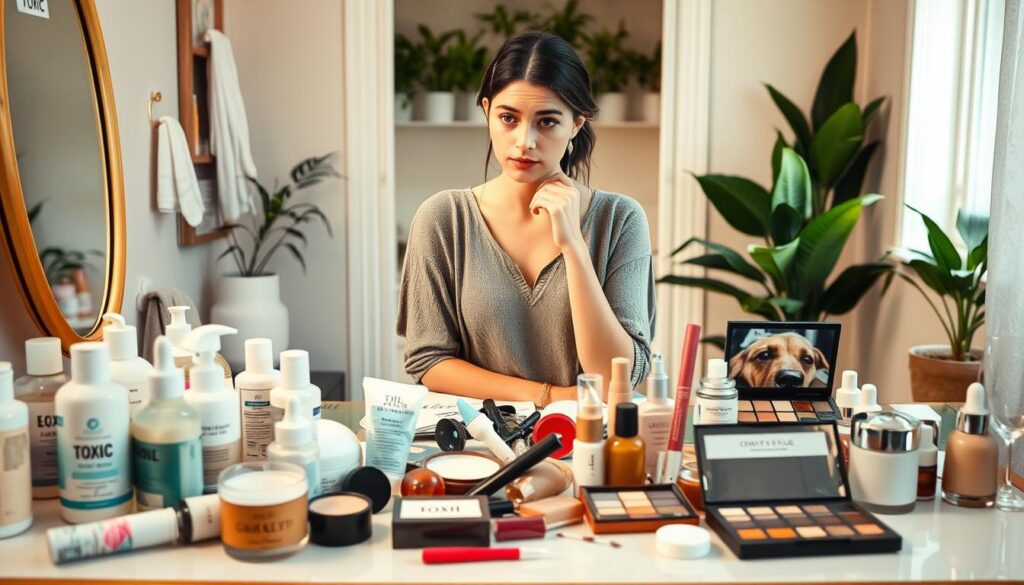
Using too many “natural” acids can harm your skin. Fruit enzymes and botanical extracts can strip your skin barrier. Your face doesn’t need that kind of stress.
DIY skincare might seem appealing, but it’s risky. Mixing kitchen ingredients can create a bacterial mess. Some things are best left to experts, like skincare formulation.
The beauty industry lacks real oversight. “Non-toxic” claims are not well-regulated. Companies often focus on profit over product quality.
Don’t think expensive products are always better. Sometimes, you’re just paying for fancy packaging. That $100 serum might have the same ingredients as a $30 one, but with better marketing.
Formulating with natural ingredients is hard. Preservation and stability can be tricky. The clean beauty journey needs careful consideration, like fact-checking a news headline.
Your skin deserves more than just marketing promises. Approach clean beauty with a critical eye. Your skin will appreciate it.
Budgeting for the Switch
Switching to non-toxic skincare doesn’t have to break the bank. It’s like updating your wardrobe without throwing away everything. You can start with small changes.
Start by using up what you already have. Replace products as they finish, not all at once. This way, you spread out the cost over time.
Think about your clean beauty budget like this: focus on organic for products with lots of plants (like oils and moisturizers). But for products with less plant stuff (like clay masks), you can save money with non-organic options.
It’s not about being perfect. It’s about making smart choices. Don’t spend a lot on things that don’t have much plant stuff.
Keep it simple. You don’t need a lot of products. A good cleanser, serum, and moisturizer can do a lot. Fewer products mean more money for better ones.
Remember, money stress can make you look older than any bad ingredient. Make your clean beauty journey affordable and empowering.
Quick budgeting wins:
- Replace multi-purpose products first (cleanser, moisturizer)
- Shop seasonal sales at clean beauty retailers
- Consider travel sizes before committing to full products
- Follow the 80/20 rule: 80% of results come from 20% of products
This isn’t about spending more. It’s about spending wisely. Your skin and wallet will appreciate it.
Recap
We’ve explored the world of clean beauty together. We’ve learned about ingredients and how to stay within a budget. It’s more than just changing products; it’s about changing how we think about our skin care.
Ingredient transparency is key. Brands like Beautycounter and Drunk Elephant are showing us the way. They make it clear what’s in their products, making it easy to understand.
Choosing clean beauty is a vote for a better future. It’s about moving away from harsh chemicals and towards healthier options. This change is for our skin, our health, and the planet. It’s about making progress, not achieving perfection.