
I used to think “unscented” meant no scent at all. But my skin had other plans, making me feel like I was in a French revolution.
Hidden fragrances are more than just tricky labels. It’s a whole industry hiding from our health. It’s like buying a “healthy” salad that’s really full of bad oils.
Companies sneak fragrance chemicals into products they say are gentle. And we pay a lot for it, not knowing it might harm our skin.
Research shows that fragrances can cause skin problems. The NHS says perfumed cosmetics can make skin worse. Even 1 in 10 people worldwide react to these allergens.
Many “unscented” products actually have hidden fragrances. These can be more irritating than the scents they cover up. It’s like lipstick on a pig, but it might make your skin break out.
Legal Definitions of “Fragrance-Free”
Welcome to the wild west of skincare labeling, where ‘fragrance-free’ means whatever companies want it to mean. It’s like a choose-your-own-adventure novel, but with more risk of allergic reactions.
The FDA’s approach to fragrance regulation is quite loose. They technically require truth in labeling, but the beauty industry finds ways to interpret it loosely. It’s like political promises: technically true but practically useless.
Here’s the legal reality: “fragrance-free” should mean zero added fragrance compounds. No perfume in skincare. No masking agents. No scent chemicals hiding in your moisturizer.
But without strict testing and enforcement? Companies take what they want from definitions. It’s like “alternative facts” in skincare, where marketing rewrites reality for profit.
The worst part? Companies use natural essential oils and say they’re “fragrance-free” because they’re “natural.” Poison ivy is natural too, but I wouldn’t put it on my face.
So, what does this mean for you? Reading labels becomes a detective job and a philosophy class. You’re not just buying skincare; you’re decoding corporate messages.
The answer? Look beyond the marketing. Check ingredient lists carefully. In the world of fragrance labeling, the truth is often hidden but visible.
Fragrance-Free vs. Unscented
Beauty labels can be confusing, like political promises. They seem true but often mean little. The difference between “fragrance-free” and “unscented” is a big trick in the cosmetics world.
Fragrance-free means no added scents. It’s what your sensitive skin needs. But “unscented” often means they’ve added fragrances to hide other smells. It’s like using air fresheners in a chemical plant and calling it “nature-scented.”
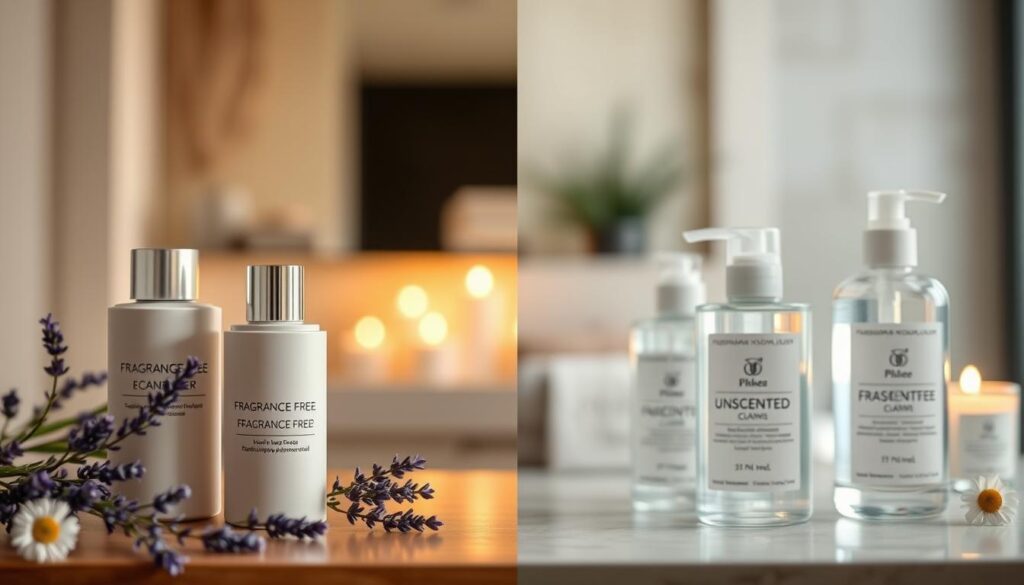
This trickery is like something politicians would do. Imagine if restaurants said “salt-free” but used potassium chloride instead. It’s technically right but not right.
People with sensitive skin often choose unscented thinking it’s safer. But they might be exposing themselves to irritants. The difference between unscented and fragrance-free is real and important.
Masking agents in unscented products are often fragrances themselves. They’re like lipstick on a pig. Your skin might look like Mars.
For sensitive skin, fragrance-free is the clear choice. Unscented can hide problems. It’s not just about smell but what’s hidden.
Common Fragrance Ingredients to Look For
Imagine a game of “Where’s Waldo?” but instead of Waldo, it’s about finding hidden perfume in skincare. This game can turn your skin into a map of irritation. It’s all about spotting the sneaky chemical irritants.
Limonene might seem like fresh citrus but can irritate your skin. Linalool hides in floral scents, acting as a double agent. Benzyl alcohol, on the other hand, is the unwanted guest in “fragrance-free” products.
Essential oils are another group to watch out for. Lavender oil can be harsh on sensitive skin. Citrus extracts, like lemon juice, can irritate even more. These oils often hide in products meant for sensitive skin, which is a big betrayal.
Companies get creative with labels like “masking fragrance” or “natural scent.” It’s like calling a wolf a “fluffy woodland companion.” The name might change, but the effect is the same.
| Ingredient | Common Sources | Potential Effects |
|---|---|---|
| Limonene | Citrus-scented products | Skin irritation, sensitization |
| Linalool | Floral products, lavender | Allergic reactions, dermatitis |
| Benzyl Alcohol | Preservatives, fragrances | Skin dryness, irritation |
| Essential Oils | “Natural” products | Varying sensitivity reactions |
| Citronellol | Rose-scented items | Contact allergies, redness |
Reading ingredient lists is like detective work. Look for specific names beyond the marketing. Your skin will be grateful for this careful search.
It’s ironic that these ingredients are in products for sensitive skin. It’s like finding meat in a vegetarian dish. Knowing these hidden ingredients helps you choose better perfume in skincare.
Fragrance/Sensitive Skin Connection
Your skin isn’t being dramatic – it’s just aware of the chemical warfare in your skincare routine. That pleasant scent might be your skin’s worst frenemy, smiling while slowly undermining your epidermal democracy.
Fragrance compounds, whether synthetic or from natural essential oils, trigger more than just allergic reactions. They’re the ultimate gatecrashers at your skin’s barrier function party. Studies show up to 10% of people worldwide develop sensitivities to fragrance allergens. Your favorite scented moisturizer might be slowly radicalizing your immune system.
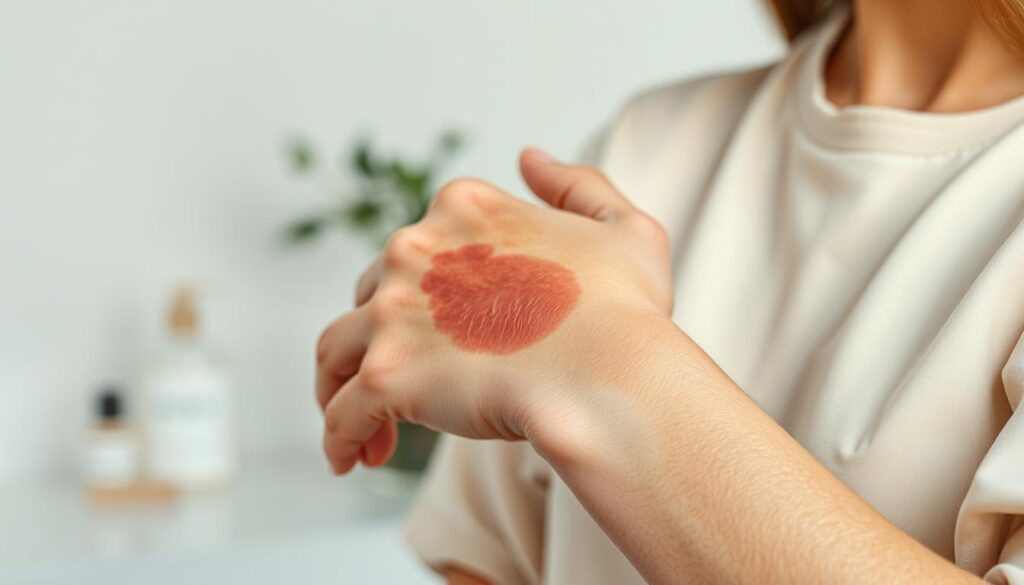
The science is brutally clear: fragrance chemicals disrupt your skin’s microbiome like a bull in a china shop. They compromise your barrier function, creating sensitivities where none existed before. It’s the skincare equivalent of death by a thousand cuts – each scented product slowly eroding your skin’s resilience.
Common reactions include:
- Stinging and redness that makes you look like you just lost an argument
- Dryness that could rival the Sahara desert
- Allergic contact dermatitis – your skin’s version of filing a formal complaint
- Compromised barrier function that leaves you vulnerable to environmental stressors
The most frustrating part? Many people develop fragrance sensitivities over time through repeated exposure. Your skin remembers every scented insult, building resistance until it stages a full-blown rebellion.
| Reaction Type | Immediate Symptoms | Long-term Consequences | Prevention Strategy |
|---|---|---|---|
| Irritant Contact Dermatitis | Redness, stinging, burning | Barrier function compromise | Avoid known irritants |
| Allergic Contact Dermatitis | Itching, swelling, blisters | Permanent sensitivity | Patch testing |
| Photosensitivity | Sunburn-like reaction | Increased sun damage risk | Sun protection essential |
| Barrier Damage | Dryness, flaking | Environmental vulnerability | Barrier repair ingredients |
Think of fragrance sensitivity as your skin’s protest movement against chemical overload. The inflammation isn’t just a reaction – it’s your body’s way of waving a red flag. Your sensitive skin isn’t being difficult; it’s just more politically conscious than your beauty cabinet.
The solution isn’t complicated: listen to your skin’s manifesto. Ditch the fragranced products before your epidermis starts organizing a full-scale revolution. Your skin’s comfort should never be compromised for a temporary scent experience.
Brands Leading in This Space
Most skincare companies keep their secrets hidden. But a few brave brands are different. They openly talk about perfume in skincare. They’re like the truth-tellers of the beauty world.
Conscious Skincare is one such brand. They believe in keeping things simple. If an ingredient might harm your skin, they don’t use it. No hidden chemicals or tricks.
They have a range of products that show their commitment to good skincare:
- Gentle Face Wash that cleanses without fragrance
- Gentle Day Cream that moisturizes without perfume
- Gentle Serum that works without scent
- Fragrance-Free Body Lotion that hydrates without tricks
- Fragrance-Free Body Wash that cleanses without perfume
These products show you don’t need perfume in skincare to be effective. It’s like a government that doesn’t take money from big companies. It’s rare, but it works well.
Their fragrance-free products are a big deal. They work without the need for perfume. They focus on results, not just smells.
Other brands could learn from this. Instead of hiding what’s in their products, they should be open. Fragrance-free skincare is all about being honest.
Conclusion
So, where do we stand in the fragrance debate? We’re trying to separate marketing myths from real science. Choosing fragrance-free isn’t about giving up on beauty. It’s about putting skin health first, like a policy expert does.
For people with sensitive skin, avoiding perfume in skincare is a must. It’s like fact-checking news before sharing it. Your skin needs the same careful check as your news feed.
The facts are clear: fragrance-free products lower irritation risks and help your skin’s natural barrier. This move is a return to science in skincare, not just marketing tricks.
Think of perfume in skincare as empty promises—exciting but lacking real value. Your face shouldn’t be a lab for chemicals, just like democracy shouldn’t test bad ideas.
The choice is clear: choose long-term skin health over quick beauty fixes. Demand honesty from beauty brands like you would from politicians. Your skin will be grateful for the careful reading.