The Proposed GRAS Rule has become a useful test case for ingredient transparency because it asks a direct question: should companies be able to rely on self-affirmed safety conclusions for food substances without notifying the FDA or the public? For food shoppers, the answer may affect how visible certain safety files become. For beauty shoppers, the effect is less direct, but the transparency signal is still worth reading carefully.
What The Proposed GRAS Rule Would Change
On August 10, 2026, HHS Secretary Robert F. Kennedy Jr. directed the FDA to explore rulemaking to eliminate the self-affirmed GRAS pathway, citing concerns that some companies introduced new ingredients with unknown safety data without telling FDA or the public, according to HHS. GRAS means generally recognized as safe, and the issue is not whether every food ingredient is unsafe. The issue is whether the public system sees enough information before and after substances enter the food supply.
Proposed GRAS Rule Timing And Scope
The regulatory entry for RIN 0910-AJ02 states that FDA is considering revisions to 21 CFR parts 170 and 570 that would require submission of GRAS notices for human and animal food substances claimed to be GRAS under intended conditions of use. Under the existing system described in the research, notification is voluntary. If finalized, substances used under the GRAS provision without the required notice would be presumed not GRAS unless the notification requirement is met, as described by Reginfo.
The research also notes that the proposal was published on August 11, 2026, and that the public comment period is open through December 9, 2026. Because today is September 21, 2026, that comment window has not closed. The proposal is not final as of this date, so cautious wording matters. Companies, consumers, and public interest groups may read the same proposal differently, and the final rule could change after agency review of comments.
What Mandatory Notice Could And Could Not Mean
A required notice system would not automatically mean FDA premarket approval for every GRAS substance. The research indicates that companies could still market qualifying uses before FDA completes its review. That limitation matters because transparency is not identical to approval, and a public notice inventory is not the same thing as a guarantee of individual suitability.
The proposal also includes a time-limited streamlined pathway for substances already on the market based on self-affirmed GRAS conclusions. In plain language, that means the agency is not only looking forward to future substances. It is also seeking a way to receive notices for certain existing uses and to support post-market safety evaluation priorities.
Food Transparency Under The Proposed GRAS Rule
For food ingredient transparency, the central shift is visibility. If more GRAS notices are submitted, the FDA and the public would have a broader inventory of substances and intended uses that companies claim meet the GRAS standard. That does not answer every consumer question, but it gives journalists, researchers, advocates, manufacturers, and shoppers more information to compare.
The rule would apply to human and animal food substances, and the research includes indirect sources such as substances that may migrate from food packaging. That scope is one reason the proposal is being watched closely. Ingredient transparency is not only about the visible ingredient list on a package. It can also involve supplier records, intended use, exposure assumptions, and what regulators can see.
From an ethical consumer perspective, the shift is less about panic and more about documentation. Better notice systems may make it easier to ask whether a company has a public safety rationale, whether the intended use is narrow or broad, and whether an ingredient has been evaluated only behind closed doors. Those are process questions, not personal medical conclusions.
Why Beauty Shoppers Should Read This Carefully
The Proposed GRAS Rule is primarily about food substances. The research is clear that it does not directly address cosmetics or beauty products beyond existing labeling obligations. Cosmetics are regulated separately, and cosmetic ingredients are not covered by this food-focused proposal unless they also enter the food supply. That distinction is essential for anyone comparing food policy with skincare labels.
Still, beauty shoppers often see overlapping words: botanical, food-grade, edible, natural, clean, safe, and non-toxic. Those marketing cues can blur categories. A substance being discussed in a food GRAS context does not automatically tell you how it performs on skin, how it behaves in a finished cosmetic formula, or whether it is suitable for a person with a specific allergy, skin condition, pregnancy-related concern, medication use, or medical history.
As a cruelty-free skincare advocate, I see this as a transparency lesson rather than a reason to overstate the rule. A stronger food notice process could raise expectations for documentation across consumer goods, but it would not rewrite cosmetic law by itself. For a closer beauty-specific reading, see our related analysis of the natural beauty label implications.
What The Proposed GRAS Rule Does Not Do
This proposal does not create a cruelty-free standard. It does not require full cosmetic fragrance disclosure. It does not decide whether a DIY skincare ingredient is appropriate for your face or body. It also does not make natural ingredients automatically safer than synthetic ingredients. The supported takeaway is narrower: for food-related substances, FDA is considering a shift from voluntary notice toward required notice for GRAS claims under intended use.
That narrower reading protects consumers from two common errors. The first is assuming the rule covers every wellness or beauty product. The second is dismissing it because it is food-focused. A food transparency reform can still influence public expectations, supplier conversations, and consumer questions, even when it does not directly regulate a moisturizer, shampoo, serum, or homemade mask.
Practical Label Reading For Food And Beauty
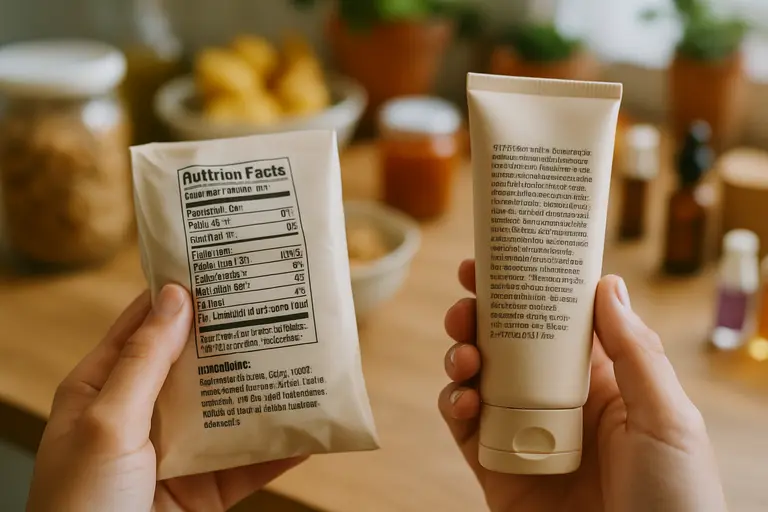
For shoppers, the most useful response is not alarm. It is better questioning. On food products, the rule discussion points toward asking how a company supports the ingredients and intended uses it relies on. On beauty products, the same mindset can help shoppers avoid vague marketing and look for clearer ingredient lists, use instructions, and supplier accountability.
Related consumer education resources in our network include our partners at CPCWA, which may be useful for readers who compare wellness information across public-facing sites. The key is to separate general education from personal advice. Ingredient transparency can support better questions, but it does not replace a clinician, allergist, dermatologist, registered dietitian, or other qualified professional who knows your health context.
- Ask whether a food brand has submitted or plans to submit relevant GRAS notices if the final rule requires them.
- For beauty products, check whether the ingredient list is clear, whether fragrance disclosure is limited, and whether claims are specific rather than broad.
- Be cautious with claims that borrow authority from food language, such as food-grade or edible, when the product is meant for skin or hair.
- For DIY recipes, avoid assuming that kitchen familiarity equals skin suitability; personal tolerance varies.
Cost and paperwork are also part of the proposal. The research notes expected one-time costs for manufacturers, such as reading the rule, revising internal procedures, and preparing streamlined submissions, plus ongoing costs for future GRAS notices. Those costs may be debated during the comment period, but they are part of the same transparency tradeoff: more public-facing information usually requires more documentation.
Questions To Ask About The Proposed GRAS Rule
The Proposed GRAS Rule should be read as a food ingredient transparency proposal with indirect relevance for ethical beauty shoppers. It may expand public visibility into GRAS notices and improve FDA awareness of substances in the food supply, but it does not turn every ingredient question into a simple safe or unsafe label.
The strongest consumer position is cautious and evidence-aware: ask what the rule actually covers, what remains outside its scope, and what documentation a brand can provide. For food, that may mean watching whether notices become easier to find. For beauty, it may mean asking brands for clearer ingredient explanations without assuming this food rule directly governs cosmetic formulas.
If ingredient questions connect to allergies, pregnancy, a diagnosed condition, medication use, skin irritation, nutrition needs, or a child’s health, discuss them with a qualified clinician. Regulatory transparency can support better conversations, but personal health decisions belong with professionals who can evaluate your individual context.