Hair Product Transparency has become a central beauty justice issue because recent campaigns and product testing have raised questions about what shoppers can see on labels, especially in products marketed to women of color and people with textured hair. The concern is not that every product will harm every person. The concern is that shoppers, salon workers, parents, and clinicians often have too little information to compare ingredient risks, fragrance disclosures, contamination findings, and marketing claims with care.
What Hair Product Transparency Campaigns Are Showing
Beauty justice campaigns are drawing attention to a gap between hair-care marketing and the information people need to make informed choices. This is especially relevant for leave-on styling products, hair dyes, children’s temporary color products, braiding hair, shampoos, and products marketed with “clean” language. Recent testing cited in campaign materials does not provide a personal risk score for any one user, but it does show why clearer disclosure matters.
Why Hair Product Transparency Matters For Textured Hair
Textured-hair routines may involve multiple product types: conditioners, gels, creams, edge controls, oils, relaxer-adjacent products, dyes, braiding hair, wigs, and extensions. A person may use several of these products on the same day or over many years. Beauty justice advocates argue that labels should help people understand what they are applying, wearing, inhaling during styling, or being exposed to in salon settings.
Hair Product Transparency also intersects with access. If safer-feeling options are harder to identify, cost more, or are not stocked in stores serving Black communities and other communities of color, the issue becomes more than a label problem. It becomes an equity problem in beauty retail, salon work, and routine self-care.
Testing Results Do Not Equal Personal Diagnosis
On April 14, 2026, Consumer Reports said it tested 23 popular at-home hair dye products and found detectable levels of toxic chemicals in every product, including methylene chloride in every product and benzene in two children’s hair chalks, according to its hair dye testing statement. Those results are a reason to ask sharper questions, not a basis for self-diagnosis. Product use, frequency, ventilation, age, pregnancy status, work exposure, and health history can all affect what a finding may mean for an individual.
Label Gaps In Products Marketed As Clean
The word “clean” can sound reassuring, yet it is not a full safety disclosure by itself. A label can avoid certain well-known ingredients and still leave shoppers unclear about fragrance mixtures, contaminants, chemical byproducts, or ingredients with limited public safety data. That is one reason ingredient transparency advocates are pressing for disclosures that go beyond branding language.
Clean Claims Need Evidence, Not Assumptions
A UCSB study published on April 21, 2026 examined 150 textured-hair products marketed as “clean” and reported that more than 90% of the products with available data were classified as moderate, rather than low, risk to human health, according to the university’s report on hidden hazards in clean hair products. The finding does not mean every user will experience a health problem. It does suggest that “clean” language may not give enough detail for shoppers who want to compare products with caution.
Campaign research also described other concerns, including formaldehyde-releasing agents, certain siloxanes, cocamide DEA notices, heavy metals in synthetic braiding hair, and volatile organic compounds found across tested braiding-hair samples. The supported takeaway is measured: labels and claims may not fully reflect what independent testing finds, and product categories serving textured hair deserve the same level of scrutiny as any other beauty category.
Ethical Beauty Choices Without Fear-Based Shopping
Ethical beauty should not rely on panic. A cautious approach asks what is known, what is uncertain, and what information is missing. For example, a product may be cruelty-free yet still lack enough detail about fragrance components, contaminants, sourcing, or ingredient safety. Another product may have a long ingredient list that looks intimidating but includes substances used for preservation, texture, or stability.
Hair Product Transparency asks brands and retailers to make comparison easier. That can include full ingredient lists, clearer fragrance disclosure, safety data access, batch testing where relevant, and plain-language explanations of why certain ingredients are used. Readers interested in the broader ethical label issue can review this related discussion of ingredient transparency in ethical beauty.
If readers are exploring broader lifestyle topics within the same network, they might find it beneficial to visit Petraclass for related wellness and consumer topics. However, remember that hair-care decisions require specific product evaluations. A preference for “natural” or “clean” products based on general wellness advice must still be supported by checking actual ingredient disclosure and verifying evidence behind claims.
Practical Label Checks For Hair Routines
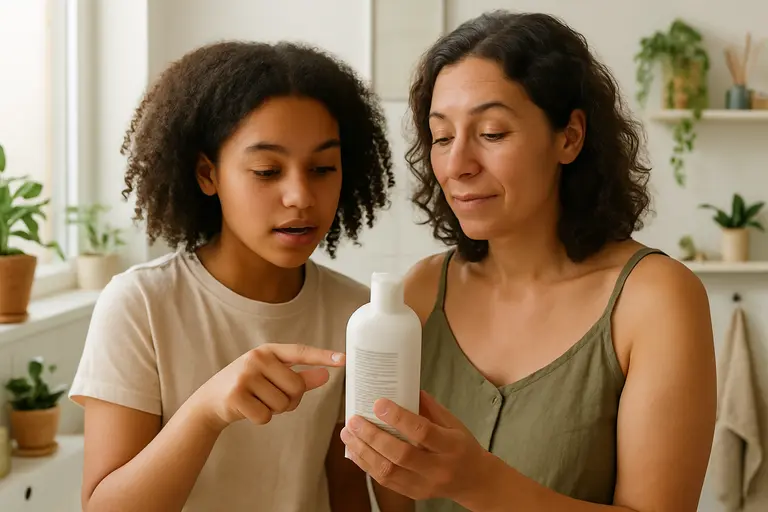
Shoppers cannot personally test every product for contaminants, and many people do not have the time or budget to replace an entire routine. A practical response is to prioritize the products with the most frequent use, the longest contact time, or the closest contact with the scalp and face. Salon workers may also need to think about repeated occupational exposure and ventilation, which is different from occasional home use.
Hair Product Transparency Signals Shoppers Can Check
Some label and brand signals can help, even though none provide a guarantee. The goal is not to chase perfect products. It is to reduce confusion and choose brands that answer reasonable questions.
- Look for a complete ingredient list rather than broad phrases such as “botanical blend” without detail.
- Check whether fragrance ingredients are disclosed beyond the single word “fragrance” or “parfum.”
- Be cautious with children’s color products and temporary hair products if testing has raised questions in that category.
- For braiding hair, wigs, and extensions, look for brands that publish testing practices and avoid relying only on “safe” claims.
- If you have scalp irritation, asthma, pregnancy-related concerns, allergies, or a history of reactions, discuss product use with a clinician before making major changes.
Hair Product Transparency does not require shoppers to become toxicologists. It does require brands and retailers to provide enough information for reasonable comparison, especially when products are marketed to communities that have historically had fewer safe, affordable, and well-tested choices.
Beauty Justice Questions For Hair Product Transparency
Beauty justice campaigns are revealing a practical problem: many shoppers are asked to trust claims that are not matched by full disclosure. Ingredient labels, “clean” marketing, retailer standards, and voluntary brand promises can each leave gaps. Regulatory updates may address some issues over time, but shoppers still need clearer information at the point of purchase.
For personal health decisions, especially during pregnancy, for children, for salon workers, or for anyone with allergies, respiratory concerns, scalp symptoms, or chemical sensitivities, consult a clinician. Useful questions to ask include: Are any products in my routine likely to irritate my scalp or skin? Should I avoid certain product types because of my health history or medications? Do my symptoms suggest I should stop using a product until I am evaluated? What signs would warrant urgent care?
Hair Product Transparency is not about rejecting beauty practices that carry cultural meaning. It is about giving people better information so protective styles, color, cleansing, and styling can be chosen with clearer tradeoffs and less guesswork.