The internet is full of bad skincare tips. One minute, you’re watching a calm video about aloe vera. The next, you’re told to mix lemon juice and baking soda on your face. This mix has the pH balance of a supervillain’s lair.
This guide is here to help. We’re leaving the DIY mess behind and entering a smarter world. Think of it as a friendly, slightly sarcastic class.
Learning to take care of your skin is a big step in self-care. It’s also a way to fight against expensive, overhyped products that take up space in your bathroom.
We’re not just mixing things randomly. We’re studying the ingredients, learning about chemistry, and finding them ethically. Our goal is to give you the tools to create products that are as effective as they are real.
Goodbye to guessing. Hello to making skincare with a purpose.
FAQ
Q: What are some natural beauty ingredients that can help with skin care?
A: Natural beauty ingredients like coconut oil, honey, and green tea are great for skin care. They moisturize, soothe, and protect the skin.
Q: How can I incorporate natural beauty ingredients into my skincare routine?
A: You can add natural beauty ingredients to your skincare routine by using them as face masks, moisturizers, or even as part of your makeup routine.
Q: What are some natural beauty ingredients that can help with hair care?
A: Natural beauty ingredients like coconut oil, olive oil, and avocado can help nourish and strengthen your hair.
Q: How can I incorporate natural beauty ingredients into my hair care routine?
A: You can use natural beauty ingredients like coconut oil and olive oil as hair masks or add them to your shampoo and conditioner for extra nourishment.
Q: What are some natural beauty ingredients that can help with nail care?
A: Natural beauty ingredients like coconut oil, lemon juice, and tea tree oil can help strengthen and moisturize your nails.
Q: How can I incorporate natural beauty ingredients into my nail care routine?
A: You can use natural beauty ingredients like coconut oil and lemon juice as nail treatments or add them to your nail polish for extra nourishment.
Q: What are some natural beauty ingredients that can help with body care?
A: Natural beauty ingredients like coconut oil, shea butter, and essential oils can help moisturize and nourish your body.
Q: How can I incorporate natural beauty ingredients into my body care routine?
A: You can use natural beauty ingredients like coconut oil and shea butter as body moisturizers or add them to your bath water for extra nourishment.
Q: What are some natural beauty ingredients that can help with makeup?
A: Natural beauty ingredients like coconut oil, honey, and green tea can be used as makeup removers, moisturizers, or even as ingredients in homemade makeup products.
Q: How can I incorporate natural beauty ingredients into my makeup routine?
A: You can use natural beauty ingredients like coconut oil and honey as makeup removers or add them to your homemade makeup products for extra nourishment.
Q: What are some natural beauty ingredients that can help with oral care?
A: Natural beauty ingredients like coconut oil, baking soda, and essential oils can help strengthen and freshen your breath.
Q: How can I incorporate natural beauty ingredients into my oral care routine?
A: You can use natural beauty ingredients like coconut oil and baking soda as mouthwashes or add them to your homemade toothpaste for extra nourishment.
Q: What are some natural beauty ingredients that can help with foot care?
A: Natural beauty ingredients like coconut oil, sugar, and essential oils can help soften and moisturize your feet.
Q: How can I incorporate natural beauty ingredients into my foot care routine?
A: You can use natural beauty ingredients like coconut oil and sugar as foot scrubs or add them to your homemade foot creams for extra nourishment.
Q: What are some natural beauty ingredients that can help with hand care?
A: Natural beauty ingredients like coconut oil, shea butter, and essential oils can help moisturize and nourish your hands.
Q: How can I incorporate natural beauty ingredients into my hand care routine?
A: You can use natural beauty ingredients like coconut oil and shea butter as hand creams or add them to your homemade hand lotions for extra nourishment.
Q: What are some natural beauty ingredients that can help with face masks?
A: Natural beauty ingredients like honey, avocado, and green tea can be used to create nourishing face masks.
Q: How can I incorporate natural beauty ingredients into my face mask routine?
A: You can use natural beauty ingredients like honey and avocado to create nourishing face masks or add them to your homemade face masks for extra nourishment.
Q: What are some natural beauty ingredients that can help with body scrubs?
A: Natural beauty ingredients like sugar, salt, and essential oils can help exfoliate and nourish your skin.
Q: How can I incorporate natural beauty ingredients into my body scrub routine?
A: You can use natural beauty ingredients like sugar and salt to create nourishing body scrubs or add them to your homemade body scrubs for extra nourishment.
Q: What are some natural beauty ingredients that can help with homemade makeup products?
A: Natural beauty ingredients like coconut oil, honey, and green tea can be used to create nourishing homemade makeup products.
Q: How can I incorporate natural beauty ingredients into my homemade makeup products?
A: You can use natural beauty ingredients like coconut oil and honey to create nourishing homemade makeup products or add them to your homemade makeup recipes for extra nourishment.
Understanding Active Compounds
Think of your favorite natural skincare ingredients as a rock band. The carrier oils are like the rhythm section, providing the base. But the active compounds are like the lead singers and guitar heroes—the ones your skin loves.
Anyone can follow a recipe. But understanding the biochemistry is what makes you a true formulator.
Let’s meet the molecular celebrities. First up: fatty acids. Not all fats are created equal, and your skin knows the difference.
- Linoleic Acid (Omega-6): This is the lightweight, non-comedogenic MVP for oily or acne-prone skin. It helps repair the skin’s barrier without feeling greasy. Think of it as the precise bass player—essential, clean, and supportive.
- Oleic Acid (Omega-9): The richer, more emollient cousin. It’s fantastic for dry, mature skin needing deep nourishment but can be a bit heavy for oilier types. This is the powerful lead vocalist—commanding and deeply penetrating.
Choosing an oil high in linoleic acid (like rosehip or grapeseed) versus one rich in oleic acid (like olive or avocado) isn’t just about texture. It’s a targeted strategy.
Next, the bodyguards of your formulation: antioxidants. Vitamin E (tocopherol) isn’t just a buzzword for your serum. It’s a multitasker. Inside the bottle, it sacrifices itself to neutralize free radicals, preventing your precious oils from turning rancid—that’s the “oxidation” in “going off.” On your skin, it does the same heroic deed, protecting your cells from environmental damage.
Botanical extracts like rosemary CO2 extract play this double duty perfectly. They’re potent antioxidants that preserve your creation while delivering their benefits to your face. It’s like hiring a security guard who also gives great life advice.
This brings us to the true heavy lifters: phytochemicals. This is the umbrella term for the thousands of bioactive compounds in plants. Curcumin in turmeric, catechins in green tea, resveratrol in grapes—these aren’t just “good stuff.” They’re specific molecules with studied actions: calming inflammation, inhibiting pigmentation, boosting collagen.
When you see “chamomile extract” on a label, the magic isn’t in the word “chamomile.” It’s in the bisabolol and apigenin inside it—the specific phytochemicals that reduce redness. This understanding is your superpower. It moves you from guessing (“This oil is good for skin”) to knowing (“This oil is high in linoleic acid, which will help balance my sebum production”).
It’s the difference between throwing random ingredients into a pot and composing a symphony for your skin. The grammar of skincare isn’t magic. It’s science. And learning to speak it fluently is how you write your own success story.
Understanding the INCI List and Its Importance
The INCI list is a key component in the world of organic skincare. It stands for International Nomenclature of Cosmetic Ingredients. This list ensures that all ingredients in skincare products are labeled accurately and in compliance with international standards. This transparency is vital for consumers who want to know exactly what they are putting on their skin.
By using the INCI list, you can make informed choices about the products you use. It helps you avoid hidden ingredients and ensures that the products you choose align with your values and preferences. This list is a cornerstone of ethical sourcing in the beauty industry, promoting transparency and accountability.
Organic skincare components are often listed in the INCI list, providing a clear view of the ingredients used. This information is essential for those who prioritize natural and organic products. It allows you to choose products that are free from harsh chemicals and artificial additives, promoting a more sustainable beauty routine.
Overall, the INCI list plays a significant role in the organic skincare industry. It ensures that products are transparent, ethical, and meet international standards. By understanding the INCI list, you can make better choices for your skin and contribute to a more sustainable beauty industry.
Oil Types and Their Skin Benefits
Imagine skincare oils as a social gathering. Coconut oil is the loud talker, while squalane is the quiet, sophisticated one. Choosing the right oil is like curating a collection, not just slapping on a product.
The comedogenic scale is like a map for oils. It shows how likely an oil is to clog pores. Oily skin should avoid high numbers, while dry skin can handle them better.
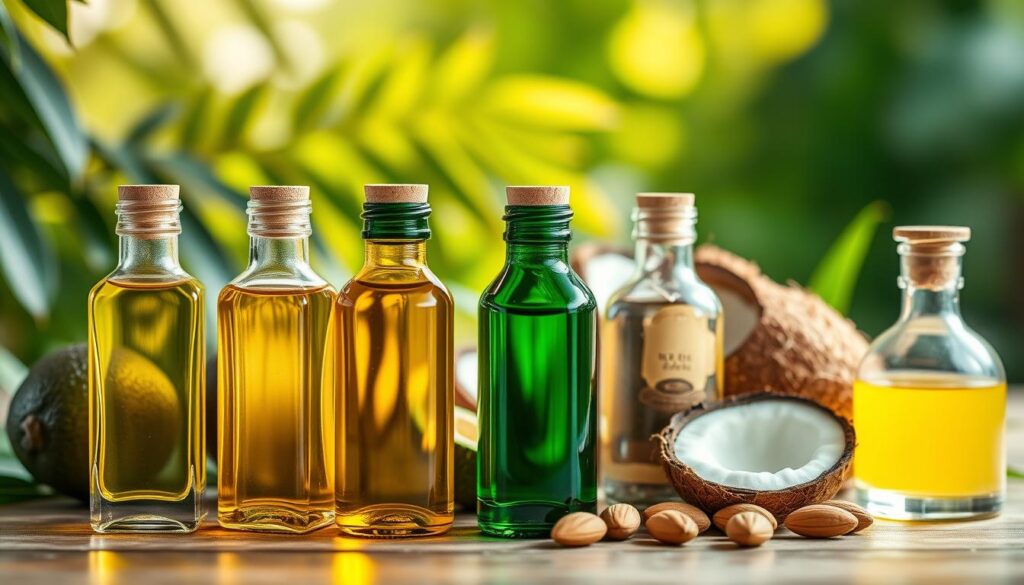
Squalane is a star for many. It’s made from sugarcane and is great for oily skin. It hydrates without making skin oily.
Not all carrier oils are the same. Some are loud and greasy, while others are quiet and sophisticated. Olive oil can be greasy, but argan and jojoba are silky.
Knowing about oil types is important. Here’s a quick guide to the main types of natural skincare ingredients:
- Carrier Oils: These are the workhorses. Jojoba, rosehip, and argan are examples. They help essential oils work better.
- Plant Butters: These are the rich, solid oils. Shea, mango, and cocoa are examples. They lock in moisture.
- Esters: These are the modern, silky oils. They’re made from fatty acids and alcohols. They’re great for oily skin.
- Waxes: These are the structural oils. Beeswax and carnauba are examples. They help keep moisture in.
Choosing the right oil for your skin is an art. Dry skin might need shea butter, while combination skin might prefer jojoba oil and an ester.
Oils do more than just soften the skin. They can fight inflammation, help with regeneration, or repair the skin barrier. They’re active players in your skin’s health.
Don’t just debate coconut oil versus olive oil. It’s like comparing the Beatles to the Stones. Both are great, but it depends on your skin’s needs. Dry skin might need a rich oil, while oily skin might prefer something light.
Listen to your skin and choose oils that work with it. Start with samples and patch test. This way, you can find the right oil for you.
Understanding oils makes you more than just a consumer. You become a formulator, choosing oils that work with your skin. This is the true power of knowing about oil types and their benefits.
Plant Extracts and Their Properties
Carrier oils are like the steady beat in your skincare mix. Botanical extracts add the surprise and excitement. They’re packed with nature’s wisdom, ready to enhance your skincare routine.
Extracts vary greatly. A chamomile extract might be water-based or oil-based. Each type has its own strength and character. It’s like choosing between a book, a poem, or a tweet to tell the same story.
Making your own herbal skincare is a fun DIY project. Imagine chamomile petals soaking in olive oil, slowly releasing their goodness. These homemade macerations are charming and tell a story of patience and connection. Yet, they can be inconsistent, like two different versions of the same story.
Professional extracts, on the other hand, offer precision and reliability. They have standardized percentages and guaranteed potency. It’s like the difference between a folk song and a studio-recorded track.
Let’s look at some top botanicals:
Green Tea Extract is a powerhouse against free radicals. It’s like a friend who always has the facts ready. Studies in the Journal of Clinical and Aesthetic Dermatology show its protective effects.
Licorice Root brightens your skin. It works like a diplomat, calming your skin’s tone. Its active compound, glabridin, is like a skilled editor.
Centella Asiatica (Cica) heals your skin. It’s like a conductor bringing an orchestra together after damage. It stimulates collagen and calms redness.
The method of extraction matters a lot. Water-based glycerites capture water-soluble compounds. Oil macerations get fat-soluble actives. Supercritical CO2 extracts get everything, like a biographer with unlimited access.
Your skincare formulation tells a story. It can be calming, invigorating, or healing. Each mix creates a unique story for your skin.
Remember, solubility is key. Water-loving extracts won’t mix well with oil-only products. It’s like trying to mix oil painters with watercolorists.
Start with professional extracts for consistency. Use home macerations for special products like bath oils. This mix offers both reliability and personal touch.
Plant extracts turn basic skincare into targeted therapy. They blend art and science, tradition and technology. Choose them wisely, and your skincare will truly perform.
Understanding Phototoxicity and Its Impact on Skincare
Phototoxicity is a significant concern in the world of skincare, affecting how we interact with the sun and our skin’s health. It occurs when certain ingredients in skincare products react with sunlight, leading to adverse effects. This is why it’s essential to understand the impact of phototoxicity on skincare and how to prevent it.
What is Phototoxicity?
Phototoxicity is a condition where certain substances in skincare products become harmful when exposed to sunlight. These substances can cause skin irritation, redness, and even more severe reactions. It’s a critical issue that skincare enthusiasts and professionals must address to ensure safe and effective skincare routines.
Common Ingredients That Can Cause Phototoxicity
Several common skincare ingredients are known to cause phototoxicity. These include:
- Retinoids: Known for their anti-aging properties, retinoids can increase the skin’s sensitivity to sunlight, leading to phototoxicity.
- Salicylic Acid: While effective in treating acne, salicylic acid can also cause phototoxicity when exposed to UV rays.
- Hydroquinone: Used to lighten skin, hydroquinone can become phototoxic when combined with sunlight, leading to skin darkening.
It’s important to note that these ingredients are not inherently bad. They are valuable in skincare when used correctly and with caution.
Preventing Phototoxicity in Your Skincare Routine
To prevent phototoxicity, it’s vital to follow a few key steps:
- Choose Sun-Safe Products: Opt for products that are labeled as “non-phototoxic” or “photostable.” These products are formulated to minimize the risk of phototoxic reactions.
- Apply Sunscreen: Always apply a broad-spectrum sunscreen with an SPF of at least 30 before going outside. This will help protect your skin from harmful UV rays.
- Use Products in the Morning: Apply skincare products that may contain phototoxic ingredients in the morning, allowing them to be fully absorbed before sun exposure.
By following these guidelines, you can enjoy the benefits of your skincare products while minimizing the risk of phototoxicity.
Understanding phototoxicity and its impact on skincare is essential for maintaining healthy, radiant skin. By being aware of the ingredients that can cause phototoxicity and taking preventive measures, you can ensure that your skincare routine is both effective and safe.
Natural Emulsifiers and Thickeners
When oil and water don’t mix in your homemade cream, it’s not a failure. It’s a chance to learn about formulation science. Emulsifiers are like the United Nations peacekeepers of your skincare. They help oil and water mix, preventing them from separating.
Many DIYers start with beeswax, thinking it’s the best binder. But beeswax is more of a stabilizer than a true emulsifier. It’s like using duct tape on a delicate mechanism. For real natural skincare ingredients that create lasting harmony, we need specialized plant-derived emulsifying waxes.
Modern non-GMO emulsifiers come from coconut, palm (sustainably sourced), or soy. They’re the sophisticated diplomats with actual credentials. These ingredients don’t just mix oil and water—they create micelles, tiny structures that encapsulate oil droplets within water or vice versa. The result? A luxurious, stable emulsion that won’t betray you in a week.
Now, let’s demystify the HLB value without requiring a chemistry degree. HLB stands for Hydrophile-Lipophile Balance. It’s basically a number that tells you whether an emulsifier prefers hanging out with water (high HLB) or oil (low HLB).
Here’s the practical translation:
- Want a water-in-oil cream (rich, protective)? Use emulsifiers with low HLB values (3-6).
- Creating an oil-in-water lotion (light, refreshing)? Choose high HLB emulsifiers (8-18).
- Many plant-derived emulsifying waxes have balanced HLB values around 10-12, making them versatile for various recipes.
This isn’t just theory—it’s the difference between a grainy separation and a silky-smooth cream. Mastering HLB is like learning the secret handshake of formulation science.
Then come the thickeners, the silent architects of texture. Xanthan gum is the MVP here. Derived from fermented sugar, this powder is the guardian of your serums and lotions. A tiny amount—we’re talking 0.1% to 0.5%—transforms a watery mixture into something with elegant body and viscosity.
Other natural thickeners include:
- Guar gum: Similar to xanthan but with slightly different flow properties
- Carrageenan (from seaweed): Excellent for gel-like textures
- Clays like bentonite: Provide thickness and oil-absorbing benefits
Each thickener brings its own personality to the formulation party. Xanthan gum creates shear-thinning fluids (they flow when you rub them). Guar gum offers more consistent viscosity. Choosing the right one depends on whether you’re making a serum, cream, or mask.
Don’t forget the solubilizers like polysorbate 80. These are the social directors that help essential oils and fragrance oils mix into water-based products like toners. Without them, your essential oils would float on top like oil on vinegar. With solubilizers, they distribute evenly throughout the solution.
So why does this matter beyond avoiding separation anxiety? Mastering these functional natural skincare ingredients transforms you from a recipe follower to a true formulator. You gain the power to engineer anything from a featherlight lotion to a decadent night cream with intentional texture and guaranteed stability.
It’s the engineering behind the art. When you understand how non-GMO emulsifiers work with thickeners and solubilizers, you’re no longer just mixing ingredients—you’re architecting experiences. That rich cream that melts into your skin? That’s not magic. That’s formulation science made beautiful.
The journey from separated disappointment to creamy perfection begins with respecting these functional ingredients. They’re not just additives—they’re the foundation of every professional-grade product you admire. And now, they can be the foundation of yours too.
Understanding the Skin Acid Mantle
The skin acid mantle is a vital barrier that protects our skin from environmental stressors. It is composed of fatty acids and lactic acid, which work together to maintain the skin’s natural pH balance. This balance is essential for the skin’s health and function.
When the skin acid mantle is disrupted, it can lead to various skin issues. This disruption can be caused by factors such as harsh skincare products, environmental pollutants, and even certain skin conditions. It is important to understand the role of the skin acid mantle and how it can be affected by external factors.
By maintaining a healthy skin acid mantle, we can ensure that our skin is well-protected and able to function optimally. This is where natural preservatives come into play. Natural preservatives, such as essential oils and plant extracts, can help maintain the skin’s acid mantle and prevent its disruption.
When formulating skincare products, it is important to consider the skin acid mantle. Using natural preservatives can help create products that are gentle on the skin and promote a healthy skin acid mantle. This not only enhances the overall appearance of the skin but also contributes to its long-term health and well-being.
By understanding the importance of the skin acid mantle and incorporating natural preservatives into our skincare routine, we can take proactive steps to protect and maintain the health of our skin. This holistic approach to skincare is essential for achieving a balanced and radiant complexion.
The Role of Natural Preservatives
Natural preservatives play a vital role in maintaining the skin acid mantle. They help prevent the growth of harmful bacteria and fungi, which can disrupt the skin’s natural balance. By using natural preservatives in skincare products, we can ensure that our skin remains healthy and protected.
Some examples of natural preservatives include essential oils, such as tea tree oil and lavender oil, as well as plant extracts like rosehip oil and green tea extract. These ingredients not only help maintain the skin acid mantle but also offer additional benefits, such as antioxidant properties and soothing effects.
By incorporating natural preservatives into our skincare routine, we can create a balanced and healthy environment for our skin. This approach not only promotes the overall well-being of our skin but also aligns with the principles of clean beauty and sustainable skincare.