
DIY sunscreen can sound beautifully simple: a jar, a few natural oils, a mineral powder, and a beach-day label made at home. I love a creative beauty project, but sun protection is not the same as a body butter or lip scrub. After the 2026 FDA sunscreen updates, the safest educational approach is to separate cosmetic DIY from SPF claims and to use tested, labeled sunscreen for real sun exposure.
Why DIY sunscreen Needs A Cautious Reset
What DIY sunscreen Can And Cannot Prove
A homemade formula may feel pleasant on skin, but feel is not evidence of SPF, broad-spectrum coverage, water resistance, or even distribution of active ingredients. Sunscreen performance depends on the finished formula, not just a single ingredient. A kitchen batch cannot show whether zinc oxide or titanium dioxide is evenly dispersed, whether the formula stays stable in heat, or whether it offers meaningful UVA coverage after sweating or rubbing.
That distinction matters because even commercial high-SPF products can vary in UVA performance. In a 2026 in vivo study of 38 SPF 50 and SPF 50+ sunscreens, measured UVA Protection Factor values ranged from about 3.6 to 46.6, and roughly 68% met the EU SPF/UVA-PF ratio standard while about 32% did not UVA protection study. This does not prove that every homemade product fails, but it does show why finished-formula testing is so important.
What The 2026 FDA Order Changed
On June 10, 2026, the FDA issued Final Administrative Order OTC000039 adding bemotrizinol, also called BEMT, as a new active ingredient for U.S. sunscreens, the first new sunscreen active ingredient approval in more than 20 years. The FDA permitted BEMT up to 6% for adults and children 6 months and older, and the order allowed several formats including liquids, oils, lotions, creams, gels, butters, pastes, ointments, sticks, and certain pump or bag-on-valve sprays, while rejecting powders and propellant aerosols FDA sunscreen announcement.
For DIY makers, the lesson is not “buy BEMT and mix it at home.” The lesson is that sunscreen ingredients are regulated within finished OTC drug products. Ingredient status, concentration, format, testing, and labeling all matter. For a related ingredient-label discussion, see this site’s article on FDA sunscreen ingredient choices.
Ingredient Selection After The FDA Update
Mineral Powders Are Not A Shortcut
Zinc oxide and titanium dioxide are familiar mineral sunscreen filters, but adding a powder to a butter, oil, or lotion base does not automatically create a reliable SPF product. Particle size, clumping, mixing time, emulsifier choice, film formation, and batch consistency can all affect how a formula sits on skin. A visible white tint is not proof of protection, and a smooth texture is not proof of broad-spectrum performance.
As a DIY beauty educator, my practical rule is simple: if a recipe has not been tested as a finished sunscreen product, do not label it with an SPF number. Treat it as a cosmetic experiment, not as sun protection. This is especially relevant for children, pregnancy, photosensitive skin concerns, medication-related sun sensitivity, or a history of skin conditions. Personal risk varies, so a clinician is the right person to help with individual decisions.
Botanical Oils Are Cosmetic, Not SPF Evidence
Coconut oil, carrot seed oil, and red raspberry seed oil often appear in homemade sun-care recipes. They may be used in cosmetic blends for texture or skin feel if a person tolerates them, but plant oils should not be treated as strong or dependable UV filters. The research notes for this topic describe controlled testing concerns: these oils have low and unreliable SPF values, often far below levels used in labeled sunscreen products, with minimal UVA evidence.
That does not make botanical ingredients “bad.” It means their role should be described honestly. A plant oil can support slip, shine, or occlusive feel in a body balm; it should not be asked to do the job of a tested sunscreen active in a regulated formula. For an in-depth look at ingredient transparency among related sites, Up Offshore provides additional information, but sunscreen choices should still be checked against regulatory sources and clinician guidance.
A Safer DIY sunscreen Project Format
Build A Non-SPF Comfort Balm
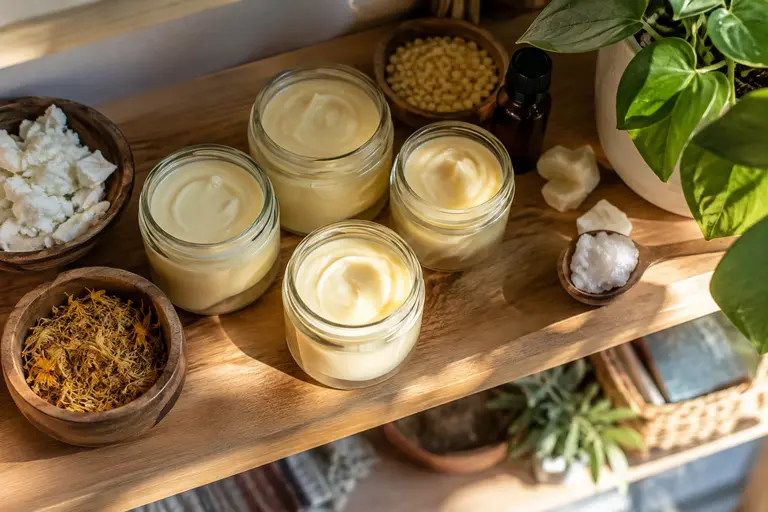
If you enjoy hands-on beauty projects, shift the goal from “homemade SPF” to “non-SPF skin comfort product.” Make the label honest: cosmetic balm, after-outdoor body butter, or dry-skin salve. Do not include an SPF number, “broad spectrum,” “water resistant,” or “sunblock” language unless the finished product has gone through the required testing. This keeps the project creative without giving a false sense of protection.
A cautious DIY workflow also means making small batches, using clean tools, avoiding shared jars for outdoor use, and watching for odor, separation, irritation, or texture changes. These steps do not turn a homemade product into sunscreen, but they can reduce common cosmetic-quality problems. If you react to fragrances, essential oils, lanolin, botanical extracts, or preservatives, avoid guessing and ask a qualified clinician or dermatologist for personal guidance.
Choose A Tested Sunscreen For Exposure
For time outdoors, choose a labeled sunscreen rather than relying on DIY sunscreen as the protective layer. Practical label signals include broad-spectrum wording, SPF, water-resistance time if present, active ingredients, and directions for use. Water-resistant products are typically labeled for either 40 or 80 minutes in water, so reapplication still matters after swimming, sweating, or towel drying.
Texture also affects real-life use. If a mineral lotion leaves a cast you dislike, you may use too little. If a rich formula pills under makeup, you may skip reapplication. If a spray format feels easy but is hard to apply evenly, a lotion or stick may be more dependable for some areas. Product selection should match the person, the activity, the skin feel they will tolerate, and the label claims the product is legally allowed to make.
Labels, Storage, And Ethical Buying
What A Clear Sunscreen Label Should Tell You
A useful sunscreen label makes the active ingredients, SPF, directions, warnings, and water-resistance status easy to find. Natural marketing can sit beside these details, but it should not replace them. Words such as “clean,” “reef-friendly,” “botanical,” or “family formula” do not answer the core performance questions. The more relevant questions are: What are the active ingredients? Is it broad spectrum? What is the SPF? Is water resistance tested? What does the label say about reapplication?
Ethical buying can include cruelty-free preferences, fragrance awareness, inclusive tint ranges, and packaging choices. Still, those values work best when paired with performance evidence. A beautiful ingredient story does not help if the product is unpleasant to apply generously or if the label leaves key information unclear.
Storage Is Part Of Product Selection
Commercial sunscreens are expected to meet stability and labeling expectations that homemade batches usually do not. Heat, direct sun, and repeated opening can affect product quality. A sunscreen left in a hot car, used past its useful life, or contaminated by sandy fingers may not perform as expected. For DIY cosmetics, the uncertainty is greater because there is no finished-product SPF, heat, UV, water-resistance, or microbial testing unless the maker arranges it through qualified labs.
For outdoor days, I like a two-product plan: a tested sunscreen for exposed skin, plus a separate cosmetic balm for comfort after washing or showering. That keeps the creative part fun while preserving a clear boundary around sun exposure decisions.
DIY sunscreen Questions To Ask A Clinician
Personal Factors Can Change The Advice
Ask a clinician or dermatologist how sun protection should fit your own health situation, especially for babies under 6 months, children, pregnancy, medication use, photosensitivity, skin conditions, recent procedures, or a personal or family history of skin cancer. General education cannot replace medical advice, and sunscreen needs can vary by age, health status, skin history, and exposure pattern.
Useful questions include: Which SPF and format make sense for my skin? Should I use mineral, organic-filter, or hybrid sunscreen? Are any ingredients better avoided for my allergies or sensitivities? How should I reapply during sweating or swimming? Is a tinted product useful for my skin tone and routine? If I make cosmetic balms at home, which ingredients should I avoid based on my history?
The safest beauty-recipe mindset is honest labeling. Enjoy DIY body care for texture, scent, and ritual, but do not turn an untested batch into a sunscreen claim. Tested sunscreen, shade, clothing, hats, and clinician guidance can work together while your homemade projects stay in the cosmetic category where they belong.