
Switching to natural skincare feels like joining a wellness cult where everyone’s glowing except you. I expected radiant, happy skin right away. But my face had other plans.
Dry patches appeared where there were none. Unexpected oil slicks formed in new territories. Occasional redness staged rebellions across my complexion. It felt less like a glow-up and more like a botanical betrayal.
This transition phase turns your skin into a moody teenager who won’t speak the language. We’re going from instant-gratification chemical products to nature’s slower, more deliberate timeline. The psychological whiplash is real.
Let’s unpack why our skin acts out during this switch. Consider my face’s dramatic performance as Exhibit A in this botanical drama.
Avoiding Ingredient Overload
Your skin’s microbiome is like an exclusive club, not a party house. Adding too many products at once is like throwing a big party in a quiet library. It messes up the balance.
This is what I call “skincare cultural shock.” Your skin’s ecosystem doesn’t like sudden changes. It’s like moving from a quiet town to a busy city overnight. Your skin will rebel.
When switching skincare, think of it as a diplomatic mission, not a takeover. Use the “wait until empty” method. This keeps your sanity and saves money, letting your skin adjust slowly.
Think of skincare as dating, not marriage. You wouldn’t propose on the first date. So, don’t start ten new products at once. The best switching skincare tips are about slow introduction.
| Approach | Skin Reaction | Time to Adjust | Cost Impact |
|---|---|---|---|
| Full Product Overhaul | Redness, breakouts, irritation | 4-6 weeks recovery | High (wasted products) |
| One Product Switch | Minimal to no reaction | 1-2 weeks adjustment | Low (targeted spending) |
| Strategic Replacement | Controlled response | 2-3 weeks per product | Moderate (planned investment) |
The key to switching skincare tips? Add one new product every two weeks. This lets your skin adjust and helps you see what works. If there’s a problem, you’ll know which product caused it.
Your skin isn’t a place for every new ingredient. It’s a complex system that prefers gentle changes. The best switching skincare tips are about patience, not rushing.
When you want to try a new serum, be patient. Wait until your current product is gone. Then, switch. Your skin’s microbiome will be happier and less likely to react badly.
The Problem with DIY Overuse
That Pinterest-perfect fantasy of mixing potions like a skincare wizard? It often crashes into the harsh reality of chemical burns and clogged pores. Essential oils aren’t fairy dust – they’re highly concentrated plant compounds that can turn your face into a science experiment gone wrong.

I learned this the hard way when I thought I could out-formulate cosmetic chemists with my kitchen ingredients. Spoiler alert: I couldn’t. My “revolutionary” lavender oil toner left me with redness that made me look like I’d lost an argument with a sunbed.
These clean beauty challenges reveal why sometimes, buying professionally formulated products is actually the smarter move for your skin’s health. As dermatologists emphasize, DIY procedures carry significant risks that many enthusiasts overlook.
| DIY Approach | Professional Product | Key Difference |
|---|---|---|
| Variable concentration | Precise formulation | Consistency in results |
| No preservatives | Stabilized ingredients | Product safety & shelf life |
| Direct essential oil use | Properly diluted actives | Reduced irritation risk |
Essential oils demand respect. Their potency means direct application may result in burns or allergic reactions. The DIY industrial complex sells us empowerment but often delivers inflammation.
Don’t drive yourself crazy trying to DIY everything. Sometimes the real power move is recognizing that professionals know things we don’t. Your skin will thank you for buying the serum instead of playing kitchen chemist.
Ignoring Patch Tests
Our eagerness to skip patch tests is a big non-toxic skincare error. It’s a rush to see results without thinking. We treat our skin like a democracy but rule it like a dictatorship.
The Great Deodorant Incident of 2018 taught me a lesson. A “natural” deodorant promised to be eco-friendly but caused a burning rash. It made me question my choices.
Every skincare lover goes through the five stages of patch-test grief:
- Denial: “This can’t be happening. It’s natural! Natural means safe!”
- Anger: “Why does my body hate everything good and pure?”
- Bargaining: “Maybe if I just use it every other day…”
- Depression: “I’ll never find a product that works for me.”
- Acceptance: “I should have patch tested this $40 artisanal deodorant.”
Experts agree: “Always patch test new products… saves a lot of frustration”. Many have shared their bad experiences, like a severe rash from a certain brand.
Patch testing is like reading the fine print. We know we should, but it takes time. The results, though, are clear on our skin.
The process is easy but very effective. Apply a small amount to a hidden area for 24-48 hours. Look for any signs of irritation. This small step can save a lot of trouble.
In our quest for perfect skin, we often overlook patch testing. This mistake can lead to big problems. Your skin’s reaction will be clear for all to see.
Expecting Immediate Results
We live in a world where we expect fast results, like glowing skin in two days. But nature works differently, like a slow-burning novel. Natural skincare takes time, unlike synthetic products that promise quick fixes.
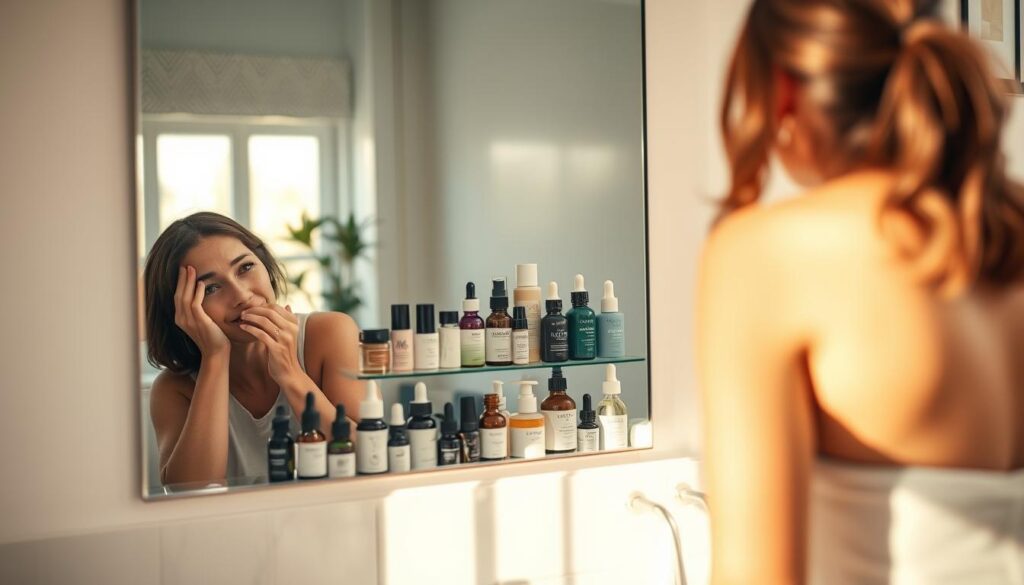
Natural skincare isn’t a quick fix. It takes four to six weeks to see real results. Synthetic products might look good at first, but they don’t solve the problem.
Think of it like this: synthetic skincare is like a friend who brings champagne when you’re down. Natural skincare is like the friend who helps you heal. One offers quick relief, the other, lasting healing.
We’re used to expecting fast results from skincare. We want sun damage gone by tomorrow. But real skin changes happen on nature’s schedule, not Amazon’s.
Switching skincare routines means embracing the slow journey. Natural ingredients work deep in your skin, improving inflammation and collagen. These changes take time, like a tree growing.
The real challenge is being patient in a fast world. Your skin is an ecosystem that needs care over time. It’s not something to be fixed quickly.
Remember, synthetic skincare offers quick fixes. Natural skincare gives you real, lasting results. It’s about choosing what you truly want.
Not Checking for Allergens
I learned the hard way that poison ivy is natural too – but you wouldn’t rub it on your cheeks. This realization hit me like a botanical wake-up call after my skin declared war on what I assumed were “friendly” plant ingredients.
The clean beauty movement often sells us a romantic fantasy: if it grows from the earth, it must be good for your face. Yet nature’s chemistry lab doesn’t care about your complexion’s preferences. Some of the most wholesome-sounding ingredients become the biggest clean beauty challenges for sensitive skin.
Take coconut oil, nature’s darling. Marketing would have you believe it’s the Swiss Army knife of skincare. Yet for many, it’s more like pouring concrete into pores. That glorious tropical scent masks its comedic ability to transform clear skin into a landscape of clogged pores.
Then there’s shea butter – the cozy sweater of natural moisturizers. Perfect for elbows and knees, but on facial skin? It’s like wearing that sweater in a sauna. Your face simply can’t breathe through the richness.
Common natural allergens that frequently cause reactions:
- Coconut-derived ingredients – pore-clogging champions
- Essential oils – nature’s chemical warfare
- Botanical extracts – not all flowers are friendly
- Natural fragrances – sometimes too natural for comfort
The irony? We scrutinize synthetic ingredients like FBI agents while giving natural compounds a free pass. Yet your skin doesn’t care about marketing categories – it only knows chemistry. These clean beauty challenges remind us that compatibility trumps origin every time.
My personal rule now: treat every new natural ingredient like a blind date. Introduce slowly, watch for red flags, and be ready to walk away if the chemistry isn’t right. Because in the end, your skin’s comfort matters more than any product’s pedigree.
Understanding Product Shelf Life
Think your natural skincare products will last forever? Think again. Unlike canned goods, your non-toxic skincare has a shorter shelf life, similar to fresh produce.
I learned this lesson the hard way. My expensive face oil turned into a science experiment. Natural preservatives are not as effective as synthetic ones.
Proper storage is key. Store products in cool, dark, and dry places. Your bathroom cabinet can be a breeding ground for bacteria.
Reading expiration dates is important. Look for symbols like:
- Period After Opening (PAO) symbol – shows how many months products last after opening
- Best before dates – the manufacturer’s guarantee of peak performance
- Batch codes – your detective tool for checking manufacturing dates
Different products have different lifespans. Here’s what you need to know:
| Product Type | Average Shelf Life | Storage Tips | Expiration Signs |
|---|---|---|---|
| Face Oils | 6-12 months | Keep away from light | Rancid smell, cloudy appearance |
| Water-Based Serums | 3-6 months | Refrigerate after opening | Separation, color change |
| Creams & Lotions | 6-12 months | Keep lids tightly closed | Texture changes, mold spots |
| Natural Masks | 3-6 months | Store in cool place | Drying out, strange odors |
Your nose knows best. If something smells off, it probably is. Natural products don’t contain masking fragrances.
Rotate products like you rotate your crops. Use older items first. Buying smaller quantities ensures you use products while they’re effective.
Remember: expiration dates aren’t suggestions. They’re expiration dates. Using products past their prime can irritate your skin.
Your skincare routine should refresh your face, not resemble a microbiology experiment. Treat your products like fresh ingredients, and they’ll return the favor with radiant results.
Learning to Listen to Your Skin
Your skin talks to you in a quiet way, like a secret message. Learning to understand it is key to glowing skin. I used to treat my skin like a problem, not a friend. But changing my approach made all the difference.
We often ignore our body’s signs for the sake of marketing. It’s like choosing campaign promises over real results. Your skin’s reactions are like the true polls you’ve been missing.
The skin journal method is not just about writing. It’s about gathering important information. It’s like analyzing political data for your skin’s health.
How to create your intelligence dossier:
- Record products used each day (including quantities)
- Note environmental factors like weather or stress levels
- Track how your skin feels morning and evening
- Document any reactions within 24-48 hours
This method turns random product changes into smart moves. You’ll spot patterns, like how stress affects your skin or how weather impacts your moisturizer.
Your journal is like a fact-checker for your skincare. It shows what products really do, not just what they claim. You’ll make better choices based on real results, not just promises.
Pay attention to your skin’s small signs. Tightness after cleansing might mean damage, not deep cleaning. Shiny spots could be dehydration, not a natural glow. Understanding these signs is like grasping political signals.
This approach helps you avoid making too many changes at once. You make smart, step-by-step adjustments. You become your own skincare expert, not just a consumer.
The best tips come from knowing your skin’s unique needs. What works for others might not work for you. Your journal is like a detailed report on your skin’s reactions.
Listen to your skin’s signals, not just what products promise. The truth is in the data, not the ads. Your skin’s feedback is the most honest you’ll get.
Conclusion
Those first clean beauty challenges aren’t failures. They’re your skin’s way of sending messages. Each mistake teaches you what your skin really needs, not what Instagram says.
Switching to natural skincare is more than just changing products. It’s about building a better relationship with your body. Healthy skin feels amazing, even better than any photo.
This isn’t about being perfect or judged. Every small step matters in your skin care journey. The key is consistent, caring for your skin.
Your clean beauty challenges mark your progress in a long journey. It’s not about being perfect. Learning your skin’s language is the real win.