
Hyaluronic acid has dominated hydrating skincare for years, but polyglutamic acid is attracting attention as a possible alternative. The debate over polyglutamic acid vs hyaluronic acid raises a practical question: does the newer ingredient deliver better moisture, or is its reputation growing faster than the evidence?
Both ingredients help skin retain water, but hydration claims are not the same as proven results. Understanding their differences can help shoppers choose effective products without paying extra for impressive-sounding promises.
Polyglutamic Acid vs Hyaluronic Acid: How They Actually Work
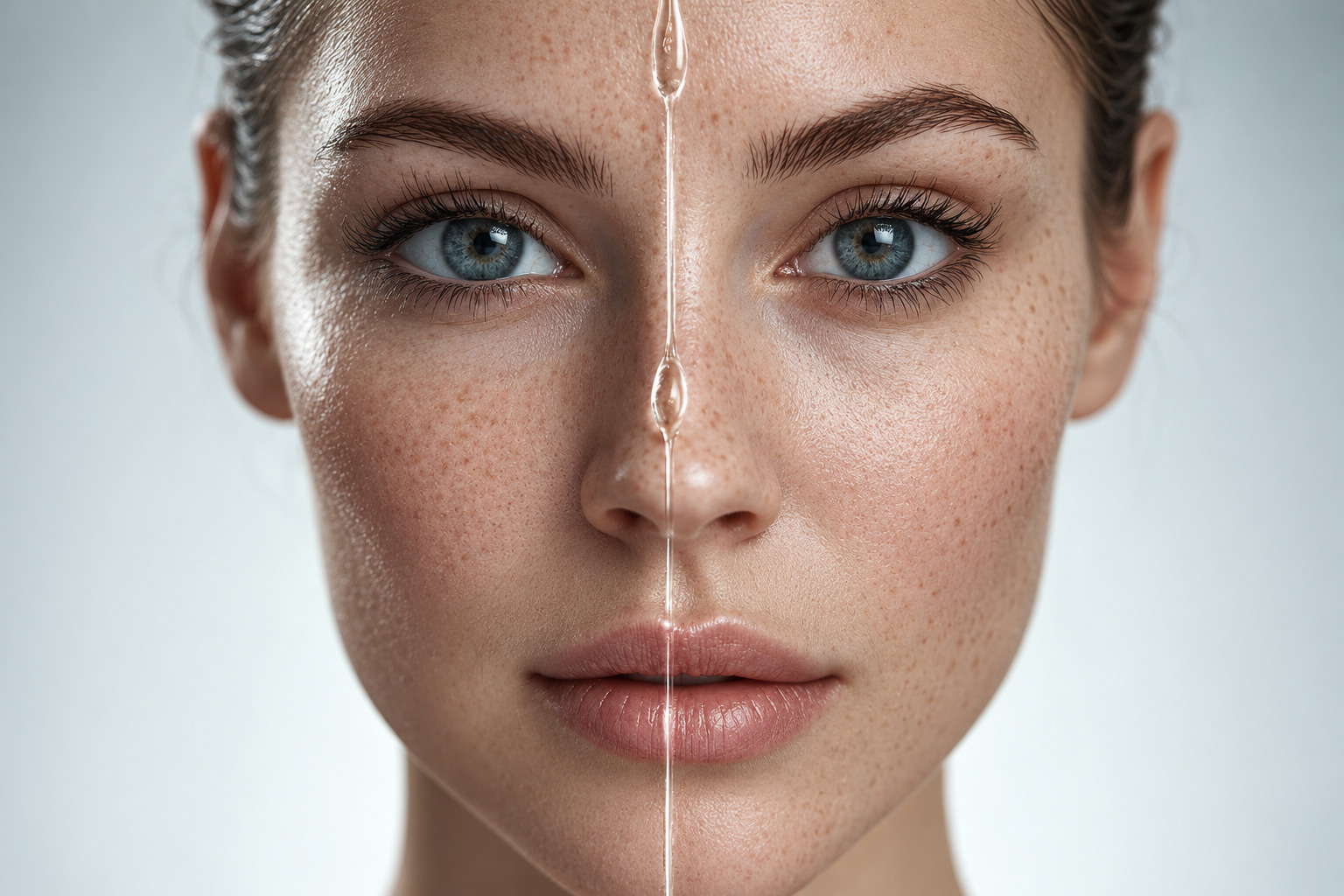
Hyaluronic acid is a naturally occurring substance found throughout the human body, including the skin. It belongs to a group of molecules called glycosaminoglycans and plays an important role in water retention.
In skincare, hyaluronic acid acts primarily as a humectant, attracting and holding moisture.
Its behavior depends partly on molecular weight. Larger molecules tend to remain closer to the skin’s surface, while smaller forms may penetrate farther into the outer skin layers.
Polyglutamic acid, often abbreviated PGA, is a biodegradable polymer composed of linked glutamic acid units. Cosmetic-grade PGA can be produced through microbial fermentation, including processes involving Bacillus bacteria.
Like hyaluronic acid, PGA attracts water. It can also form a moisturizing film that helps maintain surface hydration.
Neither ingredient works independently of its formulation.
A well-designed cream containing hyaluronic acid may outperform a poorly formulated PGA serum, even when the latter advertises greater water-holding capacity.
Understanding natural ingredient claims is particularly useful when comparing products marketed around fermentation, biotechnology, or naturally derived compounds.
The central distinction is not simply natural versus synthetic or old versus new. It is how each ingredient behaves in a finished product.
Comparing Hydration, Texture, and Skin Compatibility
Both ingredients can contribute to softer, smoother-feeling skin. Their performance, however, varies with concentration, molecular structure, and the other ingredients surrounding them.
The following comparison separates established properties from claims that still require stronger evidence.
| Comparison Factor | Hyaluronic Acid | Polyglutamic Acid |
|---|---|---|
| Primary function | Attracts and retains moisture | Attracts moisture and forms a surface film |
| Typical source | Biotechnological fermentation or other production methods | Commonly produced through microbial fermentation |
| Skin penetration | Depends on molecular weight and formulation | High-molecular-weight forms mainly act near the surface |
| Product texture | Used in lightweight serums, gels, and creams | Can add a smooth, film-forming texture |
| Clinical evidence | More extensive human skincare research | More limited human clinical evidence |
| Suitable skin types | Commonly used across skin types | Potentially suitable across skin types, depending on formulation |
| Main consideration | Formula quality and molecular weight | Limited comparative evidence and possible tackiness |
Neither ingredient is automatically better for oily, dry, or sensitive skin.
Someone with oily skin may prefer a lightweight hydrating serum, while very dry skin may benefit more from a cream containing humectants, emollients, and ingredients that reduce evaporation.
For sensitive skin, fragrance content and overall formulation may matter more than choosing between PGA and HA.
The complete formula matters more than the ingredient featured on the front label.
Why Bigger Water-Holding Numbers Can Be Misleading
One of polyglutamic acid’s most repeated selling points is that it can hold thousands of times its weight in water.
Hyaluronic acid is frequently associated with similarly dramatic hydration figures.
These numbers sound persuasive, but laboratory water-binding measurements do not directly measure how much moisture a cosmetic product delivers to human skin.
Water absorption depends on experimental conditions, polymer structure, concentration, and the measurement method.
A material capable of absorbing substantial water under controlled conditions may behave differently when combined with preservatives, emulsifiers, oils, and other cosmetic ingredients.
Likewise, the amount of water a polymer holds does not establish how long skin stays hydrated after application.
Researchers can evaluate actual moisturizing performance through measurements such as skin capacitance, which helps assess hydration, and transepidermal water loss, which measures water escaping through the skin.
These measurements answer more useful questions than an isolated laboratory absorption figure.
Water-binding capacity is not a skincare ranking.
Shoppers should be skeptical when advertising converts a laboratory property into a claim that one product hydrates several times better than another without relevant human testing.
What Scientific Studies Reveal About Each Ingredient
Hyaluronic acid has a longer history of investigation in dermatology and cosmetic science.
A review of topical hyaluronic acid research describes how molecular weight influences skin penetration, surface film formation, and moisturizing effects.
Human studies included in the review reported improvements in hydration and certain measures of skin appearance with specific formulations.
However, those results cannot guarantee identical performance across all products containing hyaluronic acid.
Polyglutamic acid has promising early evidence, but direct comparisons remain limited.
A 2025 experimental study of polyglutamic acid investigated its effects on human skin cells and reconstructed skin tissue.
Researchers observed changes in markers associated with skin barrier function and moisture regulation, including proteins involved in epidermal structure.
These findings suggest potential applications in moisturizing formulations.
However, experiments involving cultured cells and reconstructed tissue cannot establish how well a finished PGA moisturizer performs during everyday human use.
Longer-term clinical studies are still needed to clarify its benefits, suitable concentrations, and comparative effectiveness.
The evidence supports considering PGA a promising moisturizing ingredient, not declaring it universally superior to HA.
Can Combining Polyglutamic Acid and Hyaluronic Acid Improve Hydration?
Using both ingredients together is reasonable because they can contribute complementary moisturizing properties.
Hyaluronic acid can help attract water, while certain PGA formulations provide additional surface film formation.
Yet this does not establish that combining them produces better results than using either ingredient alone.
Complementary properties do not guarantee synergy.
A combined serum might feel more hydrating because it also contains glycerin, emollients, or other beneficial compounds.
Without controlled comparisons, it is difficult to identify which component produces the improvement.
For everyday skincare, a simple routine is often sufficient.
Apply a hydrating serum after gentle cleansing, followed by an appropriate moisturizer. During the day, finish with broad-spectrum sunscreen offering SPF 30 or higher.
For very dry skin, a cream containing barrier-supporting lipids may provide greater practical value than purchasing two separate humectant serums.
There is also no established requirement to apply PGA before HA, or vice versa.
Product texture and manufacturer instructions provide more useful guidance than rigid layering rules promoted online.
The Next Test for Hydrating Skincare Is Real-World Performance
As polyglutamic acid becomes more visible in skincare marketing, consumers should expect clearer evidence behind comparative claims.
Manufacturers can strengthen their claims by testing finished products against suitable controls under comparable conditions.
Useful studies would measure hydration over time, examine water loss, assess tolerability, and disclose formulation details.
Research should also distinguish immediate improvements in skin feel from sustained moisturizing effects.
Another concern is concentration.
A product advertising a high percentage of one ingredient is not necessarily better than a lower-concentration alternative. Molecular weight, stability, and interactions with other formulation components influence performance.
For shoppers, the most valuable evidence concerns lasting hydration and skin tolerance, not the largest number printed on packaging.
Choosing Hydration Based on Evidence, Not Hype
The polyglutamic acid vs hyaluronic acid comparison does not produce one universal winner.
Hyaluronic acid currently has more extensive human research supporting its moisturizing role. Polyglutamic acid offers promising surface-hydration properties, although its comparative clinical evidence remains less developed.
Both may have a place in effective skincare, individually or together.
As new formulations enter the market, the smartest purchasing decision will depend on demonstrated performance, skin compatibility, and the complete ingredient list.
Better hydration does not require chasing whichever molecule has the most impressive marketing claim. It requires choosing a product that helps your skin retain moisture comfortably and consistently.