
The PFAS Cosmetics Act shorthand refers here to H.R. 9594, the No PFAS in Cosmetics Act, a 2026 House bill that would amend the Federal Food, Drug, and Cosmetic Act to ban intentionally added PFAS in cosmetics. For shoppers who read labels closely, the significance is not only whether a product contains one listed ingredient. The larger issue is how much visibility consumers, clinicians, regulators, and brands have into ingredients, supplier data, product listings, and concentration information.
This is an ingredient transparency issue, not a reason for panic buying or fear-based beauty choices. The available federal information shows that PFAS appear in a relatively small share of listed cosmetic formulations, while the FDA also identified meaningful data gaps. That combination calls for careful interpretation: limited counts do not answer every exposure question, and uncertainty does not justify unsupported claims about personal health risk. Readers making decisions because of pregnancy, occupational exposure, allergies, skin disease, or medical treatment should discuss their situation with a qualified clinician.
Why The PFAS Cosmetics Act Matters
H.R. 9594 was introduced in the U.S. House on July 6, 2026, by Rep. Debbie Dingell of Michigan, and would target intentionally added PFAS in cosmetic products, according to the bill record for the No PFAS in Cosmetics Act. Because today is September 22, 2026, the bill should be understood as a proposal that was introduced, not as a completed federal ban. Its value for transparency depends on what happens next through the legislative process and how any final law would be implemented.
What The PFAS Cosmetics Act Would Do
The PFAS Cosmetics Act would focus on PFAS that are intentionally added, which is a narrower and more practical regulatory target than every possible trace finding. In cosmetics, intentionally added ingredients are the ones a manufacturer uses for a function in the finished product or formula. That framing matters because ingredient transparency works best when it identifies who made the decision to use a substance, why it was included, and whether it appears in the product listing system.
The bill also sits within a broader shift in U.S. cosmetic oversight. The Modernization of Cosmetics Regulation Act of 2022, known as MoCRA, created mandatory facility registration and cosmetic product listing. Enforcement began on July 1, 2024, after the law’s effective date of December 18, 2023. Compared with the prior voluntary system, mandatory listing gives regulators a clearer view of the market, though it does not answer every question a shopper may have at the shelf.
Why Intentionally Added Matters
“Intentionally added” can sound like a technical phrase, but it is central to enforcement and consumer clarity. If a rule bans intentionally added PFAS, a brand would need to understand its formulation choices and supply chain inputs. That can put pressure on raw material suppliers, contract manufacturers, and finished-product brands to document what is being used.
For shoppers, the PFAS Cosmetics Act would matter most if it led to clearer expectations across the industry rather than vague marketing claims. A label that says “clean,” “natural,” or “free from” is not the same as a transparent ingredient review. Better documentation can help consumers compare products with less guesswork, but it still would not replace individualized medical advice.
What FDA Data Shows And Does Not Show
The FDA’s December 29, 2025 report under MoCRA provides a more grounded way to discuss PFAS in cosmetics. As of August 30, 2024, FDA product listing data showed 51 out of 177 inventoried PFAS appearing in 1,744 cosmetic product formulations. That represented 0.41% of 430,134 registered cosmetic products in that data set. The same FDA report also described significant gaps, including limited information on dermal and oral absorption, toxicity, and PFAS concentrations in finished products, as shown in the agency’s PFAS cosmetics report.
Product Listing Numbers Need Context
The 0.41% figure is useful because it suggests PFAS listings were not widespread across all registered cosmetics in that FDA snapshot. Still, the number should not be stretched beyond what it says. It reflects listed formulations in the product listing data available at that time. It does not prove that every unlisted concern has been resolved, and it does not describe how much of a PFAS ingredient was present in a product.
MoCRA changed the information base by requiring more systematic registration and listing. Federal data reported in the research notes show that, by mid-2025, the FDA had registered more than 15,000 active cosmetic product facilities and more than 1 million active cosmetic product listings, compared with fewer than 5,200 registrations and about 35,100 listings under the earlier voluntary program. That shift gives regulators more visibility, but visibility is not the same as a complete safety answer for every formula.
Concentration Gaps Limit Comparison
One of the clearest transparency limits is concentration. The United States does not require cosmetic manufacturers to disclose the concentrations of intentionally added PFAS in cosmetic products. The research notes contrast that with some jurisdictions, including the EU, Canada, and Brazil. For consumers, this means two products could both list a PFAS-related ingredient, yet the public may not know how much is present in each finished formula.
That gap affects practical comparison. Ingredient presence can answer “is it there?” Concentration data would help answer “how much is there?” Exposure-related questions may also depend on product category, use pattern, application area, and frequency. A leave-on lip product, face product, or rinse-off item may raise different practical questions, but the FDA report identified limited information in areas needed to assess those differences with confidence.
Ingredient Transparency For Beauty Shoppers
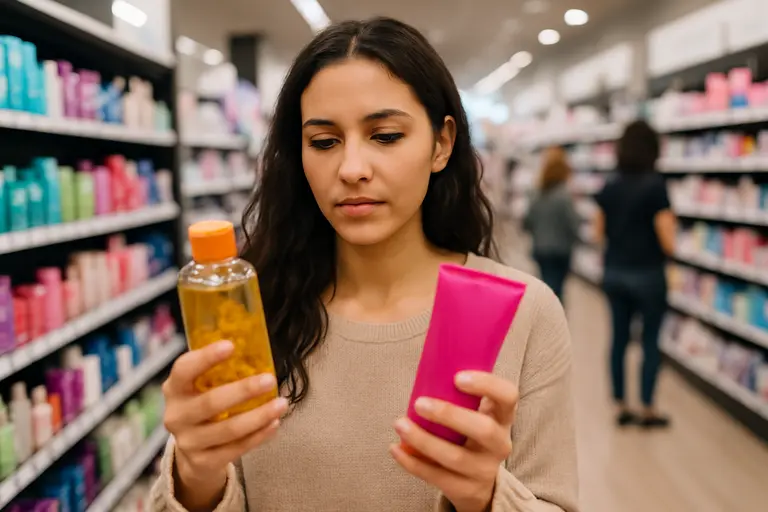
Ingredient transparency is often treated as a simple label-reading exercise, but PFAS shows why the issue is broader. Labels, product listings, supplier documentation, testing methods, and regulatory definitions all affect what the public can know. A shopper can read an ingredient panel carefully and still lack access to supplier-level information or concentration data.
Label Claims Still Need Care
Claims such as “PFAS-free” may be meaningful only if a brand can explain what it checked, which substances it screened for, and whether the claim covers finished-product testing, supplier declarations, or both. The research notes include state activity, such as Washington state restrictions that began in January 2025, with rules being developed to define “intentionally added” and enforce disclosures. That type of state action can push brands toward clearer documentation, but state-by-state rules can also create uneven consumer expectations.
Shoppers who want a deeper primer on label gaps and supplier data issues may find this related discussion of PFAS transparency in cosmetics helpful. A cautious approach is to compare specific ingredient names, ask brands how they support their claims, and avoid assuming that a broad marketing term equals regulatory verification.
How Brands Can Communicate Clearly
Brands can support consumer trust by explaining whether PFAS are intentionally added, whether supplier attestations are used, and how often formulas are reviewed. They can also be clear about what they do not know. A transparent answer may be less polished than a marketing slogan, but it is more useful for shoppers trying to make informed choices.
There is also an equity dimension. Not every shopper has time to contact brands, read federal reports, or track state rules. Clear, consistent disclosures can help people compare products without needing specialized regulatory knowledge. Related wellness education sites, including HealthScope, often emphasize that public-facing information is most helpful when it is specific, plain-language, and connected to real decision points, providing crucial support in understanding cosmetic safety and choices.
- Look for the exact ingredient list rather than relying only on front-label claims.
- Ask brands whether PFAS are intentionally added and how that answer is verified.
- Be cautious with broad terms such as “clean” or “non-toxic” unless the brand defines them.
- For personal health concerns, bring product labels or ingredient screenshots to a clinician.
PFAS Cosmetics Act Questions For Clinicians
The PFAS Cosmetics Act is significant because it connects a proposed ingredient restriction with a larger transparency problem: consumers need better information before they can compare products in a meaningful way. The FDA data suggest PFAS listings were a small fraction of registered products in the August 30, 2024 snapshot, while the agency also reported gaps that limit confident interpretation. Both points matter.
Personal Risk Conversations
Cosmetic ingredient decisions are personal, especially for people who are pregnant, trying to become pregnant, managing skin conditions, working with cosmetics professionally, or using many products daily. This article is educational and does not diagnose, treat, or provide individualized medical advice. A clinician can help place cosmetic questions in the context of health history, medications, allergies, occupational exposures, and pregnancy or lactation status.
What To Bring To An Appointment
If PFAS concerns affect your product choices, consider bringing the product name, ingredient panel, frequency of use, application area, and any symptoms or concerns you want to discuss. Ask whether a product category is relevant to your situation, whether a dermatologist or occupational health specialist would be appropriate, and how to weigh ingredient uncertainty without unnecessary alarm. The PFAS Cosmetics Act may help move policy toward clearer cosmetic ingredient disclosure, but personal health decisions are best discussed with a qualified clinician who knows your circumstances.