The Illinois Cosmetics Law is now part of the state’s ingredient transparency conversation, especially for shoppers who prefer natural or organic-leaning beauty products. Enacted on July 10, 2026, as Public Act 104-0545 and set to take effect on July 1, 2028, the Chemicals in Cosmetic Products Act does not create a legal definition for “natural.” Instead, it restricts cosmetic products in Illinois that contain certain intentionally added chemicals, while allowing narrow trace-level exceptions tied to impurities, processing, storage, packaging, and ingredient composition.
Why The Illinois Cosmetics Law Matters For Natural Ingredients
For beauty consumers, the most practical shift is not that every plant-based formula becomes safer, cleaner, or more ethical by default. The shift is that certain named substances cannot be intentionally added to cosmetic products that are manufactured, sold, held, or offered for sale in Illinois after the effective date. That makes the law ingredient-specific rather than claim-specific.
The Act states that cosmetics containing listed intentionally added ingredients are prohibited in Illinois, and it also recognizes that minor, unavoidable trace amounts may occur through impurity or processing, including from natural or synthetic ingredients, under the state’s statutory language on public health and safety Illinois public health statute. This distinction matters because natural raw materials can be chemically variable. A botanical oil, clay, wax, extract, or mineral pigment may need supplier documentation, not just appealing front-label wording.
Illinois Cosmetics Law And Trace Amounts
The trace-amount clause is especially relevant for natural ingredient users. The research record describes an allowance for technically unavoidable trace amounts when the presence of a restricted substance comes from natural ingredient composition, manufacturing, storage, or packaging rather than intentional formulation. That does not give brands permission to add a prohibited substance and call it natural. It does mean the law recognizes a real manufacturing issue: raw materials are not always chemically blank slates.
For natural brands, the Illinois Cosmetics Law does not appear to punish the mere use of plant-derived, mineral-derived, or organically marketed ingredients. The more relevant question is whether the finished cosmetic contains a listed substance because it was intentionally added. For consumers, that makes supplier transparency and batch-level quality controls more meaningful than broad marketing phrases.
What The Act Restricts
The Chemicals in Cosmetic Products Act names a set of substances that may be familiar to readers who follow cosmetic safety policy. The research notes identify formaldehyde, paraformaldehyde, methylene glycol, quaternium-15, mercury, selected phthalates, selected parabens, and a group of per- and polyfluoroalkyl substances, often shortened to PFAS. Several of these substances have been used historically in preservation systems, fragrance-related functions, texture, or durability, depending on the formula and product category.
The law’s focus on “intentionally added” chemicals is a key compliance filter. It aims at deliberate formulation choices rather than every possible trace-level contaminant. Still, natural beauty brands may need stronger supplier questionnaires and clearer certificates of analysis because the exemption depends on why a substance is present, not whether the front label sounds botanical.
Intentionally Added Ingredients
The Act defines an ingredient as any single chemical entity or mixture used in making a cosmetic, while excluding incidental ingredients as defined under federal regulation. Public Act 104-0545 also sets out the July 1, 2028, effective date and related statutory text in the official enrolled law Illinois Public Act 104-0545. That definition matters for transparency because a mixture can carry multiple chemical constituents, even when the consumer sees one ingredient name on a label.
For example, a fragrance blend, preservative system, colorant, or botanical extract may be supplied as a mixture. The consumer-facing ingredient list may not explain every supplier-level detail. The Act does not erase that gap, but it may pressure brands selling in Illinois to better understand what is inside their upstream materials.
PFAS And Preservative-Related Compounds
The inclusion of PFAS is especially relevant to ingredient transparency because PFAS concerns often arise from durability, slip, wear, or water-resistant performance claims rather than from terms shoppers immediately connect with cosmetics. The research notes that the Act includes named PFAS and their salts among prohibited intentionally added chemicals. A product marketed as long-wear, smooth, or resistant to moisture is not automatically a PFAS-containing product, but those claims are useful reasons to read the label carefully and ask brands for clearer information.
Preservative-related substances require the same careful reading. A product can be “natural inspired” and still rely on synthetic preservatives, while a product with plant extracts may still require preservation to remain usable as directed. The law does not tell shoppers that one preservation approach is always better. It narrows what can be intentionally added in Illinois after the effective date.
How Natural Claims Still Need Scrutiny
The Illinois Cosmetics Law does not standardize the word “natural.” That leaves a familiar transparency problem in place: a front label may highlight aloe, chamomile, coconut, clay, or essential oils while the full formula contains many other ingredients. Natural-themed branding can be useful as a shopping signal, but it is not a substitute for the ingredient list or for brand-level disclosure practices.
At the federal level, the research notes that “natural” has no legal definition for cosmetics labeling. Illinois’ Act also does not create one. That means natural claims remain governed more by general rules against misleading presentation than by a single statutory definition. A formula may contain natural ingredients, synthetic ingredients, or both, and the meaningful question is what each ingredient does and whether the brand presents the formula clearly.
Natural Is Not Defined
A cautious shopper should treat “natural” as a marketing term, not a safety rating. Natural ingredients can be well tolerated by some people and irritating to others. Essential oils, fragrance components, botanical extracts, clays, and plant oils vary by source and formulation. This is not a reason to avoid them automatically; it is a reason to avoid assuming that natural language answers every safety, ethics, or transparency question.
For readers comparing broader ingredient ethics, supplier accountability, and fragrance disclosure, our related resource on ingredient transparency in ethical beauty may help frame what a label can and cannot tell you. Ingredient transparency also intersects with personal values, community care, and wellness literacy; readers interested in values-based reflection can visit another network resource at Spiritual Endeavors for related perspectives.
Practical Label Reading Before July 1, 2028
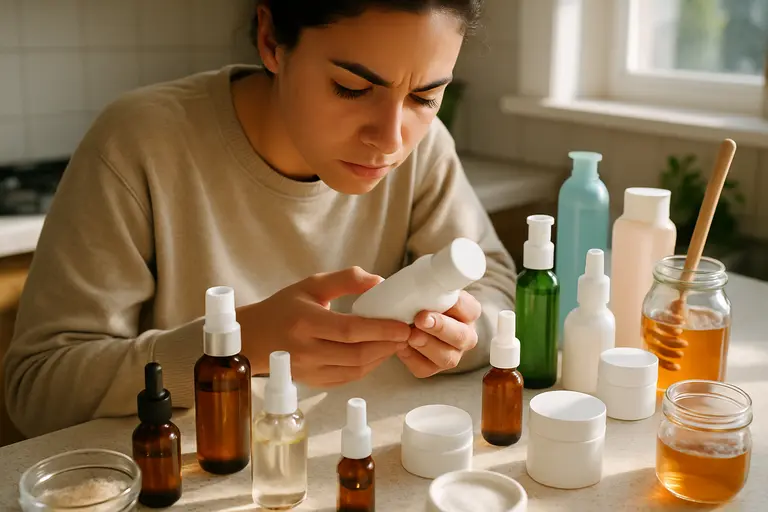
Because the effective date is July 1, 2028, shoppers and brands have time to adjust. Consumers do not need to become chemists, but a more disciplined label routine can make natural product claims easier to evaluate. The point is not to panic over long ingredient names. The point is to separate evidence-based restrictions from broad beauty marketing.
Use the following questions as a starting point when comparing products, especially those marketed as natural, organic, clean, botanical, or plant based:
- Does the brand publish a full ingredient list before purchase?
- Are fragrance, preservative, colorant, and texture claims explained with enough detail to compare products?
- Does the company answer whether listed Illinois-restricted substances are intentionally added?
- For mineral, clay, botanical, or naturally sourced ingredients, does the brand discuss trace testing or supplier documentation?
- Does the front label imply a product is mostly natural while the ingredient list tells a more mixed story?
These questions are useful because the Illinois Cosmetics Law focuses on listed chemicals and intentional addition, not on a broad natural certification system. A brand can comply with the law and still be vague about sourcing. A different brand may use both natural and synthetic ingredients while offering clearer disclosure. For consumers, transparency should be judged by the quality of information, not by the softness of the marketing language.
Illinois Cosmetics Law Questions For Your Clinician
The Illinois Cosmetics Law may help consumers ask sharper questions, but it does not replace personal medical guidance. If you have a history of skin reactions, eczema, contact allergies, fragrance sensitivity, pregnancy-related concerns, occupational exposures, or medication-related photosensitivity, discuss your personal product choices with a clinician or a qualified dermatology professional.
Useful questions may include whether a recurring reaction could warrant patch testing, whether fragrance-free is more appropriate than naturally fragranced, and whether a specific ingredient category is worth avoiding based on your health history. The Act can improve the policy backdrop for cosmetic ingredient review in Illinois, but individual tolerance still varies. A cautious, evidence-based routine starts with the full label and ends with professional guidance when personal health decisions are involved.