Utah’s 2026 law has made menstrual ingredient transparency a practical consumer issue rather than a niche policy debate. The law does not tell shoppers which menstrual products to use, and it should not be read as a medical warning about every product on the shelf. Its main effect is simpler: for certain products sold in Utah, manufacturers will have to place more ingredient and chemical information on the outer package label.
That matters because menstrual products sit at the intersection of personal care, health literacy, and access. Shoppers may want to compare tampons, pads, liners, or similar products for many reasons: fragrance preferences, skin sensitivity, ingredient concerns, or a desire to avoid vague marketing. A clearer label can help, but it cannot answer every personal health question. Anyone with symptoms, recurring irritation, pregnancy-related concerns, allergies, or medical conditions should discuss product choices with a clinician.
Why Labels Became A State Law Issue
Why Menstrual Ingredient Transparency Moved To States
Menstrual ingredient transparency has gained attention because federal packaging rules have not required the same type of ingredient disclosure that shoppers may expect from many cosmetics or household products. A September 4, 2024 letter from the Democratic Women’s Caucus stated that tampons are regulated as medical devices and that manufacturers are not required to disclose chemical ingredients on packaging; the same letter noted that New York enacted a menstrual product disclosure law in 2021, California later passed a similar law with trade secret protections, and at least six other states had introduced related legislation federal disclosure letter.
Utah’s HB 442 fits into that state-level pattern. The law was passed during the 2026 General Session and signed on March 3, 2026, according to the research provided for this article. Its labeling statute took effect on May 6, 2026, while the product-labeling duty itself applies later. This gap gives manufacturers time to change packaging before the mandatory date.
What Federal Rules Do Not Require
The policy question is not whether every ingredient is unsafe. The supported fact is narrower: federal rules have not required menstrual product manufacturers to disclose ingredients on product packaging in the way Utah’s law will require for products covered by HB 442. That difference explains why state action has become a key route for disclosure advocates.
This topic also overlaps with broader personal care labeling concerns. For readers comparing beauty, hygiene, and wellness labels, our related discussion of personal care labeling transparency explains why ingredient lists can still leave unanswered questions. Readers looking for insights within the same network may find valuable information at Trinity Bariatric Institute, particularly when exploring how consumer health discussions should involve qualified professionals rather than relying solely on marketing claims.
How Menstrual Ingredient Transparency Works In Utah
What Labels Must List
Under HB 442, manufacturers of menstrual products sold in Utah must list certain substances and all intentionally added ingredients on the outer package label. The named substances include lead, cadmium, arsenic, dioxin, and per- and polyfluoroalkyl substances, commonly called PFAS. The bill text places the labeling duty on menstrual product manufacturers and gives enforcement authority to Utah’s Division of Consumer Protection Utah HB 442.
The law also requires the covered substances to be displayed by order of predominance by weight, including the percentage by weight for each. The research notes indicate some flexibility for very small amounts under a threshold, but the key consumer-facing point is that Utah is asking for more than a simple yes-or-no disclosure. Percentages and order by weight may help shoppers compare labels with more precision than a broad “contains” statement.
Dates That Matter For Shoppers
The mandatory labeling requirements apply to menstrual products manufactured on or after December 1, 2027. Products made before that date are exempt from the new labeling standards. That means shoppers should expect a transition period rather than an immediate, uniform change across every package in every store.
This timing matters for interpretation. A product without the new Utah-style label after December 1, 2027 may have been manufactured before the requirement applied, depending on the product and supply chain. Shoppers who are trying to compare products should avoid assuming that every package on a shelf was made after the effective manufacturing date.
What The Utah Label Can And Cannot Tell You
Percentages, Predominance, And Trade Secrets
Menstrual ingredient transparency is strongest when shoppers can see both intentionally added ingredients and specific named substances. Utah’s law requires intentionally added ingredients, but it also permits a confidential business information pathway. If an intentionally added ingredient qualifies as confidential business information, the manufacturer may list it by a common name rather than a precise chemical identity. The listed chemicals named in the law, such as lead and PFAS, are not eligible for that exemption under the research notes.
That trade secret structure creates a mixed result. On one hand, the law gives consumers more information than a label with no ingredient disclosure. On the other hand, some ingredient identities may still be less specific than a shopper wants. This is why disclosure laws should be read as consumer information tools, not as complete scientific evaluations of every product.
Why A Label Is Not A Personal Risk Assessment
A label can show what is disclosed under the law. It does not automatically explain exposure, absorption, dose, individual sensitivity, or whether a product is appropriate for a particular person. Those questions depend on health history, age, pregnancy status, medication use, allergies, symptoms, and clinical context.
For example, a shopper may see a disclosed substance and feel concerned. That concern is understandable, but a package label alone may not indicate what the finding means for that person. Evidence-based consumer education works best when it separates disclosure from diagnosis. Labels can support better questions; they do not replace medical advice.
How Shoppers Can Read Menstrual Product Labels
Compare Categories, Not Marketing Language
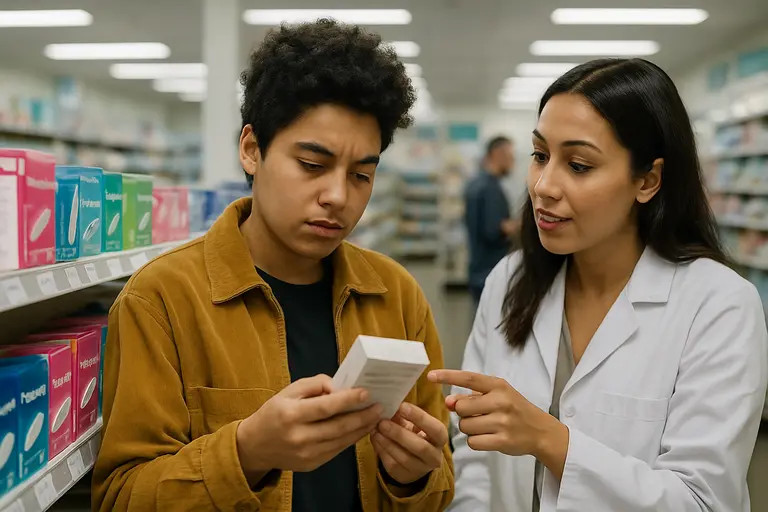
Menstrual ingredient transparency may make comparison easier, but shoppers still need a cautious reading strategy. Marketing terms such as “natural,” “pure,” or “clean” can mean different things across brands and may not explain the full formulation. Utah’s law focuses on required disclosures, not on whether a package uses appealing front-label claims.
A practical comparison starts with the product type, then the full outer-package label, then any disclosed substances, then any intentionally added ingredients. If two products serve the same purpose, shoppers can compare the disclosed lists side by side. If a label uses a common name for confidential business information, that may be a reason to contact the manufacturer or choose a product with clearer disclosure, depending on personal preference.
Keep Questions Specific
General concern is hard to act on; specific questions are easier to bring to a clinician, pharmacist, or manufacturer. A shopper might ask whether a fragrance is present, whether an ingredient has been intentionally added, or whether a disclosed substance appears by percentage. For personal symptoms, the question should shift from the label to the body’s response: timing, irritation, pain, unusual discharge, bleeding changes, or other symptoms deserve qualified medical input.
- Check whether the package was likely manufactured before or after December 1, 2027.
- Look for the named substances covered by Utah law, including lead, cadmium, arsenic, dioxin, and PFAS.
- Compare the order by weight and percentage information where listed.
- Do not treat “natural” or “clean” as a substitute for a disclosed ingredient list.
- Bring symptoms or recurring irritation to a clinician rather than trying to self-diagnose from a label.
Utah Menstrual Product Ingredients And Clinician Questions
Community Access And Disclosure
Utah’s ingredient labeling law follows earlier state activity around menstrual product access. Prior Utah law, HB 162, required public and charter schools to provide free period products in female and unisex restrooms used by students in grades 1 through 12, with costs incorporated into school operations and maintenance budgets by July 1, 2025, according to the research notes. Access and disclosure are different policy goals, but they are connected by a shared premise: menstrual products are routine necessities, and people benefit from clear, practical information.
For schools, families, and community programs, better labeling may support purchasing conversations without turning them into fear-based debates. A product can be accessible, affordable, and clearly labeled; those goals do not need to compete. Still, the research provided here does not establish how Utah’s 2027 labeling requirement will affect prices, availability, or brand participation. Those outcomes remain uncertain until implementation data becomes available.
What To Discuss With A Clinician
The safest use of menstrual ingredient transparency is as a starting point for informed questions. If you have a history of allergic reactions, vulvar irritation, pelvic pain, heavy bleeding, pregnancy-related concerns, immune conditions, or symptoms that change after using a product, bring the package or ingredient information to a licensed clinician. Ask whether your symptoms suggest an allergy, irritation, infection, or another condition that needs evaluation.
Utah’s law may help shoppers see more of what is in menstrual products sold in the state, especially for products manufactured on or after December 1, 2027. It does not guarantee that every label will answer every question, and it does not turn product choice into a medical decision that should be made alone. Use the label to compare, document concerns, and have a clearer conversation with a clinician about what is appropriate for your body and circumstances.