
The Inclusive Beauty Fund offers a useful case study in how beauty funding initiatives can support minority-owned founders without treating representation as a marketing slogan alone. For wellness-minded shoppers, the relevance is practical: who gets capital, who gains retail access, and who has room to build products and services that reflect a wider range of hair, skin, and cultural care needs. This is not a medical topic, and beauty products should not be expected to diagnose, treat, or prevent health conditions. Still, funding decisions can shape the choices people see on shelves and in service settings.
Minority-owned beauty businesses often sit at the intersection of lifestyle, entrepreneurship, and community care. A salon owner, braider, barber, aesthetician, student, or product founder may need capital for supplies, education, marketing, staffing, or compliance-related costs. Grants cannot solve every barrier, but they can reduce pressure for small operators who may not have the same investor access as larger beauty companies. Related coverage of Black beauty funding has raised the same core question: access matters most when it changes business capacity, not just public visibility.
What The Inclusive Beauty Fund Changed
Inclusive Beauty Fund Grant Structure
On March 23, 2026, L’Oréal USA, the NAACP, and the Hispanic Federation launched the third round of the Inclusive Beauty Fund, awarding 12 grants of $25,000 each to beauty entrepreneurs including braiders, barbers, salon owners, aestheticians, suite owners, stylists, and students, according to the NAACP announcement. The same source states that since the fund launched in 2021, it has supported 73 businesses and entrepreneurs nationwide.
The structure matters because the eligible professional categories are not limited to product brands. Service-based beauty businesses often influence daily routines in direct ways: how a client learns to care for textured hair, how skin services are explained, or how grooming spaces build trust across age groups and cultural backgrounds. These are lifestyle and self-care touchpoints, not substitutes for clinical care. If a skin, scalp, allergic, or hair-loss concern is present, personal decisions should be discussed with a qualified clinician.
Why One-Time Grants Still Need Context
A $25,000 grant can be meaningful, especially for a small operation buying equipment, improving booking systems, paying for education, or preparing for local expansion. Yet one-time grants also have limits. A founder may still need working capital, insurance literacy, product testing support, supplier relationships, and retail readiness. The difference between a short-term boost and long-term stability often depends on whether funding is paired with mentoring, accounting support, legal education, and access to buyers.
That is why ethical beauty funding should be assessed by more than the size of an award. Useful questions include who qualifies, whether rural and urban founders both have access, whether service professionals are included, whether mentorship is specific enough to be useful, and whether grant recipients can use funds for practical needs rather than only promotional expenses. For readers exploring diversity in wellness access across sectors, valuable insights from America’s Fair Health Care can also help frame why affordability and access are recurring issues in health-adjacent consumer choices.
How Funding Connects To Wellness Choices
Ingredient Access Is Also An Equity Issue
Inclusive beauty initiatives can affect what consumers are able to compare. A founder focused on deeper skin tones, textured hair, fragrance-sensitive routines, or culturally familiar ingredients may bring different priorities than a brand built for a narrower customer base. That does not mean every minority-owned product is automatically better, safer, or more ethical. Claims still need evidence, labels still need scrutiny, and cosmetic products should not be marketed as medical treatment.
For consumers, a careful approach is to separate identity-based support from product-performance claims. It is reasonable to value ownership diversity and community reinvestment while still asking basic questions: Are ingredients clearly listed? Are fragrance allergens disclosed where relevant? Are product directions realistic? Does the brand avoid fear-based claims? Is the product positioned as cosmetic care rather than a promise to fix a medical concern?
Retail Readiness Can Shape Consumer Trust
Retail access can help a small beauty company reach more customers, but it also brings pressure. Packaging, inventory planning, customer service, batch consistency, and claim review all become more demanding. This is where accelerators and mentorship programs may be as valuable as direct grants. The Illinois Department of Commerce and Economic Opportunity resource guide lists Ulta Beauty’s MUSE Accelerator as selecting eight BIPOC beauty brands per cycle and focusing on early-stage founders through training, tools, and mentorship for retail readiness in its business resource guide.
Retail readiness is not only a business term. For shoppers, it can influence whether a product is consistently available, labeled clearly, and supported by customer education. For founders, it can create a bridge from community demand to broader distribution. The caution is that speed should not outrun product quality systems, honest claims, or founder control. Fast growth can strain small teams, especially when they are trying to serve communities that have been underserved by mainstream beauty retail.
What To Look For In Inclusive Beauty Initiatives
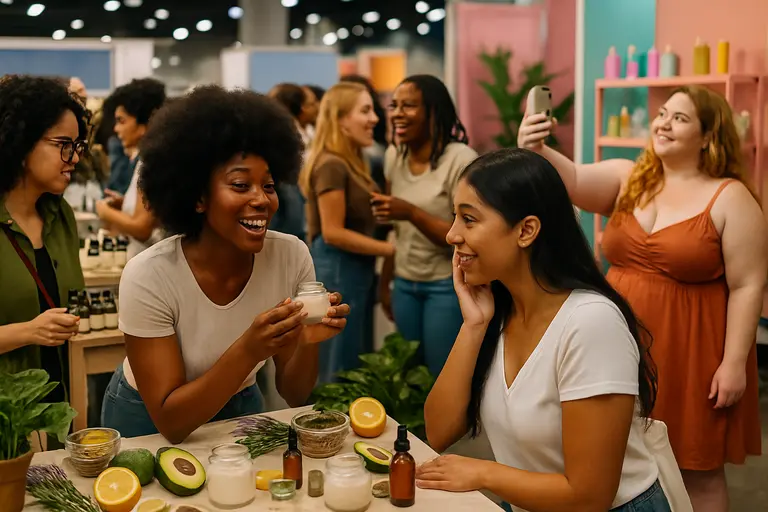
The most credible initiatives tend to be specific about who they serve, how recipients are selected, what kind of support is offered, and whether follow-up resources exist after the check is issued. For a beauty founder, a grant may help with near-term costs. For a wellness-focused consumer, the better question is whether the initiative expands access to responsible, clearly labeled, culturally aware products and services.
- Clear eligibility: Strong programs explain whether they support product founders, salon professionals, students, service providers, or all of these groups.
- Practical funding use: Grants are more useful when recipients can apply money toward equipment, education, operations, inventory, or compliance needs.
- Mentorship quality: General encouragement is less useful than help with retail terms, bookkeeping, supplier contracts, insurance, marketing claims, and customer education.
- Claim discipline: Ethical beauty programs should discourage unsupported promises about skin, hair, weight, hormones, or disease-related outcomes.
- Community accountability: Support should reach founders whose products or services respond to real gaps in access, not only brands that fit a trend.
These criteria also help avoid a common mistake: assuming that representation alone resolves quality, safety, or access concerns. Inclusive ownership can improve visibility and product variety, but consumers still benefit from reading labels, patch testing when appropriate, and seeking professional guidance for persistent concerns. A person with eczema, acne, psoriasis, hair shedding, scalp irritation, pregnancy-related skin changes, or medication-related sensitivity should ask a clinician before relying on a cosmetic routine for personal health decisions.
Inclusive Beauty Fund Lessons For Brand Support
The Inclusive Beauty Fund shows that targeted capital can widen opportunity for minority-owned beauty entrepreneurs, especially when grants recognize both product-based and service-based professionals. Its 2026 round also signals that beauty access is not only about who appears in campaigns. It is about who has the resources to build, stay open, hire, educate clients, and compete for shelf space or local loyalty.
For shoppers, ethical support can be active but still cautious. Buying from minority-owned brands may support broader representation and local economies, yet it should be paired with the same standards applied to any wellness-related purchase: transparent labeling, realistic claims, ingredient awareness, and respect for individual skin and hair needs. For founders, funding programs are most useful when they combine money with mentoring, retail education, and room to grow without overstating product benefits.
If a beauty product or service is part of a routine connected to irritation, allergies, pregnancy, a diagnosed condition, medication use, or a sudden change in skin, hair, or nails, discuss it with a dermatologist, primary care clinician, pharmacist, or another qualified health professional. Useful questions include whether an ingredient is appropriate for your situation, whether patch testing is advisable, whether a symptom needs medical evaluation, and how to separate cosmetic care from care that requires clinical guidance.