
Starting a healthier beauty routine can seem daunting. But, it’s simpler than you might think. The key to a clean makeup transition is not about the makeup itself, but the products you use first.
Think of your skin as a canvas. A well-prepped canvas makes everything else look better and last longer. This is your non-negotiable first step. Focus on your skincare base above all else.
Invest in three essential products: a gentle cleanser, a fragrance-free moisturizer, and a reliable broad-spectrum SPF. These are the big wins for skin health and makeup performance. A gentle cleanser cleans without stripping. A fragrance-light moisturizer hydrates without common irritants. Daily SPF protects your skin’s future.
Mastering this base is the first step in your 30-day plan. It’s a smart, strategic move that sets you up for success. For more tips, consider spring cleaning your makeup bag as a complementary practice.
Complexion: mineral/reef‑friendly SPF tints, non‑comedogenic oils, patch‑test plan
Let’s change your base makeup with smart swaps for skin health and sun safety. Your complexion products are the base for everything. Choosing smart formulas prevents irritation and helps your skin long-term.
Mineral sunscreen tints are a great two-in-one choice. They protect your skin from the sun using zinc oxide or titanium dioxide. These physical blockers sit on your skin, blocking UV rays. They are less irritating than chemical sunscreens and safe for reefs.
These tints also give light, buildable coverage. They even out your skin tone without feeling heavy. They’re perfect for daily use and keeping your makeup bag clean.
Knowing the difference between sunscreen types helps you choose wisely. The table below shows key differences.
| Feature | Mineral SPF Tint | Chemical SPF Tint | Primary Benefit |
|---|---|---|---|
| Active Ingredients | Zinc Oxide, Titanium Dioxide | Oxybenzone, Avobenzone | Mineral sits on skin; chemical absorbs UV. |
| Reef Safety | Generally Safe | Often Not Reef-Safe | Mineral options protect ocean life. |
| Skin Sensitivity | Best for Sensitive Skin | Can Cause Reactions | Mineral formulas are gentler. |
| Typical Coverage | Sheer to Medium | Often Sheer | Mineral tints offer extra complexion perfection. |
Next, think about moisturizing. Heavy creams can clog pores. Non-comedogenic facial oils are a game-changer. “Non-comedogenic” means they won’t block pores.
These oils mimic your skin’s natural oils. They hydrate deeply without causing breakouts. Jojoba, squalane, and rosehip seed oil are popular choices. They absorb quickly, leaving your skin supple, not greasy.
The last step for any new product is a systematic patch test. This simple habit saves you from bad reactions and wasted money. It lets you introduce new items with confidence.
Follow this professional patch test plan:
- Choose the Test Site: Apply a small amount to a discreet area like the inner forearm or behind the ear.
- Observe for 24 Hours: Check for any redness, itching, swelling, or discomfort.
- Re-apply for a Second Day: If clear after 24 hours, apply to the same spot again to confirm.
- Test on the Face: If clear, apply a small amount to your jawline or side of the neck.
- Full Application: Only after 48-72 hours with no reaction should you use the product normally.
This method is key for mineral sunscreen and new oils. It turns product integration from a gamble into a science. Your 30-day cleaner makeup journey starts with these smart, safe complexion foundations.
Eyes/lips: low‑irritant pigments, vegan waxes, long‑wear tips without harsh removers
Your mascara, eyeliner, and lipstick need careful attention, just like your skincare. The skin around your eyes and lips is very thin and sensitive. It needs makeup that looks great and lasts without drying out or irritating.

First, learn about low-irritant pigments. These are special colors that are less likely to cause allergic reactions. They often don’t have common irritants like certain iron oxides or synthetic dyes. This helps prevent watery eyes and lip chapping.
For lip products, the base is just as important as the color. Vegan waxes are a big improvement. They come from plants and are pure. This means your lips get a smooth, even color without clogged pores.
Can clean makeup really last all day? Yes, it can, with the right steps.
- Prime the Canvas: Use a tiny amount of eye cream and lip balm as a hydrating base. Let it absorb fully before applying makeup.
- Layer Lightly: Apply eye shadow or lip color in thin, buildable layers. This prevents creasing and improves wear time.
- Set Strategically: A light dusting of translucent powder over lipstick (through a tissue) or at the lash line before mascara can lock looks in place.
Removing makeup can undo the good work. Harsh wipes and removers with alcohol can damage your skin. Instead, use gentle, oil-based balms or micellar waters. Massage them onto your eyes and lips to dissolve makeup, then rinse with lukewarm water.
The table below compares key features to look for when selecting clean eye and lip products.
| Product Type | Key Clean Feature | Benefit | What to Avoid |
|---|---|---|---|
| Mascara & Eyeliner | Low-irritant pigments, nourishing oils | Prevents lash loss, no smudging into eyes | Parabens, formaldehyde-releasing preservatives |
| Lipstick & Gloss | Vegan wax base, plant oils | Hydrating, smooth application, plump look | Petroleum, synthetic fragrances |
| Eye Shadow | Mineral-based, talc-free powders | Highly blendable, less fallout, gentle on lids | Bismuth oxychloride, heavy metals |
| Makeup Remover | Oil or milky cleanser formula | Dissolves makeup without rubbing, protects barrier | Alcohol (denatured), synthetic detergents (SLS) |
Switching to these clean products means your eyes and lips get the care they deserve. You can enjoy bold, beautiful looks that feel as good as they look. Your eyes will stay bright, and your lips will stay soft, all while using products that fit a cleaner beauty routine.
Tools: washable sponges/brushes, gentle cleansers, drying racks
Switching to clean products is a big step. But, forgetting to clean your tools can ruin your clean makeup routine. Brushes and sponges can hold old makeup, oil, and bacteria. This can cause breakouts, uneven makeup, and even infections.
Getting the right tools and a simple care routine is key for healthy skin and perfect makeup.
Choose reusable, high-quality applicators. Say goodbye to single-use wipes and cheap brushes. Go for machine-washable brush sets and sponges made of silicone or antimicrobial materials.
The benefits are both immediate and long-term:
- Better Hygiene: Regular cleaning removes pathogens that cause acne and irritation.
- Superior Application: Clean bristles pick up and distribute product evenly for a smooth finish.
- Cost-Effective & Sustainable: Washable tools last for years, reducing waste and saving money.
Cleaning tools needs the right agent. Avoid harsh bar soaps or dish detergents. They can damage bristles and leave residue. Instead, use a gentle, brush-specific cleanser or a mild, fragrance-free liquid soap.
Look for formulas that are effective yet conditioning. They should break down makeup without stripping the natural oils from natural hair brushes.
After washing, drying tools properly is key. Laying wet brushes flat or standing them upright in a cup traps moisture. This is where mold and mildew grow.
A simple angled drying rack is the solution. It allows air to circulate completely around each tool, ensuring a fast and thorough dry. This simple habit is a powerful guard against bacterial growth.
To systematize your tool care, avoid these common mistakes and adopt these best practices instead.
| Common Mistake | Best Practice | Key Benefit |
|---|---|---|
| Rarely cleaning brushes | Clean foundation brushes after 1-2 uses; others weekly | Prevents pore-clogging and product mixing |
| Using harsh soaps | Use a dedicated, gentle brush cleanser | Preserves tool integrity and skin pH |
| Drying brushes bristle-up | Use a slanted rack for airflow | Eliminates moisture where bacteria thrive |
Integrating these steps makes tool maintenance a key part of your clean makeup routine. It protects your skin investment and ensures your makeup applies perfectly every time. Clean tools are the silent partner to your clean cosmetics.
Shade‑matching for undertones; inclusive shade strategies
Finding the right makeup shade is more than just light or dark. It’s about knowing the undertones under your skin. This knowledge turns your makeup routine into a precise art. It makes sure your foundation and concealer blend in, not stand out.
For makeup artists and beauty brands, this skill is essential. It’s what makes a good product great for every client.
Identifying Your Skin’s Undertone
Your skin’s undertone is its permanent, subtle color. It’s either cool, warm, or neutral. Choosing the right foundation for your undertone prevents that noticeable line at your jaw.
Here are a few ways to find out your undertone:
- The Vein Test: Look at your wrist veins in natural light. Blue or purple means cool undertones. Greenish veins are warm. Neutral if you can’t tell.
- The Jewelry Test: Which metal looks better on you? Silver for cool, gold for warm. Neutral if both look good.
- The White Shirt Test: Hold white fabric near your face. Rosy means cool, yellow means warm. Neutral if it doesn’t shift much.
Once you know your undertone, test foundations on your jawline. Check in natural light. A good match will blend seamlessly.
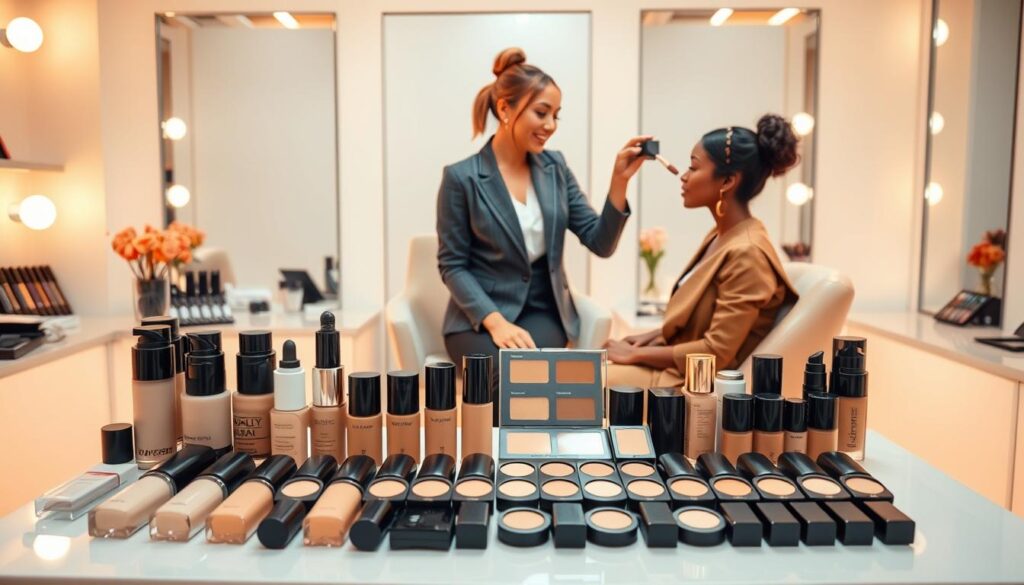
For professionals and entrepreneurs, an inclusive shade range is key. It shows respect for all clients and builds trust.
Creating an inclusive range is more than just adding dark and light shades. It’s about covering all undertones at every depth. A range that only caters to warm undertones is not inclusive.
When choosing products or partners, follow this strategy:
- Audit for Balance: Check if a foundation line offers equal cool, warm, and neutral options across all shades.
- Consider Oxidation: Some foundations darken after use. Test to see if the final color matches various undertones.
- Think Beyond Foundation: Scrutinize concealer, powder, and blush too. Inclusive color cosmetics are key for a complete look.
This approach turns makeup into solutions. It empowers you to serve every client with confidence. In today’s market, an ethically curated kit is the standard for care and expertise.
30‑day calendar with weekly swaps and budget lines
A structured plan makes your clean makeup transition simple. This 30-day calendar breaks the process into weekly, manageable steps.
Week one focuses on your complexion. Swap your foundation and daily SPF for cleaner formulas. Budget lines like e.l.f. Cosmetics or Honest Beauty offer excellent starting points.
During week two, transition your eye and lip products. Look for low-irritant pigments from brands like Burt’s Bees for lips or Pacifica for mascara.
Week three is for tool hygiene. Wash your brushes and sponges with a gentle cleanser. Affordable, washable brush sets from Real Techniques support this new habit.
The final week solidifies your routine. Perfect your shade match using inclusive lines like Fenty Beauty by Rihanna. This ensures your clean makeup transition is complete and personalized.
Following this roadmap gives you a clear, executable strategy. Your journey to a cleaner, high-performing makeup bag is now organized and within reach.