Imagine a time when testing mascara meant putting it in a rabbit’s eye. It wasn’t cruel; it was just what we knew. This idea started a big ethical and legal puzzle.
In the U.S., the FDA doesn’t make animal testing for cosmetics a must. They say it’s okay, but they don’t say it’s wrong. The company making the product is on its own for safety.
Why did we think hurting animals was okay? It’s a mix of not knowing and sad events. Old makeup had lead, and the 1920s used radium. The Nuremberg Code after World War II made animals the main test subjects.
This isn’t just about laws. It’s a big, messy talk about science, ethics, and business. The goal of a cruelty-free world is caught up in this history.
Regions with Bans vs. Loopholes
The world’s animal testing rules are like Swiss cheese, full of holes. This isn’t a failure of activism; it’s the result of geopolitics and bureaucracy. The global animal testing rules are constantly changing.
The story starts in 2013 with a big change. The European Union banned animal testing for cosmetics. This change was big for the market. It made reformulating for the EU cheaper than making two products.
After the EU’s move, other countries followed. They saw the EU’s model as a standard for consumer protection. This was a predictable chain of events.
| Region/Country | Key Ban Enacted | Notable Detail |
|---|---|---|
| United Kingdom | 1998 | The pioneer; first national ban, creating the initial blueprint. |
| European Union | 2013 | The game-changer. A full marketing ban that reshaped global supply chains. |
| California, USA | 2018 (SB 1249) | First major U.S. state ban, sparking a cascade of similar state laws. |
| Canada | 2023 | One of the most recent, following years of advocacy and political maneuvering. |
| Brazil | 2023 | Major Latin American market aligning with global trends. |
After 2013, things moved fast. More countries joined the ban club. The argument for cruelty-free products became stronger.
Now, let’s talk about China. The idea that “sold in China = tested on animals” is outdated. China has changed its beauty laws in a big way.
In 2014, China allowed companies to avoid animal testing for some cosmetics. The big change was in 2021. China removed the need for animal testing for most imported cosmetics. Brands could use existing data for safety assessments.
But, there are loopholes. China requires animal testing for some products. This includes hair dyes, sunscreens, and products making certain claims. Brands selling a wide range of products face challenges.
In Europe, there’s a big contradiction. The EU’s ban on animal testing for cosmetics clashes with REACH. REACH requires animal testing for chemicals used in cosmetics if they need more safety data. This creates a problem for regulators.
The story is complex. The EU’s ban is real, but there are loopholes. China’s rules and Europe’s REACH create challenges. The U.S. lacks federal law, adding to the complexity. The system is dynamic and often contradictory.
How Brands Adapt
Forget the image of evil labs; the real barrier to ending animal testing is a tangled web of global beauty laws. These laws are complex and even corporate strategists find them maddening. Adaptation isn’t just flipping a “cruelty-free” switch. It’s a high-stakes navigation of a labyrinth where morality, market access, and archaic rulebooks collide.
Let’s start with the innovation trap. A brand develops a novel, shimmering peptide. Under some international frameworks, this new ingredient triggers mandatory safety reviews. The problem? Existing non-animal tests might not yet have validated protocols for that specific, sparkly molecule. So, a company faces a choice: shelve a potentially breakthrough or navigate a gray area. This is the “ingredient dilemma” that keeps R&D departments up at night.
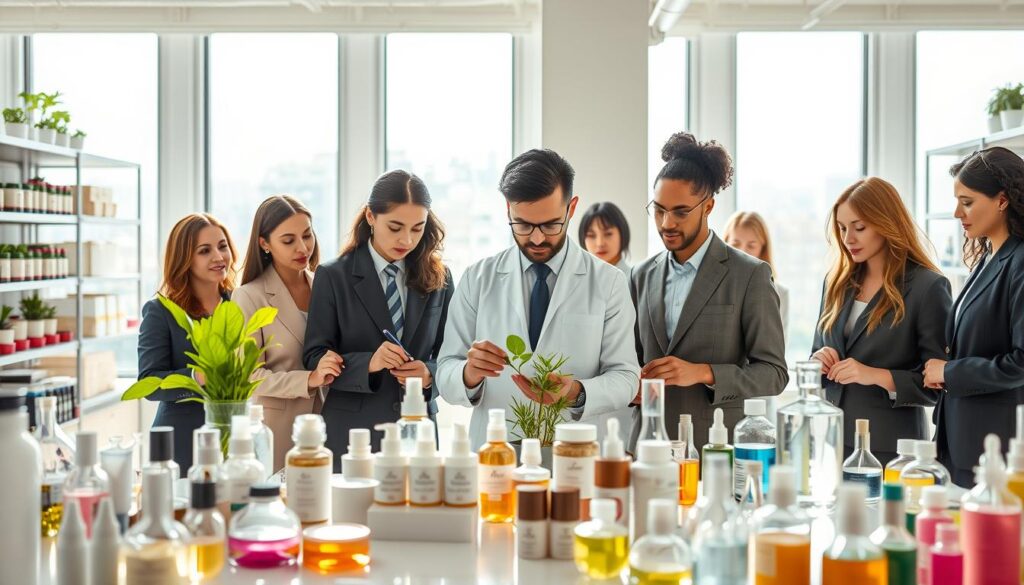
Then, there’s Europe’s regulatory civil war. On one side, you have the landmark EU cosmetics regulation, banning animal-tested ingredients. On the other, you have REACH, a sweeping chemical safety law designed to protect workers, which can *demand* new animal data for substances used industrially. An ingredient supplier is caught in a Kafkaesque bind: legally forbidden from testing for cosmetics, but potentially compelled to test for industrial registration. This conflict puts the entire supply chain on a razor’s edge.
Here’s the witty, cynical twist. The very conglomerates often criticized—your L’Oréals and Unilevers—are the ones disproportionately funding the research to make animal testing obsolete. It’s a massive economic bet. Post-global bans, pouring money into outdated methods is business senselessness. The smarter investment? Pioneering organ-on-a-chip and advanced computer modeling. The U.S. FDA, via its ICCVAM program, actively supports this shift, validating alternative methods. The biggest players are bankrolling their own obsolescence, motivated by the ultimate corporate driver: future market access.
So, the adaptation playbook is a strange dance. It’s fueled as much by spreadsheet calculations as by ethics. Brands are contorting themselves to comply with conflicting beauty laws, investing in science to solve the “ingredient dilemma,” and ultimately chasing a cruelty-free standard because the market now demands it. This consumer-driven shift is powerfully detailed in our analysis of the cruelty-free beauty trend. Progress, it seems, walks a tightrope strung between morality and the bottom line.
Advocacy & the Role of Consumers
Forget voting booths; the real ballot for ethical change is cast at the checkout counter. Your purchase is a direct signal to the market. It’s a data point in a multi-billion dollar algorithm of desire and ethics.
This isn’t a new idea. The modern playbook was written in the 1980s by activist Henry Spira. He placed a full-page ad in The New York Times targeting Revlon. The headline asked, “How many rabbits does Revlon blind for beauty’s sake?” It was cultural jujitsu. He used their own glamorous image against them.
That single ad catalyzed a corporate avalanche. It proved that shame, when paired with financial threat, could move giants. Today’s tools are different—Twitter threads, Instagram call-outs, Change.org petitions—but the engine is the same: organized consumer pressure.
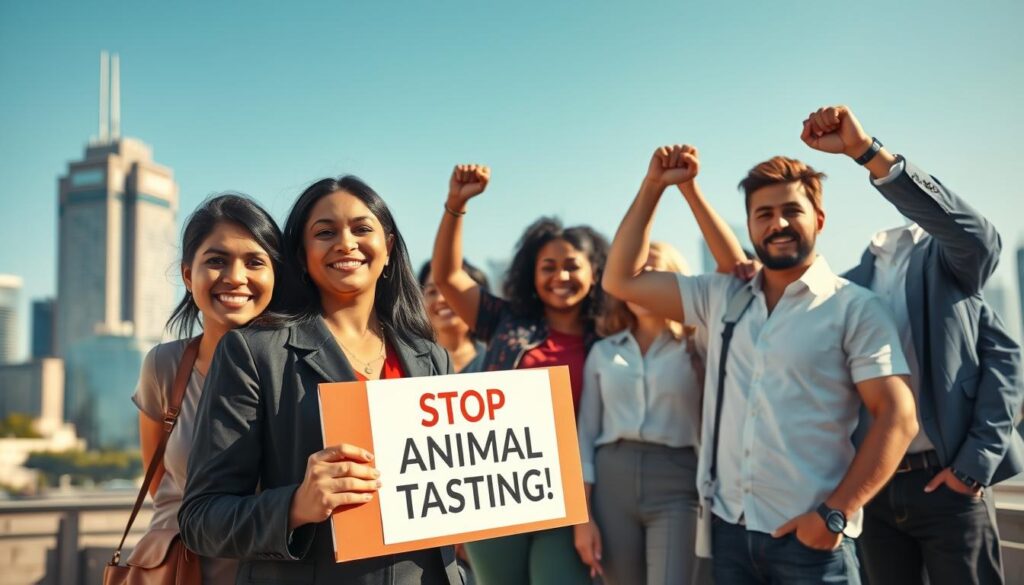
So, where does that power go now? A lot of it is focused on the Humane Cosmetics Act. This U.S. bill has been languishing in Congress for years. It’s a litmus test for political will. Passing it would ban cosmetic animal testing and sales of newly animal-tested beauty products nationwide.
Its stagnation tells you everything. While this happens, campaigns like Be Cruelty-Free push for global animal testing bans. They operate on multiple continents. Their goal is to make the concept of testing a shampoo on a rabbit seem as archaic as using leeches for medicine.
This brings us to the stickers and logos. The Leaping Bunny isn’t just a cute decal. It’s a supply-chain audit in graphic form. Managed by the Coalition for Consumer Information on Cosmetics, it requires brands to open their books. They must prove no animal testing at any stage, by them or their suppliers.
Other certifications exist, but rigor varies wildly. Your job is to know the difference. A brand’s own “cruelty-free” claim can be as hollow as a marketing meeting if they quietly sell in markets that mandate tests.
Your role has evolved from passive buyer to active investigator. Here is your actionable toolkit:
- Follow the Money (Specifically, to China): If a brand sells in physical stores in mainland China, it likely submits to post-market animal testing. This is the biggest loophole. “No testing” policies often crumble at the border of this lucrative market.
- Ask Sarcastically Sharp Questions: Don’t just read the FAQ. Email the brand. Ask: “Do you or any third party test on animals where required by law?” The phrasing matters. Legalese hides in prepositional phrases.
- Use the Bunnies: Prioritize brands certified by Leaping Bunny or recognized by the Logical Harmony approved list. These are the gold standards.
- Amplify and Contact: Social media isn’t just for pretty pictures. Publicly asking a brand about their policy puts them on record. A recent legislative analysis shows these direct pressures significantly influence corporate compliance timelines.
To cut through the confusion, here’s a breakdown of the major ethical labels. Think of it as a cheat sheet for intelligent shopping.
| Certification Logo | Issuing Organization | Key Requirement | Biggest Strength | Potential Loophole |
|---|---|---|---|---|
| Leaping Bunny | Coalition for Consumer Information on Cosmetics (CCIC) | No animal testing at any point, including suppliers; independent audit. | Most rigorous and transparent standard; annual recommitment. | Brand-owned parent companies may not be fully certified. |
| PETA’s Beauty Without Bunnies | People for the Ethical Treatment of Animals (PETA) | Brand signs a statement of assurance against animal testing. | Very large database of brands; clear “Global” vs. “US” designations. | Relies on self-reporting; no independent supply chain audit. |
| Choose Cruelty Free (CCF) | Choose Cruelty Free Ltd. (Australia) | No animal testing, including for ingredients, and no owned by a testing parent company. | Strict policy on parent company ownership. | Primarily Australian brands; less common globally. |
| Brand’s Own “Cruelty-Free” Claim | The Brand Itself | Varies wildly; often means no testing “unless required by law.” | Can indicate a brand’s awareness of consumer demand. | Often the weakest; the “China loophole” usually applies here. |
Ultimately, this is about reframing. Shopping is no longer a trivial act. It’s a form of intellectual, ethical voting. You’re not just buying a serum. You’re funding a supply chain. You’re endorsing a corporate practice.
The next time you reach for a product, pause. Ask yourself: Is my money aligning with my morals? The rabbits, the mice, the regulators—and the shareholders—are all watching.
Natural Beauty’s Global Growth
The “natural” and cruelty-free beauty movement has spread far and wide. It’s moved from health store shelves to the mainstream. This change is huge and not a sellout.
There are thousands of safe ingredients to choose from. Almost 50 non-animal tests are available. These options are not just for a few. They are the standard, thanks to strict beauty laws worldwide.
The cosmetics industry now focuses on human cell tests and computer models. This isn’t just about finding better makeup. Your purchases help fund research for a future without animal testing in beauty.
Global bans are big news in the market. They create a space where brands compete on being ethical. This mix of consumer values and smart thinking makes being kind profitable. Cruelty-free labels are now a key part of the market, thanks to these laws.
The rabbit, we can only hope, is now free from labs.