
If you’re new to skincare, one of the first things you’ll notice is how often products are labeled as natural, clean, or synthetic-free. These terms can sound reassuring, but they often raise more questions than answers.
Many beginners assume that natural ingredients are always safer or better for the skin, while synthetic ones are harmful or harsh. In reality, the difference between natural and synthetic skincare ingredients is more nuanced and worth understanding before building a routine.
Knowing how these ingredients are sourced, formulated, and used can help you make smarter, more informed choices for your skin type and concerns.
What Are Natural Skincare Ingredients?
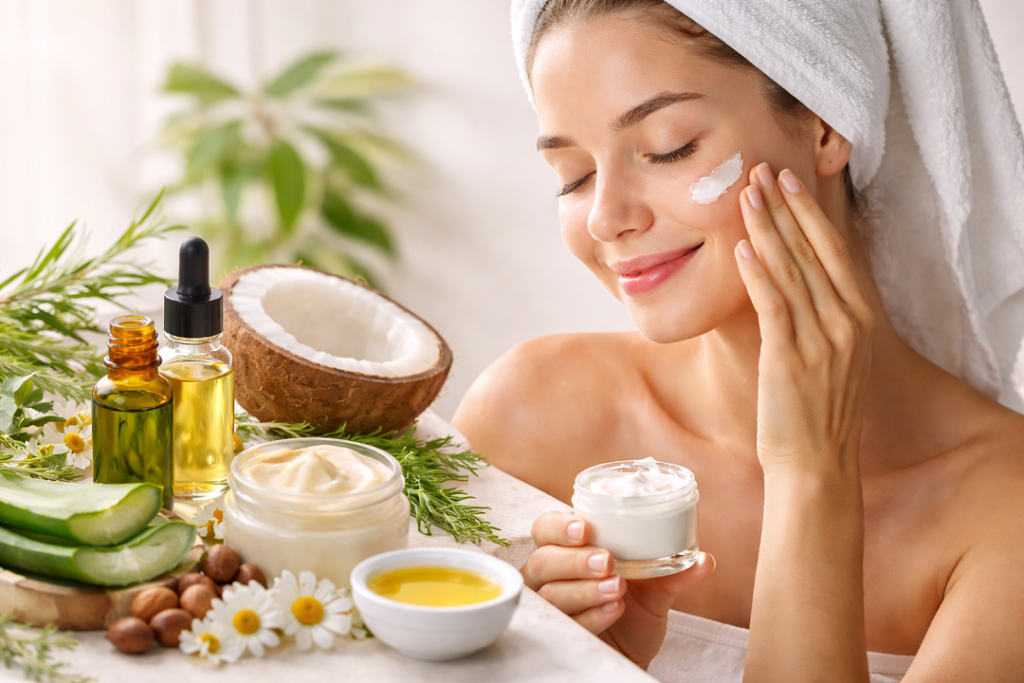
Natural skincare ingredients are derived from plants, minerals, or other naturally occurring sources. They are often minimally processed to preserve their original structure.
These ingredients are commonly found in products marketed as organic, botanical, or plant-based.
| Aspect | Natural Ingredients |
|---|---|
| Source | Plants, minerals, clays, oils |
| Processing | Minimal to moderate |
| Examples | Aloe vera, shea butter, jojoba oil |
| Shelf life | Often shorter |
| Skin feel | Can vary by batch |
While natural ingredients can be nourishing, they are not automatically gentle or suitable for everyone.
What Are Synthetic Skincare Ingredients?
Synthetic skincare ingredients are created or refined in laboratories. Some are designed to mimic natural compounds, while others are developed to improve stability, texture, or effectiveness.
They are widely used in both drugstore and high-end skincare products.
| Aspect | Synthetic Ingredients |
|---|---|
| Source | Lab-created or refined |
| Processing | Controlled and standardized |
| Examples | Hyaluronic acid, niacinamide |
| Shelf life | Generally longer |
| Skin feel | Consistent and predictable |
Synthetic does not mean unsafe. Many synthetic ingredients are well-researched and dermatologically tested.
Key Differences Between Natural and Synthetic Ingredients
Understanding how these ingredients differ helps clarify why both are commonly used in skincare.
| Factor | Natural | Synthetic |
|---|---|---|
| Consistency | Can vary by harvest | Highly consistent |
| Stability | Less stable | More stable |
| Allergies | Higher risk for some | Often lower |
| Customization | Limited control | Precisely formulated |
| Preservation | Harder to preserve | Easier to preserve |
Neither category is inherently better. The effectiveness depends on formulation, concentration, and how your skin responds.
Common Beginner Misunderstandings
Many skincare myths come from oversimplifying ingredient categories.
| Assumption | Reality |
|---|---|
| Natural means non-irritating | Natural ingredients can still cause reactions |
| Synthetic means harmful | Many are safe and clinically proven |
| Natural products don’t need preservatives | All products need preservation |
| Clean beauty avoids all chemicals | Everything is made of chemicals |
Learning to look beyond marketing terms is key to choosing the right products.
How to Decide What’s Right for Your Skin
Instead of focusing on whether an ingredient is natural or synthetic, consider how it works for you.
| Consideration | Why It Matters |
|---|---|
| Skin type | Oily, dry, sensitive skin react differently |
| Skin concerns | Acne, aging, dryness need different actives |
| Ingredient tolerance | Past reactions matter more than labels |
| Product formulation | Balance matters more than ingredient origin |
Patch testing and gradual introduction are especially important for beginners.
Practical Takeaways for Beginners
-
Focus on how ingredients function, not just where they come from
-
Don’t fear synthetic ingredients automatically
-
Be cautious with essential oils and strong botanicals
-
Read ingredient lists instead of relying on front-label claims
-
Choose products based on your skin’s needs, not trends
Simple, well-formulated products are often the best place to start.
Why This Matters Before You Choose Your Skincare
Understanding the real difference between natural and synthetic skincare ingredients helps you move past marketing buzzwords and toward informed decisions. Both types can be beneficial, effective, and safe when used correctly.
For beginners, the goal isn’t to pick a side, it’s to build a routine that respects your skin, fits your lifestyle, and is based on clarity rather than assumptions.
When you know what’s in your products and why it’s there, skincare becomes simpler, calmer, and far more effective.