Remember when botanical skincare was seen as just hippie nonsense? Now, it’s all the rage. It’s like watching a big swing in public opinion.
These plant extracts are like nature’s superheroes. They’re very strong and can outshine synthetic ingredients. They’re not just grandma’s old recipes but are actually very powerful.
The truth is, any cosmetic ingredient can be backed by science, whether it’s natural or made in a lab. These extracts pack a punch with antioxidants, vitamins, and enzymes. They’re like plant superfoods for your skin.
Green tea in your coffee and aloe vera in after-sun gel are just examples. They’ve been quietly helping us every day. We should have trusted nature’s chemistry skills more. Research proves they’re not just simple ingredients.
Common Natural Extracts and Their Benefits
Nature’s medicine cabinet is full of advanced solutions. These botanical wonders have been perfecting their craft for thousands of years. We’ve been busy reinventing the wheel while they were at it.
Aloe vera is like the plant world’s emergency responder. When your skin gets upset, aloe brings soothing relief. It’s like a cool compress and a comforting hug all in one.
Green tea extract acts as your skin’s bodyguard. Its antioxidants create a shield against environmental harm. It’s like having Tony Stark’s Iron Man suit for your skin.
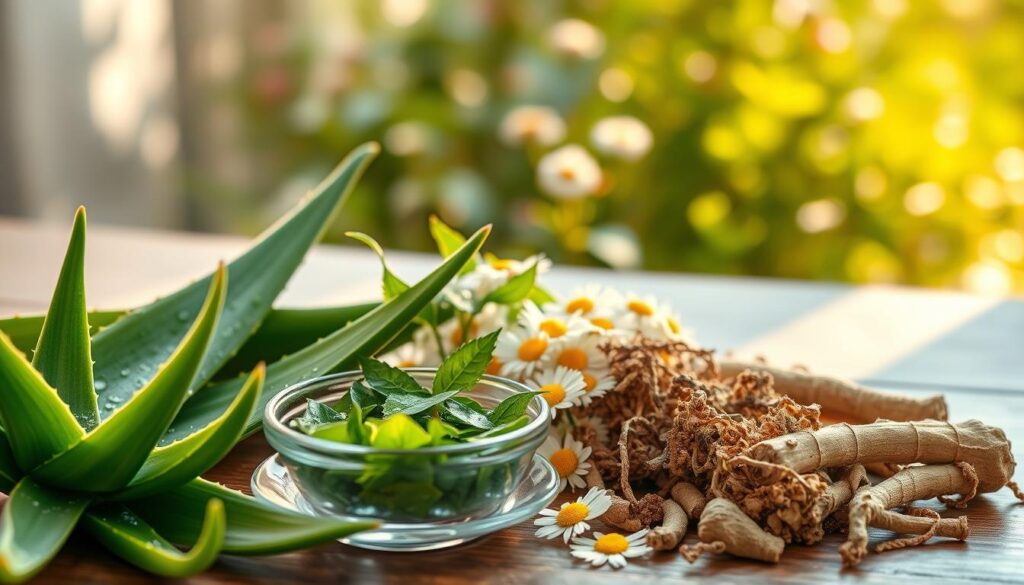
Chamomile calms redness like a seasoned diplomat. Licorice root brightens your skin like a natural filter. No need for Instagram.
Centella asiatica is a skin repair superstar. It works fast and keeps your skin looking great. It’s the top plant extract for sure.
Jojoba oil tricks your skin into thinking it’s its own oil. Rosehip oil fixes scars and texture issues with magic.
These natural extracts have centuries of research behind them. They offer specific benefits without synthetic problems. Your skin knows them instinctively, like they speak its language.
The best part? Nature’s solutions work together like a conversation. They adapt to your skin’s needs in a smart way.
Potential Allergens & Sensitivities
Nature’s pharmacy can surprise you, like an unexpected tax audit. Lavender extract, for example, has linalool. It can cause reactions quickly, like a politician changing their story.
Botanical skincare has a harsh truth: your immune system doesn’t trust plant compounds. It sees them as threats, not helpers.
Citrus extracts can make your skin react like it’s in the sun. Essential oils can cause reactions that feel harsh. We test drugs carefully but not natural extracts as much.
Common reactivity triggers include:
- Aloe latex (contains aloin) – causes digestive issues if ingested
- High-dose ginger extract – triggers heartburn and diarrhea
- Peppermint extract – relaxes esophageal sphincter, worsening acid reflux
Laboratory studies are just the start of understanding ingredients. They can’t guess how you’ll react to plant compounds.
Don’t give up on natural extracts. Just be careful with them. Always test them first. Your skin will appreciate it more than politicians do their promises.
Remember, natural doesn’t mean safe. It means complex and powerful. Treat your botanical skincare routine with care, like you would your opinions.
How to Identify Extracts on Labels
Reading skincare labels is like trying to understand a political bill. It’s full of fine print that helps the big guys. Think of me as your guide through this botanical maze.
First, look for specific extract names. “Plant extract” is vague, like saying “government official.” You want to see “chamomile extract” or “centella asiatica extract” – the full name.
Where an extract is listed matters. If it’s near the preservatives, it’s likely just for show. Ingredients are listed by how much is in the product, so those at the bottom are less important.
Concentration ratios are key. A 1:1 extract is mostly water, like light beer. But a 10:1 concentrate is like whiskey – it’s packed with plant power. This ratio shows how much raw material was used to make the extract.

Be careful of fillers disguised as active ingredients. Many “botanical extracts” have more rice flour than plant material. Look for percentages of active ingredients – aim for at least 0.5% in skincare.
Terminology is important. “Infusion” means they steeped leaves like tea. “Extract” means they concentrated the active compounds. It’s a big difference.
When checking out plant extracts, ask these questions:
- What extraction method was used?
- What’s the actual concentration?
- How was it tested?
- Who reviewed the research?
- What were the conclusions?
And watch out for “natural fragrance.” It often means they added irritating essential oils. If the ingredient list looks like a chemical weapons treaty, it’s likely not as natural as they say.
The best tip? If you need a chemistry degree to understand the label, it’s probably not real plant extracts.
Choosing Safe Extracts
Choosing natural extracts is like following the money trail in politics. You need to be transparent. In the world of botanical skincare, not everything is as it seems. Some extracts look great in ads but not in real products.
Supplier Vetting: Check extract suppliers like you would candidates in a debate. Ask for their credentials. Good suppliers show third-party testing results, like a voting record. A Certificate of Analysis (COA) proves purity and potency, and checks for contaminants.
Organic Certification: It’s not just a trend. It’s about avoiding pesticides in your skincare. Conventional farming can leave harmful residues.
Standardization Matters: Look for extracts with specific active compounds. This means you know what you’re getting. It’s like the difference between promises and results.
Don’t think expensive means better. I’ve seen pricey extracts that don’t deliver. The key is to see the proof. Your skin deserves the best, not just promises.
Quality in botanical skincare comes from being open, tested, and traceable. It’s not just about looks or ads. Choose extracts that prove their worth, and your skin will thank you.
Summary
We’ve reached the end of our journey into plant extracts. It’s like the debate between vinyl records and streaming. Both have their charm, but neither is perfect. Plant extracts offer nature’s wisdom in a bottle, but you can’t ignore labels or skip patch tests.
Think of them as the original technology, refined over millennia. They demand respect and a bit of homework. You wouldn’t buy a smartphone without reading the manual, right? The same goes for these concentrated gifts from the earth.
The smart move isn’t choosing sides in the natural versus synthetic showdown. It’s about blending the best of both worlds. Science gives us safety data; nature provides the raw power. Together, they create skincare that’s both effective and mindful.
Remember, the goal isn’t to worship plant extracts blindly. It’s to use them with intention. Listen to your skin, read those labels, and embrace the balance. After all, the future of beauty lies in this clever fusion—where lab meets leaf, and wisdom meets wonder.