
Imagine 50 million Americans waking up to unwanted facial guests every day. The drug industry tells us salvation is in pricey products with side effects that look like makeup.
We’ve all searched for gentle skincare for acne without harming our skin. But the aisle is filled with false promises and Instagram trends.
This isn’t just about finding quick fixes. We’re digging deep into your bathroom to find real natural acne remedies. It’s like MythBusters for your morning routine, with a dash of humor.
We’re sorting through the noise to find out what really works. Your skin is worth more than trendy products and empty claims.
Top Natural Ingredients for Acne
If Mother Nature had a dermatology clinic, these plants would be her top treatments. Forget the synthetic stuff – simple solutions often hide in plain sight. You might find them in your kitchen or garden.
Let’s talk about tea tree oil from Australia. It’s not just refreshing; it fights acne bacteria. Unlike harsh chemicals, it won’t dry out your face.
Aloe vera is a plant that does it all. It has salicylic acid, just like some acne treatments. It soothes and treats your skin, like a natural diplomat.
Zinc supplements are quiet heroes. They reduce inflammation from the inside. They’re like your skin’s internal peacekeepers, calming redness without making a fuss.
Apple cider vinegar is a popular choice, but use it with caution. Undiluted, it can be harsh. Always dilute it to avoid burns.
Green tea brings antioxidants to fight inflammation. Witch hazel tightens pores naturally. Honey masks have antibacterial properties with a sweet touch.
The gut-skin axis is key. Our skin loves these natural allies. Vitamin D is like sunlight therapy for your skin.
| Ingredient | Primary Action | Best For | Caution Level |
|---|---|---|---|
| Tea Tree Oil | Antibacterial | Inflammatory Acne | Medium (always dilute) |
| Aloe Vera | Anti-inflammatory | Redness & Healing | Low (generally safe) |
| Zinc Supplements | Internal Regulation | Hormonal Acne | Medium (consult dosage) |
| Apple Cider Vinegar | pH Balancing | Oily Skin | High (must dilute) |
| Green Tea Extract | Antioxidant | Prevention | Low (gentle option) |
Not all anti-acne plants work. Some fight acne, others just look good. The difference is in science, not looks.
Your skin needs real solutions, not just trendy promises. It needs treatments that work with nature, not against it.
Morning & Night Acne Routine Steps
Your acne routine is like a ballet – each step must flow smoothly. Morning is for defense, and night is for deep work.
Many people fight acne like it’s a problem to be solved. But this approach can harm your skin more than help.
The truth is, gentle skincare for acne is more effective than harsh methods. Your skin is a delicate system, not a crime scene.
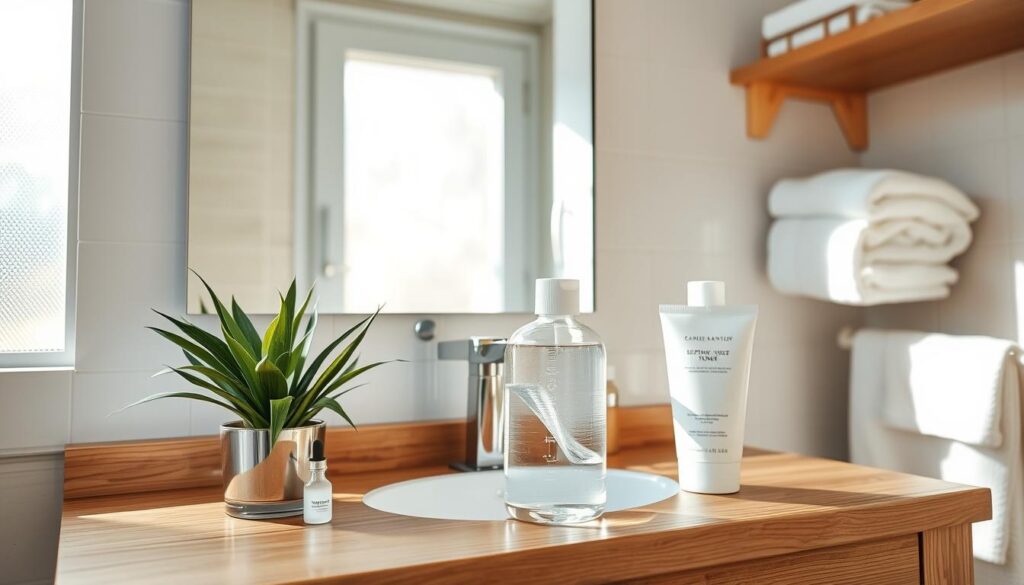
Begin with a warm water rinse or a gentle cleanser. Don’t scrub like you’re removing graffiti.
Pat dry, don’t rub. Your face is not rough sandpaper.
Next, apply antioxidant protection. Green tea extract is great against pollution. It’s like your skin’s bodyguard.
End with oil-free moisturizer and SPF. Even acne-prone skin needs moisture and protection.
Nighttime Repair Shift
Night is when your natural acne remedies work their magic. Double cleansing is best – first for makeup, second for cleaning.
Be strategic with exfoliation. Chemical exfoliants are better than scrubs for acne-prone skin. They gently remove dead skin cells.
Night is for repair. Bakuchiol and zinc reduce inflammation and heal while you sleep.
Seal with a lightweight, non-comedogenic moisturizer. Hydration is key for repair.
| Time | Goal | Key Products | Common Mistakes |
|---|---|---|---|
| Morning | Protect & defend | Antioxidant serums, oil-free moisturizer, SPF | Over-cleansing, skipping sunscreen |
| Evening | Repair & treat | Chemical exfoliants, clarifying cleansers, healing agents | Using too many active ingredients at once |
| Weekly | Deep treatment | Clay masks, spot treatments, hydration boosters | Over-exfoliating, picking at skin |
Consistency is key, not complexity. A simple 3-step acne routine beats a long, complicated one.
Remember, your skin is not the enemy. Work with it, not against it. The right order makes all the difference.
Spot Treatments at Home
When a blemish pops up, it feels like an unwanted guest. Instead of attacking it head-on, use smart tactics. Your bathroom has many tools to help.
Tea tree oil is like a precise sniper against acne. But, dilute it right to avoid skin damage. Mix one part tea tree oil with nine parts water or oil for a safe, effective treatment.
Honey masks are more than just a snack for Winnie the Pooh. They’re strong against bacteria and help wounds heal. Apply a thin layer to problem spots for 15 minutes before rinsing.
Green tea is a powerful ally in the fight against acne. Steep a bag, cool it, and apply it to spots. It reduces inflammation and controls oil, all without harsh chemicals.
For darker skin, treating acne and preventing dark spots is key. Dark spots can last long after the pimple is gone. This creates a cycle of marks that can last for months.
Effective natural acne remedies for skin of color require additional consideration:
- Turmeric paste: Anti-inflammatory properties without excessive drying
- Aloe vera: Soothes inflammation while promoting even healing
- Licorice root extract: Helps prevent post-inflammatory hyperpigmentation
- Rosewater: Calms redness without stripping natural oils
These plants fight acne smartly, not aggressively. They know harsh treatments can make dark spots worse. It’s like solving a crime without causing more harm.
Some home remedies might make us feel like we’re doing something, but they don’t always work. Baking soda scrubs can upset your skin’s pH. Lemon juice can cause burns and make your skin more sensitive to the sun.
Good natural remedies work with your skin, not against it. The best plants aim to reduce inflammation, control bacteria, and heal without causing more issues. Sometimes, the best cure is not to fight it so hard.
Avoiding Irritation
Here’s a skincare paradox that might make Oedipus blush. The solutions we use to fight acne can sometimes harm our skin. That’s like using a jackhammer to open a walnut – it works but is too harsh.
Natural doesn’t always mean gentle. Lemon juice, for example, can make your skin react. This is even more true for people with darker skin, as it can lead to hyperpigmentation.
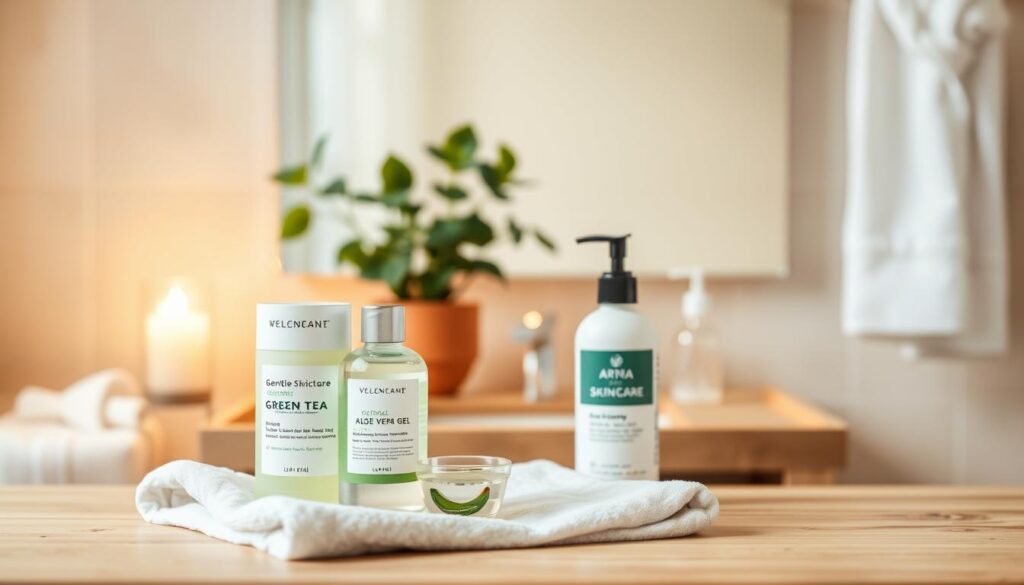
Think of your skin as a bouncer at a club. When it’s strong, it keeps trouble out. But harsh natural acne remedies can weaken it, letting in pollutants and bacteria.
The key to gentle skincare for acne is to treat your skin with care. This approach is better than any harsh treatment in the long run.
Skin Barrier Protection Checklist
| What to Avoid | Why It Harms | Gentle Alternative |
|---|---|---|
| Physical scrubs | Micro-tears in skin barrier | Chemical exfoliants (PHAs) |
| Undiluted essential oils | Chemical burns & sensitivity | Diluted formulations |
| Alcohol-based toners | Strips natural moisture barrier | Hydrating toners with niacinamide |
| DIY lemon/honey masks | pH disruption & photosensitivity | Professional-formulated masks |
For skin of color, the stakes are higher. Hyperpigmentation is a big risk. So, finding the right gentle skincare for acne is essential.
Choose non-comedogenic products. They help fight acne without causing more. The best natural acne remedies work with your skin, not against it.
Your skin is not the enemy. It’s a complex system that needs respect. The best treatments understand this and work gently.
Myths About “Clean” Acne Cures
Welcome to the wellness industrial complex, where your skin concerns have become a breeding ground for modern mythology. The “clean beauty” movement has generated more unverified claims than a presidential debate fact-checker. Let’s dissect these fairy tales with surgical precision.
First up: the chocolate-acne connection. This myth has more holes than Swiss cheese. While high-sugar diets might contribute to inflammation, the direct chocolate-acne link remains as scientifically validated as astrology. The original studies used pure chocolate bars without controlling for sugar or dairy content.
Then there’s the dairy dilemma. Some studies show correlation, but causation? That’s about as clear as mud. The research conflicts more than bipartisan legislation. For every study linking dairy to breakouts, another shows no significant connection. Your latte might be safer than your Instagram feed suggests.
Essential oils represent the wild west of natural acne remedies. These potent plant extracts aren’t FDA-regulated, meaning their safety profiles are about as reliable as a weather forecast. Tea tree oil shows some promise, but undiluted application can cause chemical burns worthy of a horror movie.
The “natural equals better” fallacy ignores basic toxicology. Poison ivy is natural. Arsenic is natural. Many anti-acne plants contain compounds that irritate more than they heal. The romanticization of botanical ingredients often overlooks their complex chemical compositions and possible reactions.
Emerging research reveals troubling gaps in “clean” claims. Many popular natural acne remedies lack randomized controlled trials. Their efficacy relies more on anecdotal evidence than scientific validation. It’s the placebo effect dressed in organic marketing.
Remember: “chemical-free” is chemically impossible. Water is a chemical. Oxygen is a chemical. This marketing term preys on scientific illiteracy while providing no regulatory protection. Your skin deserves evidence-based care, not trendy mythology.
How to Adjust for Teenage vs Adult Skin
Think of teenage skin as a rebellious startup – full of energy but lacking direction. Adult skin is like an established corporation, dealing with stress and complex issues. The right gentle skincare for acne depends on your skin’s current state.
Teenage acne is like a hormonal flash mob – sudden, intense, and oily. Your skin produces a lot of oil, leading to clogged pores and inflammation. The goal is to control the oil without harming your skin.
Adult acne is different. It’s about hormonal changes, stress, and past skincare mistakes. Your skin remembers every harsh product you used when you were younger.
Here’s your battle plan by age group:
- Teen skin: Use salicylic acid and lightweight hydration to control oil. Avoid drying agents that make oil production worse.
- Adult skin: Use anti-inflammatory natural acne remedies like tea tree oil and niacinamide. Also, focus on repairing your skin’s barrier.
- Both ages: Always protect your skin from the sun. Acne treatments make your skin more sensitive to the sun.
Using teenage skincare on adult skin is a mistake. Harsh treatments that worked in your teens can now dry out and irritate your skin. It’s like using a water gun on a grease fire when your skin needs something more.
Your skin’s needs change fast, like streaming service algorithms. The best natural acne remedies know that treating teenage skin is different from adult skin. It’s not about one miracle cure. It’s about finding the right strategy for your skin’s current stage.
Product & Lifestyle Recommendations
Ever notice how your skin reacts when life gets messy? That pizza binge or sleepless night isn’t just a bad decision—it’s a breakout waiting to happen. Your diet, stress, and sleep patterns are co-conspirators in your acne story.
Swap high-glycemic foods for anti-inflammatory choices. Think leafy greens, berries, and omega-3s. Stress management isn’t just yoga and meditation—it’s about lowering cortisol, which can calm your skin. Exercise boosts circulation, helping your body flush out toxins.
For your routine, choose gentle skincare for acne. Look for non-comedogenic products with tea tree oil, aloe, or salicylic acid. Brands like La Roche-Posay and CeraVe offer effective options that won’t aggravate your skin.
Natural acne remedies include anti-acne plants like chamomile and green tea. These ingredients reduce redness and fight bacteria without harsh chemicals. Pair them with a consistent routine for best results.
If DIY isn’t cutting it, consider professional treatments. Dermatologists can prescribe topical retinoids or suggest light therapy. Remember, clear skin is a whole-life commitment—not just a quick fix.