Ever feel like you need a cryptography degree to understand what’s actually in your skincare? Welcome to the club.
Product labels might as well be written in hieroglyphics after three espresso shots. I’ve stared at my first “clean” moisturizer like it was Klingon poetry.
The industry’s secret handshake promises transparency but delivers pure confusion. Those INCI names? Marketing buzzwords? Suspicious certifications that magically justify 40% price hikes?
We’re dissecting this cosmetic cartography like cultural anthropologists studying a strange new tribe. Consider me your snarky tour guide through the labyrinth.
This isn’t just about ingredients. It’s about decoding the language of self-care capitalism. Let’s navigate this maze together.
INCI Names Explained
Ever feel like you need a chemistry degree to understand your moisturizer’s ingredient label? Welcome to the world of International Nomenclature of Cosmetic Ingredients. It’s like the beauty industry’s version of legal fine print, making simple things sound complex.
Think of INCI names as those complicated coffee orders. “Coffee with milk” becomes “venti half-caf almond milk macchiato.” They’re precise but hard to understand. The alphabet soup on your serum bottle is not meant to confuse you. It’s the cosmetic industry’s way of speaking, making “water” sound fancier as “Aqua.”
The ingredients on your label are listed like a celebrity seating chart. The most important ones come first. The first five ingredients make up about 70-80% of the formula. So, if alcohol is second on your “hydrating” toner, it might not be as hydrating as you think.
Here’s how to decode the scientific name game:
| INCI Name | Common Name | What It Actually Means |
|---|---|---|
| Tocopherol | Vitamin E | Antioxidant that protects skin |
| Prunus Armeniaca Kernel Oil | Apricot Kernel Oil | Moisturizing plant oil |
| Butyrospermum Parkii Butter | Shea Butter | Rich moisturizing agent |
| Parfum | Fragrance | Potential irritant cocktail |
“Fragrance” gets a fancy French name as “Parfum.” That tiny asterisk is like a legal loophole. It lets companies hide many synthetic compounds under one term.
The order of ingredients matters a lot. Ingredients below 1% can be listed in any order. This is why some “with vitamin C” serums list the antioxidant last. It’s like being seated next to the bathrooms at a wedding.
Scientific names aren’t inherently bad. They help identify ingredients clearly. But they also hide cheap ingredients behind fancy names. That “Prunus Armeniaca Kernel Oil” in your serum? It’s the same apricot kernel oil your grandmother used.
The key is to know the difference between good ingredients and marketing fluff. Your skin and wallet will appreciate it.
Avoiding Greenwashing
Welcome to the beauty industry’s version of reality TV. Here, packaging promises enlightenment but the ingredients list is full of chemicals. Greenwashing is a marketing trick, where brands use our desire for purity without actually being pure.
The term “clean beauty” has little regulation. Brands can call anything “natural” if it has just a tiny bit of plant extract. The rest is often full of synthetic stuff.
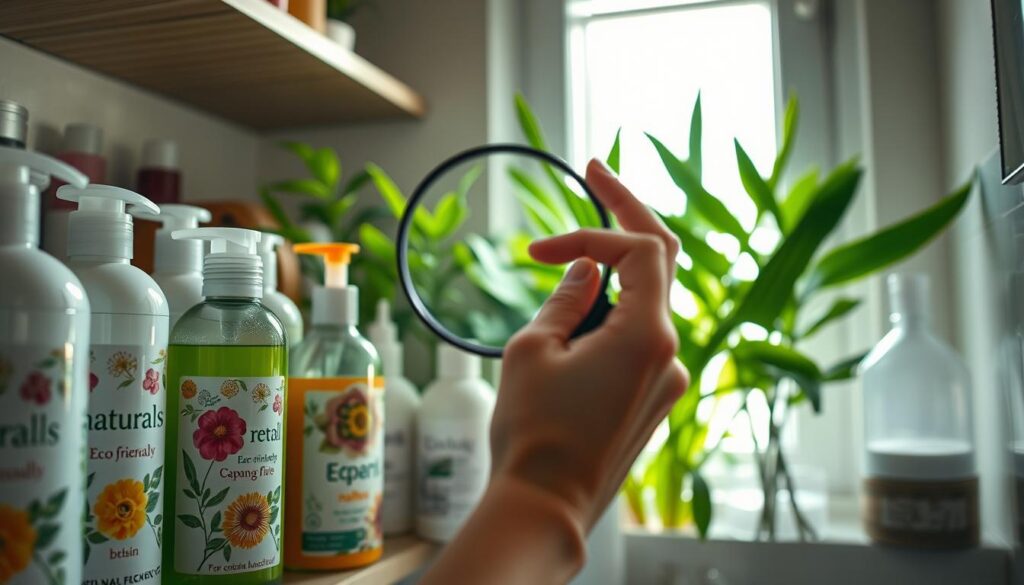
That minimalist bottle with leaves might actually have lots of synthetic ingredients. The marketing says it’s “forest fresh,” but the ingredients list tells a different story.
So, how do you tell real sustainable brands from those just making money off the trend? Look beyond the pretty packaging. Here are some signs:
- Vague claims without certification – “Natural” and “botanical” mean nothing without proof
- Earth-toned packaging with chemical contents – Brown glass doesn’t make synthetic fragrances natural
- Microbeads in recycled packaging – A big hypocrisy
- Natural ingredients that are actually irritants – Just because it’s from a plant doesn’t mean it’s safe for your skin
Greenwashing is like a magician’s trick. You’re distracted by the sustainability report while they add cheap synthetics to the formula. It’s like organic salad with factory-farmed dressing.
Here’s what makes a brand truly clean, not just greenwashed:
| Genuinely Sustainable | Greenwashing | Red Flags |
|---|---|---|
| Third-party certifications | Self-defined “clean” standards | No external verification |
| Transparent ingredient sourcing | Vague “natural origin” claims | Refusal to share suppliers |
| Full ingredient disclosure | “Fragrance” as an ingredient | Hidden chemical cocktails |
| Sustainable packaging | Eco-looking but plastic-heavy | Beautiful exterior, problematic interior |
True clean brands proudly show their ingredients. They share their sourcing, certifications, and manufacturing processes openly. They don’t hide behind marketing tricks.
To avoid greenwashing, become an ingredient list detective. Learn to see through marketing tricks. Sometimes, the most “natural-looking” products are actually synthetic.
Your skin deserves honesty, not just pretty packaging. It needs transparency, integrity, and formulas that match their eco-friendly claims.
Top Toxic Ingredients to Avoid
Decoding beauty labels is like solving a mystery. The bad guys have names that sound like they’re from another world. Parabens and phthalates are not just names; they’re real dangers in your skincare.
Let’s look at the main culprits. First, there are the comedone-causing culprits. They clog pores faster than you can say “mob boss.” Then, there are the allergy-inducing troublemakers that make your skin protest. And don’t forget the hormone-disrupting spies that sneak into your body.
Sulfates strip your skin of its natural oils. Parabens might mess with your hormones. Artificial fragrances can hide hundreds of chemicals. And many “natural” products can cause allergies.
Acne-causing ingredients often hide in products labeled “non-comedogenic.” It’s like they’re playing a trick on you.
| Ingredient Type | Common Names | Potential Effects | Products Often Found In |
|---|---|---|---|
| Preservatives | Parabens, Formaldehyde | Hormone disruption, allergies | Shampoos, lotions |
| Surfactants | Sodium Lauryl Sulfate | Skin irritation, dryness | Cleansers, body wash |
| Fragrance Chemicals | Phthalates, Synthetic Musk | Allergies, hormone issues | Perfumes, scented lotions |
| Emollients | Mineral Oil, Petroleum | Pore clogging, acne | Moisturizers, lip balms |
| Stabilizers | BHA, BHT | Skin sensitivity, toxicity | Makeup, sunscreen |
“Fragrance-free” doesn’t always mean it’s safe. Companies might use hidden fragrances. This makes decoding labels a bit like solving a mystery.
Here’s how to spot the bad guys:
- Names ending in “-paraben” (methylparaben, propylparaben)
- Ingredients containing “phthalate” or “PEG”
- Generic “fragrance” or “parfum” listings
- Mineral oil and petroleum derivatives
- Synthetic colors (FD&C or D&C prefixes)
With practice, you’ll get better at spotting these ingredients. Your skin will thank you for being a skincare detective.
Natural vs. Synthetic
Imagine poison ivy and arsenic as 100% natural. Yet, many lab-made products get tested more than a SpaceX rocket before hitting your bathroom.
The idea that “natural is always better” doesn’t hold up to science. Plant-based ingredients often have irritants, allergens, and varying strengths. This can make your skincare routine unpredictable.
Essential oils and citrus extracts seem natural but can harm your skin. They might cause photosensitivity, contact dermatitis, and other issues. This makes even the most devoted natural fans think twice.
On the other hand, synthetic ingredients show the careful precision of modern cosmetics. They’re made for specific tasks, perform consistently, and undergo thorough safety tests before reaching your skin.
The truth is, natural skincare isn’t always better as ads claim. Many synthetic products offer safer, more reliable, and effective options than their natural rivals.
Concerns about over-processing natural ingredients are often ignored. That “pure” plant extract might be more processed than a synthetic made in a lab.
The real debate isn’t about natural vs. synthetic. It’s about what’s safe and effective for your skin. Sometimes, the answer lies in a lab, not a garden.
Smart shoppers look beyond the marketing. They know both natural and synthetic ingredients have roles in good skincare. It’s about proper formulation and thorough testing.
Top Clean Beauty Certification Databases
Ever feel like beauty certifications are just like participation trophies in the skincare world? Everyone has one, but not all are meaningful. Let’s focus on the certifications that really matter.
Third-party validation is key in clean beauty. It’s like a restaurant health grade, showing what’s really happening behind the scenes.
Here’s your cheat sheet to the most meaningful badges:
- USDA Organic: The gold standard for organic claims. Requires 95% organic ingredients and strict farming practices.
- EcocertEuropean certification focusing on natural and organic cosmetics with environmental standards.
- Leaping Bunny: The most thorough cruelty-free certification with supplier checks.
- PETA Cruelty-Free: Basic animal testing ban with company self-reporting.
- EWG verification: Scientific review of ingredient safety and transparency.
The EWG verification is special because it checks not just what’s not in formulas, but what’s safe to use. It’s like having a food scientist check every label for you.
| Certification | Focus Area | Verification Process | Transparency Level |
|---|---|---|---|
| USDA Organic | Ingredient sourcing | Third-party auditing | High |
| Ecocert | Environmental impact | Document review + audits | Medium-High |
| Leaping Bunny | Animal testing | Supply chain monitoring | High |
| PETA Cruelty-Free | Animal testing | Company declaration | Medium |
| EWG Verified | Ingredient safety | Scientific assessment | Very High |
Some certifications cost as little as $200 a year, while others require a lot of testing and paperwork. The table above shows why EWG verification and USDA Organic are often the most trustworthy.
When shopping, look for products with multiple certifications. That’s like finding a restaurant with both a Michelin star and a perfect health grade. Now we’re talking real credibility.
Apps & Tools for Label Checking
Ever stared at a moisturizer bottle like it’s a puzzle? Welcome to modern beauty shopping. Our phones help us decode cosmetic labels.
These digital tools turn your phone into a cosmetic chemist. No lab coat needed. They cut through marketing fluff fast.
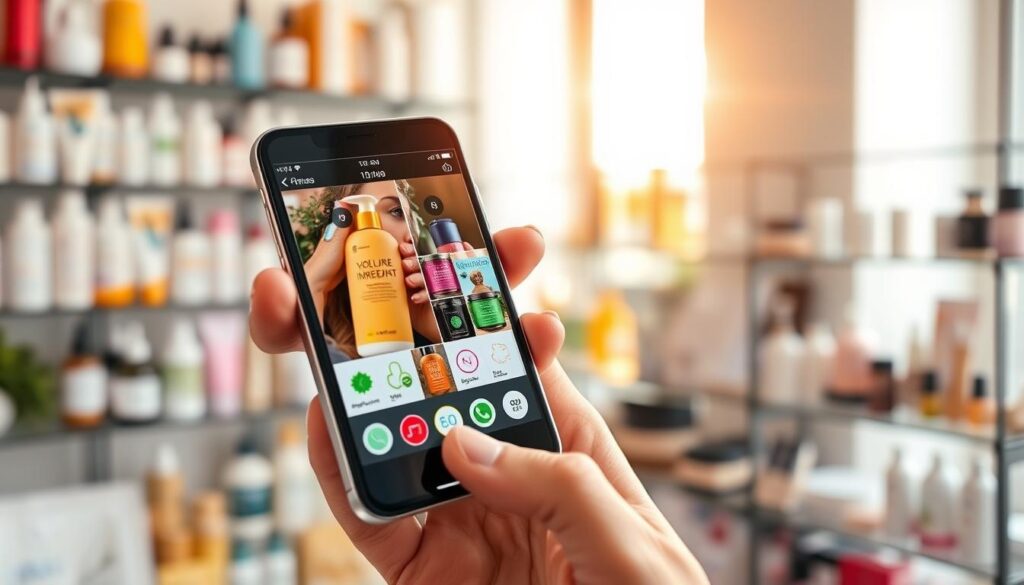
Let’s look at the skincare apps that are like Sherlock Holmes. They find secrets that brands hide.
Top Label Scanning Champions
ClearForMe is like a sommelier for ingredients. It breaks down complex formulas into easy-to-understand insights. It checks if “natural” claims are true or just marketing tricks.
Batch tracking systems are like FBI investigators. They track where ingredients come from. You’ll know if shea butter is from ethical farms or not.
Ingredient transparency platforms are like fact-checkers. They show if brands are honest about their products. These tools reveal if greenwashing is happening.
| Tool Type | Primary Function | Best For | Limitations |
|---|---|---|---|
| Scanner Apps | Instant ingredient analysis | In-store decisions | Database gaps |
| Batch Trackers | Supply chain verification | Ethical sourcing | Brand participation |
| Database Platforms | Comprehensive research | Pre-shopping prep | Information overload |
| Community Reviews | Real-user experiences | Practical feedback | Subjectivity |
These tools make beauty knowledge accessible. They turn confusing lists into clear choices. You become a label-reading ninja.
The best part? Most work while you’re shopping. Scan that serum before buying. Avoid bad ingredients and regret.
Remember: even the best apps can’t replace common sense. They’re tools, not oracles. Use them as guides, not authorities.
Your phone is now the most honest beauty advisor. And it doesn’t work on commission.
Final Shopping Tips
Shopping for beauty products is easier now that you know about INCI names and greenwashing. Your skin doesn’t deserve to be a guessing game.
Patch testing is key. Don’t rely on online reviews for your skin’s health. A quick test on your ear can prevent irritation.
Those numbers on jars aren’t secret codes. They show how long the product stays good after opening. And remember, fresh ingredients work best.
Storage tips are important. Heat and light can ruin your products. Keep them cool and dark to keep them effective.
Look for recycling symbols on packaging. Brands like Garnier and L’Oréal offer recyclable options. Choose them to support sustainability.
Use apps like Think Dirty and EWG’s Skin Deep to research products. Clean beauty is more than a trend; it’s a movement.
Being informed helps your skin and can change the beauty industry. So, keep learning and speaking up for what you believe in.