Animal testing in 2024 is as outdated as flip phones and dial-up internet. We’ve moved to a time where caring about animals is the norm. It’s not just a trend; it’s a way of life.
Big names like CoverGirl and Lush have chosen to be kind to animals. They show that glowing skin doesn’t need to hurt animals. This change shows how values and beauty can go hand in hand.
Get ready to explore the skincare revolution. We’ll look at brands that show you can be kind and effective at the same time.
Defining ‘Cruelty-Free’: What REALLY Counts?
Let’s clear up a common confusion. ‘Cruelty-free’ and ‘vegan’ are not the same. Beauty brands often mix these terms, but they’re not equal. It’s like saying apples and oranges are the same just because they’re both fruits.
Cruelty-free means no animal testing at any stage. Vegan means no animal products used. But, a product can be vegan but not cruelty-free if tested on animals. Also, a cruelty-free product might have animal ingredients like honey or lanolin.
I learned a hard lesson when I found out my “vegan” moisturizer was tested on animals. It felt like a personal betrayal. You think you’re doing good, but it turns out you’re not.
Non-vegan ingredients often hide in products. They sneak in like lobbyists in politics:
- Beeswax and honey (the sweet exploitation)
- Lanolin from sheep’s wool
- Carmine (crushed beetles for red pigment)
- Collagen from animal tissues
It’s important to choose both cruelty-free and vegan. Ethical beauty means no animal testing and no animal ingredients. We need to reform our skincare choices.
Brands that blur these lines are doing “ethical washing.” They make you feel good without actually changing anything. The truth about cruelty-free labeling shows big loopholes.
True ethical beauty means being open about everything. It’s about accountability, like we expect from our leaders. But, we often find it in our skincare products.
Brand Spotlights and Certifications to Look For
Finding cruelty-free certifications can feel like trying to understand healthcare policies. Everyone claims to be the best, but you must read the fine print. Let’s focus on the real gold standards that matter.
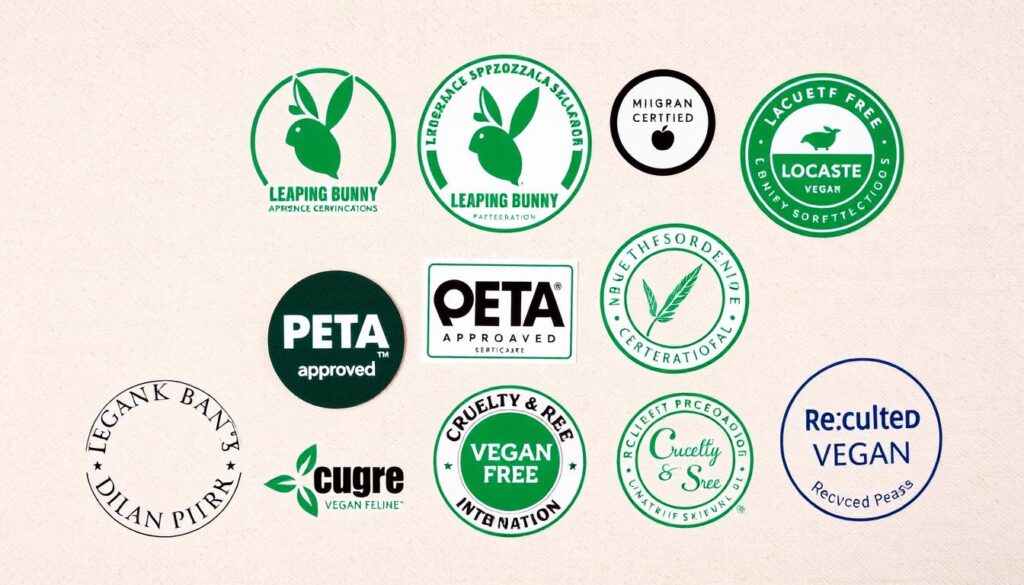
Leaping Bunny Certification
Leaping Bunny is like the FBI background check for cruelty-free products. Brands must let their entire supply chain be checked. No animal testing is allowed at any stage.
This certification is serious. Brands must commit yearly and pass independent audits. It’s like a thorough vetting process.
Vegan Society Label
The Vegan Society is the oldest in plant-based verification, starting in 1944. Their sunflower logo means no animal products – not just no testing.
This label checks for cross-contamination risks during making. It’s like getting a Michelin star for vegan skincare.
Vegan Certified Logo
The Vegan Certified logo is like the Kosher stamp for plant-based beauty. It shows products have no animal ingredients and weren’t tested on animals.
What makes it special? They randomly test products to make sure they meet standards. It’s not just about paperwork.
Other Trusted Certifications
There are other certifications worth noting. PETA’s Beauty Without Bunnies program is a basic check, but it’s more about self-reporting than audits.
Brand partnerships are important too. Bliss Cosmetics works with PETA but also has strong ethics. Derma E is 100% vegan, non-GMO, and cruelty-free in their whole range.
ACURE is a new leader in clear vegan skincare. They use many certifications and are very open about their ingredients.
Remember, the best brands often have more than one certification. They’re not taking any chances with your values. It’s like wearing both a belt and suspenders.
Best Serums, Oils, and Moisturizers
Let’s cut through the marketing noise and get to what actually works. The beauty industry has evolved, making products that are just as good as those tested on animals. These products deliver great results without harming animals.
What makes these standouts different? They combine science with ethics. Each product is chosen for its effectiveness and how it’s made.
Hyaluronic Acid Heroes
Hyaluronic acid is a key player in skincare. It holds up to 1000 times its weight in water, making it a top choice for hydration.
Moisturizer Marvels
Tarte’s Rainforest of the Sea moisturizer is a game-changer. It deeply hydrates without clogging pores, perfect for combination skin.
What sets it apart? It uses sea algae and hyaluronic acid in a lightweight formula. Your skin stays hydrated and looks refreshed, like you got plenty of sleep.
Serum Standouts
Serums are the special ops of skincare. They’re highly concentrated and target specific skin concerns with precision.
JeNu Pure Hyaluronic Acid Serum is a hydration powerhouse. It has five molecular weights of hyaluronic acid that reach different skin layers. Your skin will plump up immediately and stay hydrated for a long time.
Paula’s Choice BHA Liquid Exfoliant is a deep cleanser. It uses 2% salicylic acid to clear pores without drying out your skin. It’s great for acne-prone skin.
Oil Obsessions
Facial oils have had a reputation makeover. Today’s oils are lightweight, don’t clog pores, and are full of antioxidants.
The right oil can balance your skin’s oil production. Look for oils like jojoba, rosehip, or squalane. They mimic your skin’s natural oils without harming animals.
For those who prefer oil-free options, there are excellent oil-free moisturizers. They provide hydration without oil. The best cruelty-free skincare options use alternative ingredients to keep your skin hydrated.
What truly separates these products? They show that making products ethically doesn’t mean they can’t work well. In fact, making vegan products often leads to better results that work with your skin’s natural biology.
Buyer’s Check: Red Flags to Avoid
Welcome to the hidden side of ethical beauty. Here, marketing tricks meet skincare facts. Think of this as your guide to spotting cosmetic scams. I’ve spent a lot of time checking beauty brands, just like fact-checking politicians. The similarities are striking.
Ingredient Red Flags
Some ingredients are like political scandals. They scream “animal-derived” loudly. Here are the sneaky ones that can ruin your cruelty-free goals:
- Collagen: Often comes from animal connective tissue – like pork barrel spending in beauty
- Beeswax: Unless it’s labeled “ethically sourced,” it likely comes from commercial bee farms
- Lanolin: Comes from sheep’s wool – not vegan-friendly
Certification Warnings
Some certifications are full of loopholes, like campaign finance laws. The Leaping Bunny logo is top-notch. But “cruelty-free” claims without proof are just spin.
Be wary of brands using fake certification symbols. It’s like beauty industry fake news – looks real until you check it.
Brand Transparency Issues
If a brand is as secretive as a Senate meeting, be careful. True ethical beauty companies share their processes, ingredients, and testing.
When brands dodge questions, they might be hiding something. Companies that are open are as clear as a clean window.
Supply Chain Concerns
The true test of ethical beauty is in their suppliers’ facilities, not just their labs. Many brands send production to places where animal testing is legal.
This is like offshore banking in cosmetics – legal but questionable. Always ask if they check their whole supply chain. If they hesitate, it’s a big red flag.
| Red Flag | What to Look For | Why It Matters | Trustworthy Alternative |
|---|---|---|---|
| Vague Certifications | Self-created logos without third-party verification | Indicates possible greenwashing | Leaping Bunny or PETA certification |
| Hidden Animal Ingredients | Collagen, beeswax, lanolin without source info | Undermines vegan and cruelty-free claims | Plant-based alternatives clearly labeled |
| Supply Chain Secrecy | No info about manufacturing partners | Could mean animal testing in production | Full transparency about all facilities |
| Selective Transparency | Sharing some practices but hiding others | Suggests cherry-picked info | Comprehensive ethical statements |
In ethical beauty and politics, trust must be earned. The best brands welcome scrutiny like a free press. They know being open builds trust, not harms it.
Reader Favorites and Testimonials
Real people’s stories can change the game. Our community’s move to ethical beauty is like a political awakening. It’s when skincare values meet personal ethics.
Real User Experiences
“My dermatologist suggested Three Ships Beauty after seeing my reaction to regular products,” says Maya from Chicago. “Their vegan skincare line changed my sensitive skin for the better, without any guilt.”
Another person says: “I thought cruelty-free meant lower quality. But then I found products that outperformed my old luxury brands. And I’m not supporting animal testing anymore.”
Before and After Stories
Jessica’s skin journey is like a policy change: “Six months ago, I used brands that tested on animals. Now, my skin is clearer than ever – both ethically and physically.”
Mark’s story is even more impactful: “I thought vegan skincare was just a trend. But then I realized my choices were shaping the beauty industry I want to see.”
These stories show that ethical beauty is more than skin deep. It’s about the world we create with every purchase.