Natural beauty claims can sound reassuring, but the phrase on the front of a bottle often tells less than the ingredient list, qualifying language, and evidence behind the marketing. As of September 19, 2026, U.S. cosmetics law still does not give shoppers a single official definition for “natural” in beauty labeling, which means consumers have to read these claims with care rather than treating them as a safety or quality guarantee.
The shift is not just about consumer preference. Regulators and courts have been paying closer attention to whether product labels and advertising could mislead reasonable shoppers. That matters for product reviews because a “natural,” “clean,” or “free-of” claim may be truthful in one narrow sense while still leaving out context that affects how a buyer understands the product.
Why Natural Beauty Claims Face Scrutiny
Beauty shoppers often use “natural” as shorthand for fewer synthetic ingredients, plant-derived inputs, or a simpler formula. Brands may use it in a different way. One label might say “100% natural,” another might say “naturally derived,” and another might use a plant image without making a direct ingredient claim. Those differences matter because each wording choice creates a different expectation.
How Natural Beauty Claims Can Mislead
The main concern is not that every natural-positioned product is problematic. The concern is that natural beauty claims can sit on packaging without enough explanation. A product may contain some plant-derived materials while also containing synthetic preservatives, fragrance components, colorants, or processing aids. Without clear qualifiers, a shopper may assume the whole formula meets a standard that the brand has not actually defined.
That is why vague front-label wording deserves more scrutiny than a full ingredient panel. Ingredient names, product use directions, warnings, and contact information give shoppers more concrete details than mood words such as “pure,” “clean,” or “botanical.” For a related label-reading discussion, our review of natural beauty label scrutiny explains why broad wording can blur safety, ethics, and sourcing claims.
What MoCRA Changes for Labels
The Modernization of Cosmetics Regulation Act of 2022, known as MoCRA, expanded FDA authority over cosmetics, including requirements tied to serious adverse event reporting, safety substantiation, facility registration, product listing, and records access. The FDA says responsible persons must report serious adverse events associated with cosmetic use within 15 business days after receiving the report, with other MoCRA provisions phased in after enactment on December 29, 2022 FDA MoCRA information.
MoCRA does not create a simple definition of “natural” for cosmetics. Its relevance is more practical: brands need stronger internal records, clearer responsibility for safety substantiation, and better systems for adverse event reporting. A product’s natural positioning does not exempt it from truthful labeling expectations or from the broader legal duty to avoid misleading consumers.
What to Check on a Product Label
A careful label review starts with the exact words used. “Natural,” “naturally derived,” “made with natural ingredients,” and “100% natural” are not interchangeable. The stronger the claim, the more specific the support should be. A narrow claim may refer to one ingredient source; a broad claim may imply something about the whole formula.
Ingredient Lists Versus Front-Label Phrases
The ingredient list is not a perfect tool for every shopper, but it is still more informative than front-label branding. Look for standard ingredient names, placement of fragrance, preservatives, colorants, and active ingredients where applicable. A botanical extract listed near the end of an ingredient panel may be present at a lower amount than ingredients listed earlier, though exact percentages are not usually disclosed for all cosmetic ingredients.
Pay attention to whether the label explains the claim. If a bottle says “naturally derived surfactants,” that is more specific than simply saying “natural shampoo.” If it says “made with aloe,” that does not mean the full product is aloe-based or free from synthetic ingredients. A cautious review asks what the claim actually covers, what it leaves out, and whether the package gives enough context.
Certifications and Qualifiers
Third-party certifications can be useful because they may apply defined standards, but shoppers should still read the certifier’s criteria. A seal is not the same as a medical endorsement, and standards can vary. USDA Organic, ECOCERT, and similar programs may address ingredient sourcing or processing rules, but the meaning depends on the specific program and product category.
- Check whether the claim applies to the full formula or only selected ingredients.
- Look for qualifiers such as “naturally derived,” “plant-based,” or “made with.”
- Compare front-label claims with the full ingredient list and directions.
- Be cautious with broad “free-of” wording unless the package clearly defines it.
- For personal skin concerns, allergies, pregnancy, medication use, or recurring irritation, ask a clinician before relying on label language.
Time also matters. Taking your time for proper label reading is important, which is why initiatives like Take Back Your Time stress the value of making informed choices without the pressure of rushed shopping.
Claims, Evidence, and Consumer Caution
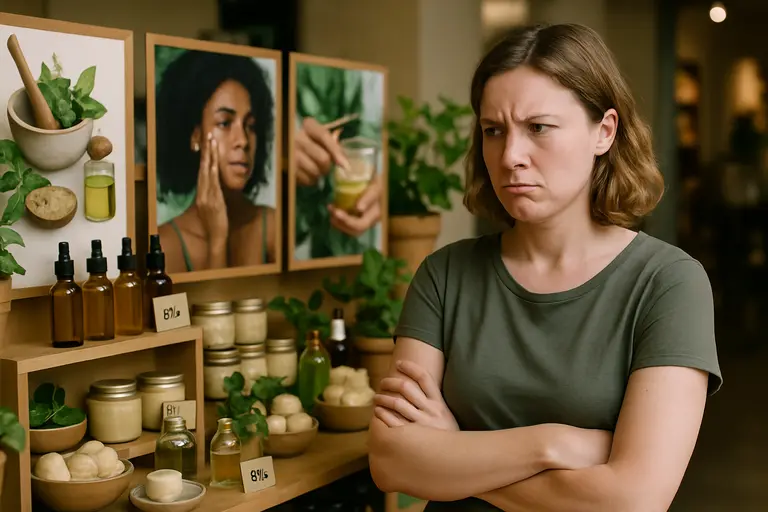
Regulatory scrutiny is not limited to the word “natural.” Related claims such as “clean,” “non-toxic,” “chemical-free,” “free of synthetics,” and “safe” can raise similar questions. Some of these phrases are marketing shorthand rather than scientific categories. “Chemical-free,” for example, is especially imprecise because cosmetics are made of chemical substances, whether the source is mineral, plant, animal-derived, synthetic, or biotech-based.
Free-Of, Clean, and Naturally Derived Claims
The Federal Trade Commission’s advertising guidance emphasizes that objective marketing claims need support, and businesses should avoid advertising that is deceptive or not adequately substantiated FTC advertising guidance. For beauty labels, that means a brand should be able to support specific claims about what a product contains, does not contain, or how ingredients are sourced.
A “free-of” claim can be helpful when it is clear and accurate. It can also mislead if it suggests a product is safer or superior without evidence, or if it distracts from a similar ingredient serving the same function. For example, saying a product is free from one preservative does not explain how the formula is preserved, whether another preservative is used, or whether the product has adequate microbial control.
Why Lawsuits Are a Signal, Not Proof
Consumer lawsuits over “natural,” “clean,” and “free-of” beauty claims have drawn attention in the United States through 2026. These cases can be useful signals because they show which wording choices are being challenged, including percentage-based “naturally derived” statements and claims that rely on fine print or asterisks. Still, a lawsuit filing is not proof that a label is misleading, and a settlement may not answer every scientific or labeling question.
For shoppers, the practical lesson is to avoid treating litigation headlines as the whole story. Read the claim, read the qualifier, and read the ingredient list. If a brand gives clear definitions, explains its sourcing standards, and avoids exaggerated safety language, that is a stronger transparency signal than a front label filled with broad wellness wording.
Reading Natural Beauty Claims With Care
Natural beauty claims should be treated as prompts for more questions, not as final answers. Ask what the word “natural” refers to, whether the whole formula is covered, whether a recognized certification is involved, and whether the brand provides enough detail to support the claim. If the wording is broad but the explanation is thin, caution is reasonable.
For personal health decisions, product reactions, allergies, eczema-prone skin, pregnancy, medication use, or persistent irritation, speak with a clinician. A beauty label can support comparison shopping, but it cannot replace individualized medical guidance. Bring the product name, ingredient list, and any concerns about natural beauty claims to that discussion so the advice is based on the actual formula rather than the marketing phrase alone.