
Think of your skin as a thriving, invisible garden. It’s home to trillions of beneficial microorganisms. Together, they form a dynamic, protective living shield for your face and body.
When balanced, this community works tirelessly. It helps maintain your natural pH, locks in essential hydration, and defends against daily environmental stressors. The result is a calm, resilient, and radiant appearance.
But when this delicate system is compromised, it sends clear distress signals. You might notice increased sensitivity, persistent redness, or unexpected breakouts. Dryness, oiliness, and dullness are also common signs of an underlying imbalance.
Understanding and nurturing this foundational barrier is the first, most critical step toward true skin health. It’s not about tackling single symptoms, but about restoring the core ecosystem that keeps your complexion balanced and glowing.
Food for microbes: yogurt/kefir, kimchi, miso, fiber‑rich plants; simple daily servings guide
Starting to nourish your skin from the inside is all about your diet. What you eat directly feeds the good bacteria that keep your skin healthy and strong.
It’s a two-step plan: feed the good bacteria you have and bring in new ones. This is where prebiotics and probiotics play a key role.
Probiotics are live, good bacteria in fermented foods. Eating them is like welcoming new neighbors to your gut. Prebiotics are special fibers that feed these good bacteria, helping them grow and thrive.
Science shows this approach works. Certain probiotic strains, like Lactobacillus casei, are good for the skin. They can fight off bad bacteria like Staphylococcus aureus, which can cause skin problems.
This shows how our gut and skin are connected. Eating a variety of foods supports a healthy gut. This balance can reduce inflammation and lead to clearer skin.
Your Simple Daily Servings Guide
Adding these foods to your diet doesn’t mean you need to change everything. Here’s a simple guide to get you started.
For probiotics, aim for one to two servings a day. A serving is usually:
- 1 cup of yogurt or kefir
- 2 tablespoons of kimchi or sauerkraut
- 1 tablespoon of miso paste (in soup)
- ½ cup of kombucha
For prebiotics, eat several servings of high-fiber foods daily. Great sources include:
- Garlic, onions, and leeks
- Asparagus and artichokes
- Bananas (even slightly green ones)
- Oats and barley
- Flaxseeds and chia seeds
These foods have fibers like inulin that good bacteria can ferment for energy.
Microbe-Friendly Foods at a Glance
| Food Type | Key Benefits | Example Sources | Simple Daily Serving Idea |
|---|---|---|---|
| Probiotic Foods | Introduce live beneficial bacteria; may support skin barrier and immune function. | Yogurt, kefir, kimchi, miso, sauerkraut, kombucha. | Add a scoop of kimchi to your lunchtime rice bowl or salad. |
| Prebiotic Foods | Feed existing good bacteria; promote diversity and a healthy gut environment. | Garlic, onions, asparagus, oats, bananas, flaxseeds. | Mix a tablespoon of ground flaxseed into your morning smoothie or oatmeal. |
| Combination Foods | Offer both probiotics and prebiotics for a synergistic effect. | Kefir with bananas, yogurt with oats, kimchi fried rice with onions. | Enjoy a parfait with yogurt, oats, and sliced banana for breakfast. |
Begin by adding one new food from the guide each day. See how your digestion and skin change over a few weeks. Small, consistent changes are more effective than big, occasional ones.
For busy people, it’s easy. Swap your afternoon snack for yogurt with berries. Use miso paste for a quick soup. Add sauerkraut to your dinner.
By making these choices, you create an environment inside that supports your skin’s health. You’re not just eating for energy—you’re feeding your microbiome for a visible, radiant difference.
Topicals that respect microbes: low‑pH cleansers, ceramides, squalane, urea, panthenol; patch‑test reminder
Choosing the right skincare products is key to a healthy skin microbiome. Look for products that support your skin’s barrier, not harm it. This is vital for a strong barrier support.
Start with a gentle cleanser. Avoid harsh, sulfate-based cleansers that can damage your skin’s natural oils. Instead, use a soap-free, pH-balanced cleanser. This keeps your skin’s acid mantle intact, protecting it from harm.
After cleansing, apply nourishing ingredients. These help strengthen your skin’s barrier:
- Ceramides: These lipids act like glue between your skin cells. They help repair and seal your skin, keeping moisture in and irritants out.
- Squalane: A lightweight emollient that helps lock in moisture. It’s non-comedogenic, so it won’t clog pores, and it soothes your skin.
- Urea: A humectant that draws moisture into your skin. At low levels, it hydrates your skin, making it plump and resilient.
- Panthenol (Provitamin B5): This ingredient soothes and hydrates your skin. It helps calm redness and irritation, supporting your skin’s health.
Skincare science has made great strides in barrier support. For example, research on encapsulated probiotics, like Lactobacillus casei, shows how they can be delivered directly to your skin. This is the latest in topical microbiome care.
Always do a patch-test before using a new product. Apply a small amount to a discreet area of your skin for a few days. This ensures the product won’t harm your skin microbiome. It’s a smart way to check if a product is right for your skin, even if you’re dealing with sensitive skin.
What to limit: over‑exfoliation, harsh surfactants, high‑alcohol toners, heavy fragrance if sensitive
Many skincare steps can harm your skin’s natural balance. It’s key to protect this balance. This means checking your routine for common problems.
Harsh surfactants are a big problem. Ingredients like Sodium Lauryl Sulfate (SLS) and Sodium Laureth Sulfate (SLES) create lots of foam. This foam takes away oils and good microbes, leaving your skin dry and tight.
Over-exfoliation also harms your skin. This includes using rough scrubs and strong acids like AHAs and BHAs. While exfoliation is good in small amounts, too much can damage your skin’s layer. It makes your skin less friendly to good bacteria.

High-alcohol toners are another risk. They dry out your skin fast. This drying action can kill both good and bad microbes, upsetting your skin’s balance.
For sensitive skin, heavy fragrance is a big problem. Fragrances, even some essential oils, can cause inflammation and itching. This stress hurts your skin’s microbiome. It’s best to choose fragrance-free products. Learn about hidden fragrances too.
Knowing what to avoid is powerful. Use the table below to find gentler alternatives for your skin.
| Common Disruptor | Why It’s Disruptive | Gentler Alternative | Key Benefit |
|---|---|---|---|
| SLS/SLES Cleansers | Strips natural oils & microbes, damages lipid barrier. | Gentle Surfactants (Coco-Glucoside, Decyl Glucoside) | Cleanses without compromising the skin’s protective layer. |
| Daily Physical/Strong Chemical Exfoliation | Creates micro-tears, alters skin pH, weakens barrier over time. | Low-dose PHAs (Gluconolactone) 2-3x/week | Exfoliates gently without penetrating deeply, hydrates. |
| High-Alcohol (Denat.) Toners | Dries skin severely, kills microbes indiscriminately. | Hydrating Toners with Hyaluronic Acid or Green Tea | Balances pH and delivers hydration without irritation. |
| Heavily Fragranced Products | Triggers inflammation and allergic reactions, stressing the microbiome. | Fragrance-Free Formulas | Eliminates a major source of irritation and sensitivity. |
Limiting these four categories helps your skin’s microbiome. Swapping harsh products for gentle, fragrance-free ones can greatly improve your skin’s health.
A 2‑Week Microbiome‑Friendly Routine (AM/PM)
Try a simple, consistent plan for just fourteen days to reset your skin’s balance. This routine focuses on gentleness and nourishment for your skin’s microbiome. It aims to calm sensitivity and strengthen your natural barrier.
The idea is “less is more.” Too many products can upset your skin’s delicate balance. A simple approach lets beneficial ingredients work well without causing irritation.
Follow this routine for two weeks. See how your skin responds when it’s supported right. Consistency is key to a calmer, more resilient complexion.
Your Morning (AM) Routine
Your morning routine should be gentle. Cleanse, protect, and hydrate lightly. Start your day by supporting your skin’s natural defenses.
- Cleanse: Use lukewarm water or a very mild, low-pH cleanser. This removes overnight residue without stripping essential oils.
- Treat: Apply a probiotic or postbiotic essence or serum. Look for formulas with lactobacillus ferment or other probiotics. This step feeds your skin’s good bacteria and reinforces its protective layer.
- Moisturize: Follow with a lightweight, barrier-supporting moisturizer. Ceramides, squalane, or panthenol are excellent choices.
- Protect: Finish with a broad-spectrum sunscreen (SPF 30 or higher). This is non-negotiable for protecting your microbiome and skin cells from UV damage.
Your Evening (PM) Routine
Your evening routine focuses on gentle cleansing and overnight repair. This is the time for your skin to recover and regenerate.
- Cleanse: Use the same gentle cleanser from your AM routine to remove sunscreen, makeup, and pollution.
- Treat: This is your chance for a targeted treatment, if needed. Use a hydrating serum with hyaluronic acid or a calming mask 2-3 times a week. Avoid harsh actives like retinoids or strong acids during this two-week reset.
- Moisturize: Apply a slightly richer, nourishing moisturizer. Look for the same barrier-repairing ingredients—ceramides, fatty acids, and urea work well overnight.
- Facial Oil (Optional): If your skin feels dry, press a few drops of a non-comedogenic oil (like squalane) over your moisturizer to seal in hydration.
| Time | Step | Product Category | Key Benefit |
|---|---|---|---|
| AM | Gentle Cleanse | Low-pH Cleanser | Removes impurities without disruption |
| AM | Treat | Probiotic Essence/Serum | Feeds good bacteria, strengthens barrier |
| AM | Moisturize & Protect | Ceramide Cream & Sunscreen | Hydrates and shields from UV stress |
| PM | Gentle Cleanse | Low-pH Cleanser | Removes daily grime and makeup |
| PM | Treat & Repair | Hydrating Serum / Calming Mask | Addresses specific concerns, soothes skin |
| PM | Nourish | Barrier-Support Moisturizer/Oil | Supports overnight recovery and repair |
Stick to this routine daily. Notice if redness decreases and hydration improves. For deeper seasonal insights, explore our guide on creating a microbiome-friendly routine for winter wellness.
After two weeks, reassess. Your skin should feel more balanced and less reactive. This routine shows that supporting your skin’s ecosystem with probiotics and gentle care yields visible, healthy results.
Lifestyle boosters: sweat + rinse routine, clean pillowcases, post‑workout steps
Good skin health starts with how you live. Your daily habits are key to a balanced skin microbiome. The right products are important, but your habits are the base.
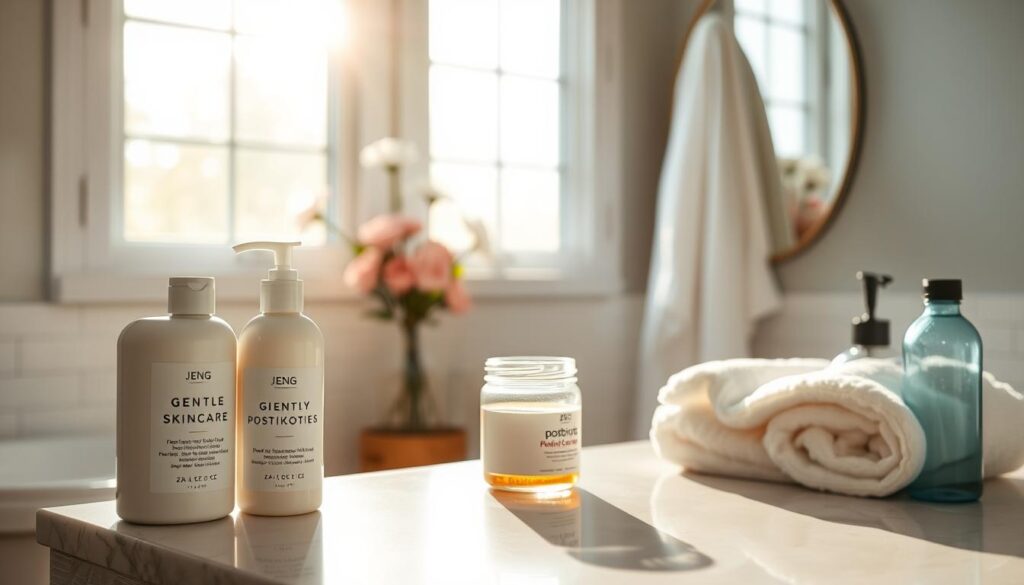
These routines help your skin’s bacteria. They make your skin stronger and healthier.
The Sweat & Swift Rinse Strategy
Sweating is good for your skin. It removes dirt from your pores. But, sweat left on skin can clog pores and upset your microbiome.
Use lukewarm water and a gentle cleanser within 30 minutes of sweating. This keeps your skin clean without removing good oils.
Your Pillowcase: A Silent Saboteur
Your pillowcase is part of your skincare. It collects oils, sweat, and bacteria every night.
Using the same pillowcase for days can spread dirt back to your skin. Change your pillowcase at least twice a week. Natural fibers like silk or cotton are better for your skin.
Smart Post-Workout Skin Steps
What you do after exercise is important. Follow these steps:
- Rinse Immediately: Don’t wait. A quick shower prevents pore congestion.
- Pat Dry, Don’t Rub: Use a clean, soft towel to gently pat your skin dry.
- Replenish with Care: Apply a light, hydrating moisturizer with ingredients like ceramides or squalane to support barrier recovery.
These steps help your skin recover without upsetting its balance.
The Holistic Connection: Internal Balance for External Health
Your skin shows what’s happening inside you. Stress and poor sleep can harm your skin. Managing stress and getting enough sleep helps your skin.
Drinking enough water is also key. It helps your skin get nutrients and get rid of toxins. A healthy gut, fed by fiber, also helps your skin.
When you take care of your body, your skin benefits. Good bacteria thrive, making postbiotics. These help calm and strengthen your skin.
| Lifestyle Habit | Action | Microbiome Benefit | Postbiotic Link |
|---|---|---|---|
| Sweat Management | Rinse with lukewarm water within 30 min of sweating. | Prevents pore clogging without disrupting beneficial bacteria. | Clear pores allow microbes to function optimally, supporting their metabolic activity. |
| Pillowcase Hygiene | Change pillowcase 2-3 times per week. | Reduces nightly exposure to dirt, oil, and bacteria buildup. | A cleaner surface minimizes microbial imbalance, encouraging a stable community that produces postbiotics. |
| Post-Workout Routine | Rinse, pat dry, moisturize gently. | Resets skin pH and hydrates without harsh cleansing. | A calm, balanced microbiome post-exercise is more likely to generate beneficial byproducts. |
| Stress & Sleep | Prioritize 7-8 hours sleep and daily stress relief. | Lowers cortisol, which can compromise the skin barrier and microbiome. | A less-stressed internal environment promotes a diverse, active microbial population. |
Adding these lifestyle habits is not about being perfect. It’s about making mindful choices every day. With the right diet and skincare, these habits create a strong defense. Your skin becomes clear and resilient.
Ingredient transparency: how to read INCI lists for microbiome kindness
Learning to read product labels is key to a healthy skin microbiome. The International Nomenclature of Cosmetic Ingredients (INCI) list guides you. Look for natural ingredients in a good formula.
Ingredients that nourish your skin are important. Lactobacillus ferments are great. Panthenol and ceramides soothe and balance. Prebiotics like inulin feed the good bacteria.
But, beware of ingredients that harm your skin’s balance. Sodium lauryl sulfate removes natural oils. Denatured alcohol can dry out your skin. Synthetic fragrances and some preservatives can cause irritation.
Studies help you make smart choices. Simple ingredients like alginic acid sodium salt are good signs. Choose products with living ferments over synthetic additives.
Now, you can read INCI lists with confidence. You’ll pick products that support a healthy skin microbiome. This knowledge empowers you to make better choices for your skin.