
A solid facial cleanser may contain less water than a bottled alternative, but does that automatically make it better for the environment? As waterless skincare products gain attention, shoppers face a more complicated question than whether a formula contains water.
Concentrated beauty products can reduce packaging and transportation demands. Their environmental advantages, however, depend on how they are manufactured, packaged, used, and eventually discarded.
Waterless Skincare Products Are Not All the Same
The term “waterless beauty” generally describes products formulated without added water or with substantially reduced water content.
The category includes cleansing bars, powdered facial cleansers, concentrated balms, facial oils, and certain solid moisturizers.
These formats work differently.
A powdered cleanser may require water during application, while a facial oil can be applied directly to the skin. A solid cleansing bar typically needs water to produce lather and rinse away residue.
That means waterless does not mean water-free use.
The distinction matters because a product can contain little water in its packaging while still requiring considerable water during a person’s skincare routine.
Some products also contain naturally occurring moisture within their ingredients, even when water is not intentionally added during formulation.
For shoppers, the most useful starting point is understanding what a manufacturer means by waterless rather than assuming every product follows an identical formulation standard.
The same careful approach applies when evaluating natural ingredient claims, which can communicate less about a finished product than consumers initially expect.
Concentrated Formulas Can Reduce Packaging and Shipping Demands
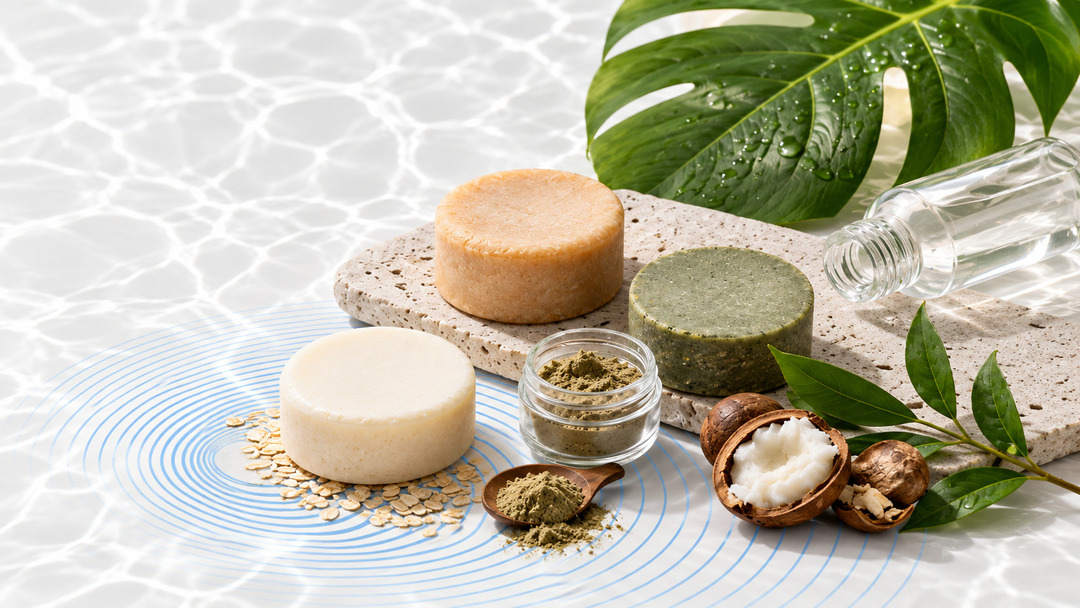
One potential advantage of waterless beauty is straightforward: removing water can reduce the weight and volume of certain finished products.
Traditional liquid cleansers often require bottles capable of containing relatively large volumes of formula.
A concentrated cleansing bar may provide a similar number of uses in a smaller package, potentially requiring fewer packaging materials.
Shipping can also benefit when more product units fit within the same transport space.
However, these advantages depend on packaging choices and product performance.
A solid cleanser wrapped in multiple layers of decorative packaging may lose some of its potential material savings. Similarly, a small concentrated product that requires frequent replacement may not outperform a larger conventional alternative.
Research examining the cosmetic product life cycle identifies formulation, manufacturing, packaging, distribution, consumer use, and disposal as interconnected parts of water sustainability.
That broader perspective prevents a common misunderstanding.
Lower shipping weight is not proof of lower overall impact.
It can be an environmental advantage, but a complete comparison requires information about the other stages of production and consumption.
Solid, Powdered, and Oil-Based Products Have Different Trade-Offs
Waterless beauty includes several product formats, each with different practical advantages and limitations.
Comparing them by performance and packaging requirements is more useful than treating the entire category as environmentally identical.
| Product Format | Potential Advantage | Important Limitation |
|---|---|---|
| Solid facial cleanser | May reduce bottle packaging and shipping weight | Requires water for use and proper drying between applications |
| Powdered cleanser | Compact packaging and adjustable application amount | Usually requires water and careful moisture protection |
| Facial oil | Can be formulated without added water | May not replace every function of a conventional moisturizer |
| Cleansing balm | Concentrated texture and potentially smaller packaging | Packaging materials and rinsing requirements vary |
| Solid moisturizer | May require less packaging than some liquid products | Texture, application, and skin suitability differ |
A solid cleanser may be convenient for travel but less practical if it becomes soft or breaks apart when repeatedly stored wet.
Powdered formulas may avoid transporting substantial amounts of water, yet packaging must protect them from unwanted moisture.
Facial oils illustrate a different distinction. Although they can reduce moisture loss by supplying emollient ingredients, they do not necessarily provide the same hydration experience as a water-based formula containing humectants.
Product format is not performance equivalence.
Consumers should compare what each product actually accomplishes rather than assuming a concentrated formula can directly replace every step in an existing routine.
Less Water in the Bottle Does Not Mean Less Water Overall
Water use in beauty extends well beyond the ingredient list.
Cosmetic manufacturing can require water for equipment cleaning, heating and cooling systems, and processing raw materials.
Agricultural ingredients may also carry upstream water demands associated with cultivation and processing.
These activities remain relevant even when the finished product contains no added water.
Consumer behavior creates another variable.
A cleanser that rinses away quickly may require less water during use than one that takes longer to remove. Water temperature and the time a faucet or shower remains running can also influence resource consumption.
Research on shampoo and conditioner rinsing has shown that product performance and individual hair characteristics affect water requirements during use.
This complicates simple comparisons between liquid and solid beauty products.
For a credible environmental assessment, water savings need a defined boundary.
A brand might legitimately reduce water within its formulation without demonstrating lower water consumption throughout the product’s entire life cycle.
Those are two different claims.
Consumers should look for explanations identifying whether reported savings relate to manufacturing, packaged product volume, consumer use, or a complete environmental assessment.
Ingredient Safety and Preservation Still Matter in Waterless Beauty
Waterless products are sometimes marketed as requiring fewer preservatives or being inherently gentler on the skin.
Neither assumption should be accepted without examining the finished formulation.
Microorganisms generally require available moisture to grow, so some genuinely anhydrous formulations may present different microbial risks from conventional water-based products.
However, contamination can occur during manufacturing or consumer use.
A cleansing bar repeatedly exposed to water, for example, needs suitable storage and a formulation designed for its intended conditions.
Likewise, products containing oils may experience oxidation or other stability changes even when microbial growth is relatively limited.
The absence of added water does not eliminate the need for safety assessments, appropriate packaging, or shelf-life evaluation.
Under the FDA’s cosmetic ingredient safety requirements, companies marketing cosmetics are responsible for ensuring their products are safe under labeled or customary conditions of use.
That responsibility applies regardless of whether a product is liquid, solid, powdered, or oil-based.
Consumers with sensitive skin should also examine fragrance, exfoliating ingredients, cleansing agents, and other potentially irritating components.
A concentrated product is not automatically stronger, safer, or more effective simply because it contains less water.
Environmental Claims Need Better Evidence as Waterless Beauty Expands
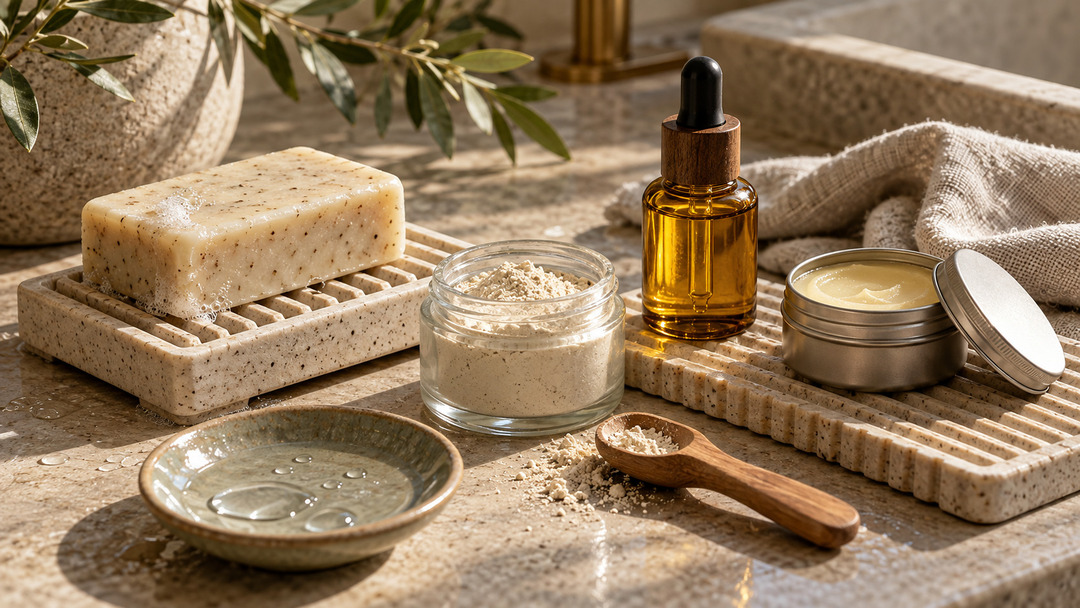
The growing variety of concentrated beauty products gives consumers more choices, but it also creates opportunities for vague sustainability claims.
A package might advertise reduced water content without explaining whether the product requires additional water during application.
Another might emphasize plastic-free packaging while overlooking the resources needed to manufacture its alternative container.
These omissions can make meaningful comparison difficult.
Shoppers can look for specific information: packaging weight, refill availability, product longevity, recommended usage amounts, manufacturing practices, and independently supported environmental assessments.
Price deserves similar attention.
A compact cleanser may appear expensive per ounce but deliver many applications. Conversely, an inexpensive bar may offer poor value if it dissolves quickly or requires excessive product per use.
Compare cost per usable application, not simply package size or advertised concentration.
Brands that provide clear supporting evidence make it easier to separate measurable sustainability improvements from appealing marketing language.
The strongest waterless claims explain precisely what has been reduced and which environmental impacts remain.
For consumers, waterless skincare products offer a potentially useful way to simplify routines and reduce certain packaging demands. Their long-term environmental value will depend on transparent life-cycle evidence, effective formulations, and responsible use—not the absence of water alone.