Ever feel like reading skincare labels is like solving a chemistry puzzle? I did when I saw “propanediol” on a serum. It’s actually corn-based hydration, not a face destroyer.
Lalita Iyer made a great point: we should know what’s on our skin. Reading labels isn’t just to avoid bad stuff. It’s about matching our skin’s needs to what’s real, not just marketing.
Brands like HPPY Skin are making it clear what’s in their products. Others seem to be playing a game of marketing tag with our skin. It’s not just about looking good; it’s about knowing what’s in that product.
Think of it like reading the fine print before you agree to something. Your skin will be grateful.
Decoding Common Label Terms
Welcome to the world of cosmetic marketing, where words play tricks on us. Your journey in reading labels starts with knowing not all shiny things are good. Or even true.
The debate between “natural” and “chemical” is big. But here’s a fact: everything is made of chemicals. Even water is dihydrogen monoxide. And that scary propanediol? It comes from corn.
Many think ingredients at the end of the list don’t matter. But that’s not true. Hyaluronic acid works well even at 0.1% concentration. Niacinamide shows results at 2-5%.
The INCI (International Nomenclature of Cosmetic Ingredients) format tells the truth. It makes ingredient names clear worldwide, cutting through marketing tricks. In cosmetics, ingredients are listed in order of how much is in them.
Be careful of these marketing words that often mean nothing:
| Buzzword | What It Usually Means | Reality Check |
|---|---|---|
| Clinical Strength | Tested somewhere | Might mean “tested on Brenda from marketing” |
| Dermatologist Tested | One dermatologist saw it | Doesn’t mean recommended or effective |
| Hypoallergenic | Less likely to cause reactions | No legal definition or testing standards |
| Natural Derivatives | Originally from nature | Could be highly processed chemicals |
| Patent-Pending | Application submitted | Doesn’t mean proven or effective |
Inactive ingredients are not always inactive. They might be needed for the product to work right. Without them, your product could separate or grow mold.
It’s important to know the difference between real science and marketing tricks. That “age-defying complex” might have only a tiny bit of real ingredient and a lot of marketing.
Ingredients work best when they’re together in a formula. A product with great ingredients but bad formula is like a team that doesn’t practice.
When you choose a product, look beyond the words. Your skin needs real science, not just pretty promises.
How to Read an INCI List
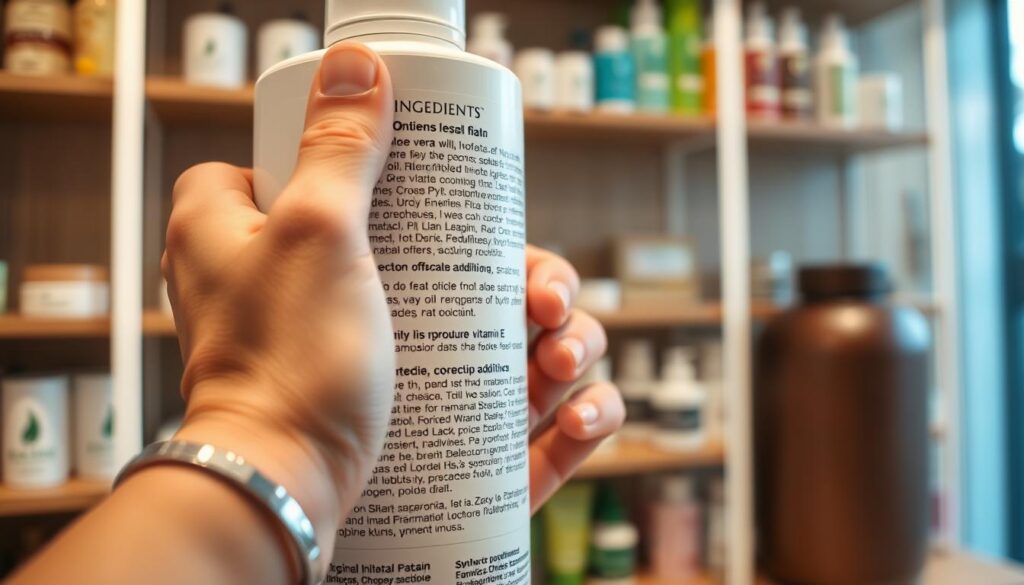
An INCI list is like the fine print in a romance novel. It shows the real deal behind the beauty promises. It’s the honest talk between you and your skincare product.
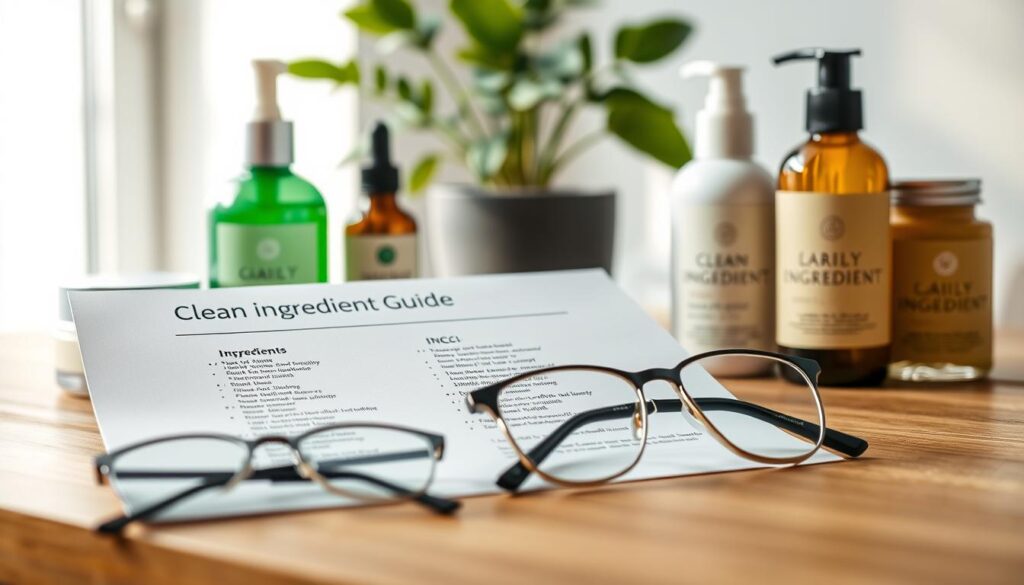
Ingredients must be listed in order of how much is in the product. The first five ingredients make up about 80% of it. The rest are like extras hoping to shine.
Water is always first because most products are water-based. That “hero ingredient” you see first? It might not be as important as it seems.
The INCI list uses standard names for ingredients. This means “vitamin E” in New York is “tocopherol” in Paris. It’s like a global language for cosmetics.
Here’s your clean ingredient guide cheat sheet:
- Ingredients before preservatives = main actors
- Ingredients after preservatives = supporting roles (
- Fragrance/parfum = possible red flag zone
- Scientific names = standardized global language
Remember, the order of ingredients tells the truth. That hyaluronic acid serum might have it in its name but it’s really low on the INCI list. The truth is always in the listing.
Avoiding Greenwashing
The beauty industry uses greenwashing tactics that are very clever. They could teach politicians a thing or two about twisting words. Skincare marketing often feels like a magic show, full of tricks and little truth.
“Clean beauty” sounds good, but it’s not regulated. It’s like saying a drink is healthy just because it has mint. One brand might say their product is “clean” but it could have ingredients that irritate your skin.
“Organic” has lost its meaning. Unless it has the USDA Organic seal, it’s not really organic. True organic skincare meets strict standards that many brands don’t follow.
The “free from” trend is like a politician saying they’re against bad things. Of course, they’re not using mercury and asbestos! But what about the ingredients they add? It’s often to scare you into buying more.
Here’s how to tell if a brand is being honest or just marketing:
| Greenwashing Tactic | What It Really Means | Reality Check |
|---|---|---|
| “Chemical-Free” Claims | Everything is chemicals – water is H₂O | Meaningless term that reveals brand’s scientific illiteracy |
| “90% Natural” | The effective ingredients are synthetic | Natural doesn’t mean better or safer for skincare |
| “Dermatologist-Tested” | One dermatologist glanced at it once | No standard for how many tests or results |
| “Hypoallergenic” | Marketing term without legal definition | Anyone can have allergic reactions |
Brands like Ilia and Beautycounter are transparent and honest. They show all ingredients and have third-party certifications. But some big brands just use fancy words to sound good.
The best way to check if a brand is honest? Look at the INCI list, not the marketing words. If they can’t explain their ingredients clearly, they might be hiding something. True honesty in skincare doesn’t need fancy terms; it shows in the ingredients and how they’re explained.
Ingredients to Seek and Avoid
Think of your skincare routine as a political cabinet. You want proven performers, not flashy populists. It’s about building your skin’s ideal team of ministers who actually show up for work.
Your skin type determines your political leanings. Is your complexion sensitive and easily triggered? Oily and ready to party? Dry and desperately seeking diplomatic relations? Let’s break down which ingredients deserve your vote and which should be recalled immediately.
Ceramides are the seasoned diplomats of skin care. They reinforce your skin’s natural barrier, making them essential for everyone. Think of them as the bipartisan unifiers everyone can agree on.
Retinoids are the ambitious reformers. They accelerate cell turnover, fight acne, and reduce wrinkles. But like any powerful politician, they need careful introduction. Start with lower concentrations to avoid cabinet rebellions.
Hyaluronic acid is the hydration ambassador. It can hold 1000 times its weight in water, making it the ultimate moisturizing diplomat. Perfect for dry, dehydrated, or even oily skin that’s misunderstood its own needs.
The Opposition Party:
Certain fragrance cocktails are the lobbyists you didn’t invite. They smell nice but often irritate sensitive skin and cause long-term damage. If your skin tends toward protests (redness, breakouts), these are the first to cut from the budget.
Some alcohols are the tourists who overstay their welcome. While fatty alcohols (cetyl, stearyl) are beneficial, denatured alcohol can strip your skin’s natural oils faster than a scandal empties campaign funds.
Parabens have become the controversial legislation everyone debates. While research is mixed, many prefer to avoid them given the availability of cleaner alternatives. Sometimes politics is about perception as much as policy.
| Skin Type | Seek These Allies | Avoid These Troublemakers | Why It Matters |
|---|---|---|---|
| Sensitive Skin | Ceramides, Oat Extract, Niacinamide | Fragrance, Essential Oils, Harsh Alcohols | Reduces inflammation and strengthens barrier |
| Oily/Acne-Prone | Salicylic Acid, Niacinamide, Retinoids | Comedogenic Oils, Heavy Butters | Regulates oil without causing congestion |
| Dry/Dehydrated | Hyaluronic Acid, Ceramides, Squalane | Stripping Cleansers, High Alcohol Content | Builds moisture retention without irritation |
| Aging/Mature | Retinoids, Vitamin C, Peptides | Drying Alcohols, Simple Moisturizers | Targets multiple signs of aging simultaneously |
Proper label reading transforms you from passive consumer to active participant in your skin’s governance. You’ll spot the difference between evidence-based actives and marketing fluff faster than a fact-checker during election season.
Remember: context matters. An ingredient that’s problematic in leave-on products might be fine in rinse-off formulas. Concentration matters too – even the best politicians can cause trouble when they have too much power.
Build your regimen like a smart coalition government. Mix proven veterans (retinoids) with rising stars (peptides) and steady supporters (ceramides). Your skin will thank you with the glowing approval ratings of a successful administration.
Trusted Sources for Ingredient Info
Your journey to understanding ingredients starts with real science, not just social media. Forget the TikTok dermatologists and their quick fixes. We’re looking for facts, not fancy words.
The Cosmetic Ingredient Review (CIR) is a great place to start. It’s run by experts who check the safety of ingredients. Unlike online rumors, these folks have degrees and share their methods openly.
Real cosmetic chemists offer genuine insights without the hype. They explain how products work, not just scare you. They focus on science, not fear.
PubMed is your go-to for debunking marketing myths. It might feel like organic chemistry class, but it’s worth it. Look for systematic reviews and meta-analyses for solid evidence.
Online tools like INCI Decoder make complex chemical names easy to understand. They won’t exaggerate the dangers of simple ingredients. These tools give you the facts without the drama.
Some apps are more like horoscopes than science. They use fear tactics instead of real research. The Think Dirty app is popular but oversimplifies complex issues. It doesn’t reflect real risk assessments.
Peer-reviewed studies are the gold standard. They’re checked and verified before being shared. When many studies agree, you can trust the information.
This guide isn’t about memorizing formulas. It’s about learning to think critically. It’s like getting a degree in spotting fake news.
The best sources are honest about the complexity of science. They don’t promise easy answers. Your perfect guide values real evidence over emotional appeals.
Creating a Product Checklist
Welcome to your personal skincare constitution. It’s your guide to finding the best products. It’s not about following brands blindly. It’s about creating a process that checks products thoroughly.
This checklist is like your political platform for skincare. You’re choosing what’s best for your skin with your money. It’s a vote for what matters most to your skin’s health.
First, know your skin type well. Is it sensitive, combination, or oily? Knowing this helps guide your choices.
Your checklist must include key items:
- Active ingredient concentrations that actually mean business
- pH levels politically aligned with your skin’s needs
- Preservative systems that act as security detail, not secret police
- Certifications that prove more than empty campaign promises
Be careful with sensitivities. If your skin reacts to fragrances or essential oils, add that to your list.
Concentration is key. Too little is ineffective, too much can be harmful. Find the right balance for your skin.
| Checklist Item | What to Look For | Red Flags |
|---|---|---|
| Active Ingredients | Proven concentrations, clinical studies | Vague percentages, “proprietary blends” |
| Skin Type Alignment | Specific recommendations for your type | One-size-fits-all claims |
| Certifications | Third-party verification (EWG, Leaping Bunny) | Self-awarded seals, meaningless badges |
| Formula Complexity | Focused ingredient lists | Overloaded formulas (30+ ingredients) |
| Sensitivity Concerns | Clear allergen labeling | Hidden fragrances, undisclosed alcohols |
Stay away from products with too many ingredients. They’re like political parties trying to do everything. Too many ingredients can cause problems.
Check if the product works well with others. Some ingredients get along, while others don’t.
Your checklist will change as your skin does. What works now might not later. Stay open to new things and always question the status quo.
Empowering Your Choices
Your knowledge of ingredients now gives you real power. This power changes how you shop and affects your skin health. You can tell real transparency from fake marketing.
Brands like HPPY Skin and IllumeSkin are leading the way. They use honest labeling to educate consumers. Their focus on clarity sets a new standard in the industry. Ingredient transparency is now a must, not just a choice.
Learning to read labels gives you control over your skincare. You can judge any product with confidence. This skill makes every shopping trip a chance to make a smart choice.
Your informed choices are the strongest vote in skincare. Regularly reading labels builds trust and keeps brands honest. Your skin’s health depends on these smart choices.
Real power comes from knowing what you put on your skin and why it’s good for you. This knowledge leads to lasting changes, not just fleeting trends or false promises.