
Ever feel like figuring out your skincare routine is like solving a political puzzle? You’re not alone. The beauty world’s marketing can be as confusing as a Senate meeting.
Real clean beauty isn’t just following every trend. It’s about understanding what’s in your products. Reading labels like you’re checking campaign finance reports. Because what you put on your skin is more important than fancy packaging.
This guide will help you see through the greenwashing. We’ll create a skincare routine that’s as clear as day. Say goodbye to synthetic fragrances and harmful parabens. It’s time to break free from beauty secrets.
Choosing Multi-Purpose Products
Multi-purpose products are like political coalitions in beauty. They combine different functions under one name. Why have many products when one can do it all? It’s the smart way to take care of your skin.
You don’t need a lot to have glowing skin. What’s key is finding the right balance. Choose products that feed your skin well. This makes your minimal routine truly effective.
Imagine a serum that hydrates, protects, and brightens. Or a cleanser that tones and cleanses. These are real solutions for busy people.
But which multi-taskers really work? Let’s look at the facts:
Winners include tinted moisturizers with SPF and serums full of antioxidants. They’re the backbone of a good minimal routine.
Compromises are products that promise to do everything but don’t excel at anything. Like a 10-in-1 cream that’s just okay at everything. True efficiency means choosing products that multitask well, not just claim to.
The aim is a simple collection of products that really take care of your skin. It’s about being smart in your minimal routine, not just doing a lot.
Balancing Efficacy and Safety
Choosing skincare feels like picking between a strict leader and a group that does nothing. You want results but also safety. The best choice is a balance between the two.
The clean beauty movement is real, not just marketing. It aims to protect your skin and the planet. But, “clean” isn’t officially defined. Companies can use it for products with unknown ingredients.
It’s like voting for someone who seems honest but takes money from big donors. You must look beyond what they say.
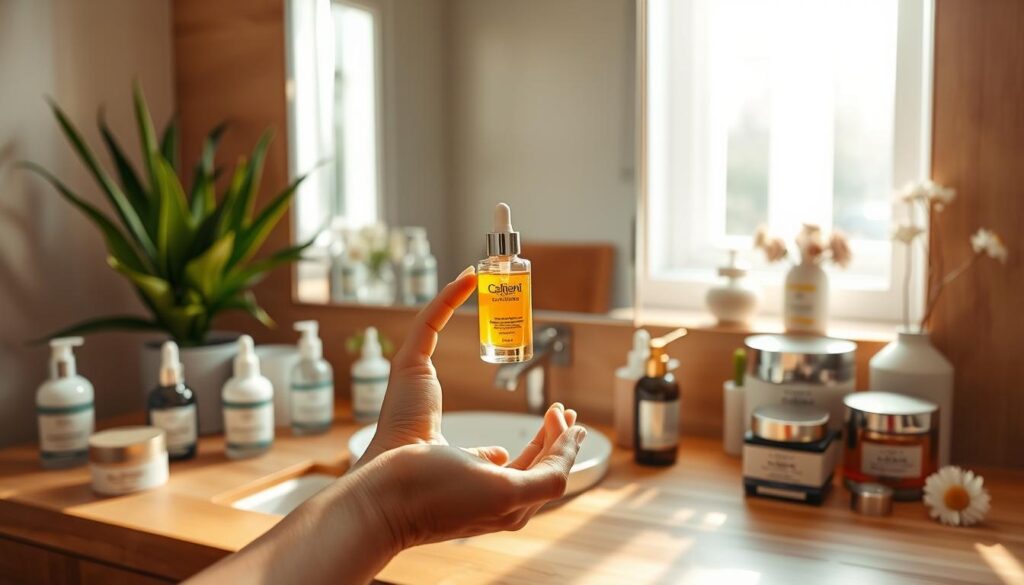
Your skincare should work like a democracy. It needs strong ingredients but also balance. A powerful active can harm if not balanced.
I’ve found products that balance well. They are effective but safe. Here’s how to tell the good from the bad:
| Ingredient Type | High-Efficacy Risk | Safe Alternative | Balance Score |
|---|---|---|---|
| Retinoids | Irritation, sun sensitivity | Bakuchiol blends | 9/10 |
| Acid Exfoliants | Barrier damage, redness | PHAs with ceramides | 8/10 |
| Vitamin C | Oxidation, instability | Tetrahexydecyl Ascorbate | 9/10 |
| Physical Scrubs | Microtears, inflammation | Enzyme exfoliators | 7/10 |
The best products offer results and safety. They respect your skin’s needs. They’re like the political middle ground in beauty.
Your skincare should be safe and effective. The best products offer both. They’re the calm in the beauty storm.
Look for products with third-party certifications. Check the ingredients like you would a law. Sometimes, the best choice is something that works quietly.
Patch-Test Protocols
Think of patch testing as your skin’s primary election. You wouldn’t vote for a candidate without checking their platform first, would you? The same logic applies to your minimal routine. This isn’t just about avoiding allergic reactions—it’s about establishing diplomatic relations between your skin and new products.
I’ve learned this lesson the hard way. Skipping this step once left my complexion looking like a poorly managed campaign headquarters. Red, inflamed, and utterly chaotic. Now I treat every new product like a political appointee requiring thorough vetting.
The process is simpler than filing taxes but more rigorous than presidential debate prep. Here’s your forensic investigation protocol:
- Apply product to a discreet area (behind ear or inner arm)
- Wait 48-72 hours for any reaction
- Monitor for redness, itching, or swelling
- Only proceed if your skin gives its approval
This method transforms your skincare approach into a strategic minimal routine instead of a chaotic free-for-all. You’re not just throwing products at your face and hoping for the best. You’re conducting proper research through patch test skincare protocols that would make any scientist proud.
Why the behind-the-ear spot? It’s sensitive enough to reveal reactions but hidden enough to avoid public scrutiny. Perfect for testing those potentially volatile serums or active ingredients.
Remember: introducing products gradually prevents constitutional crises on your face. One new product every week lets you identify troublemakers immediately. Your skin will thank you for this diplomatic approach to skincare negotiations.
Journaling Ingredients
Ever feel like you need a PhD in chemistry to understand your moisturizer’s ingredients? You’re not alone. The tiny letters on the back of your products might seem like hieroglyphics. But here’s the truth: if you’re not tracking what goes on your face, you’re basically voting blind in the democracy of your skincare routine.
Ingredient journaling turns you from a passive consumer into an active investigator. Think of yourself as the Woodward and Bernstein of your own complexion. This isn’t just note-taking—it’s building a intelligence network that would make the NSA jealous.

Why bother with this level of scrutiny? Because patterns emerge. That breakout wasn’t random—it was your skin’s protest against that new silicone-based primer. The glorious glow last month? Thank the niacinamide serum, not the alignment of the planets.
Here’s how to build your beauty intelligence database:
- Start simple: Note product names and dates of use
- Track reactions: Both positive and negative responses
- Cross-reference ingredients: Spot the common denominators
- Rate performance: Scale of 1-10 for quick reference
The real power comes when you analyze your data. You’ll start seeing correlations even product manufacturers might miss. That “natural” cream causing irritation? Probably the essential oils. The drugstore serum outperforming luxury brands? Likely the straightforward formulation without filler ingredients.
| Ingredient Category | Positive Effects | Potential Reactions | Journal Code |
|---|---|---|---|
| Niacinamide | Reduces redness, minimizes pores | Rare irritation if concentration too high | NIA+ |
| Fragrance | Pleasant scent experience | Redness, allergic reactions | FRAG- |
| Hyaluronic Acid | Intense hydration, plumping | Can feel sticky in humid climates | HYA+/± |
| Retinoids | Cell turnover, anti-aging | Peeling, sun sensitivity | RET+/± |
Your journal becomes your personal skincare constitution. It tells you what works, what doesn’t, and what deserves a permanent place in your routine. No more guessing games or wasted money on products that don’t deliver.
The best part? You become your own beauty analyst. You’ll confidently scan ingredient lists knowing exactly what to embrace and what to avoid. That foreign language on the back of products becomes your second language—the language of great skin.
When to Discard Products
Think of your skincare products like political appointees—they have a shelf life before becoming ineffective. That serum collecting dust from the Obama administration? It’s probably past its prime. Knowing when to discard is key for a minimal routine.
Most budget-friendly products last a long time. You use tiny amounts every day. Many stay fresh for months. But nothing lasts forever—not even your favorite moisturizer.
Expiration dates are more important than you think. It’s not just about bacteria. Ingredients oxidize and lose potency. Your products become as useless as a broken campaign promise.
Here’s how to check your products:
- Check packaging symbols (6M, 12M, 24M)
- Watch for texture changes
- Notice scent alterations
- Observe color shifts
Your minimal routine needs fresh, effective products. Don’t let outdated items ruin your skin’s progress. It’s like keeping expired milk in the fridge—why would you?
| Product Type | Average Shelf Life | Warning Signs |
|---|---|---|
| Serums | 6-12 months | Color darkening, separation |
| Moisturizers | 12-18 months | Oil separation, graininess |
| Cleansers | 18-24 months | Texture thinning, odor change |
| Sunscreens | 12 months | Formula separation, reduced protection |
Remember: when in doubt, throw it out. Your skin deserves better than expired products. Fresh ingredients work better—it’s that simple.
Maintaining a streamlined collection helps track expiration dates. Fewer products mean easier monitoring. Your minimal routine becomes both effective and efficient.
Customization Tips for Different Skin Types
Think of your skin type as a special interest group demanding tailored legislation. A one-size-fits-all approach to skincare is political theater—it performs well in ads but fails in practice.
Oily or combination skin thrives on lightweight hydration. Think gel-based moisturizers instead of heavy creams. Your minimal routine should focus on balance, not suppression.
Dry skin requires layered diplomacy. Start with a hydrating mist from brands like La Roche-Posay, then seal with a richer cream. This approach transforms your minimal routine into a moisture-saving coalition.
Sensitive skin needs a fragrance-free cabinet. Stick to soothing products from trusted brands like CeraVe. Your minimal routine becomes a non-aggression pact with your complexion.
Dull skin benefits from strategic alliances. Make a Vitamin C serum from Skinceuticals your ambassador of brightness, paired with gentle exfoliation. This elevates your minimal routine from maintenance to transformation.
The most transparent skincare is personally tailored legislation. Your face deserves representation that actually serves its needs.