DIY Natural Sunscreen has become a tempting project for ingredient-conscious shoppers, especially after the 2026 FDA sunscreen updates. As an ethical beauty advocate, I understand the appeal: people want cruelty-free choices, simpler ingredient lists, and fewer mystery additives. The caution is that sunscreen is not just a cosmetic texture project. In the United States, sunscreen products are regulated as over-the-counter drugs because their active ingredients and finished formulas need to meet specific safety, labeling, and performance expectations.
A homemade balm can feel soothing, spread nicely, and still fail to show reliable SPF, broad-spectrum coverage, water resistance, or shelf-life. That gap matters. A recipe using zinc oxide, plant oils, butters, or waxes is not the same as a tested commercial sunscreen. For those interested in exploring additional information on beauty and wellness subjects, they might consider visiting PetraClass, which is part of the same publishing network, although this article continues to focus on informed sun-care practices.
DIY Natural Sunscreen After FDA Changes
What The Phrase Can And Cannot Mean
For DIY Natural Sunscreen, the key question is not whether an ingredient sounds natural. The question is whether the finished mixture has been tested in a way that supports its label claims. Sunscreen performance depends on the type of active ingredient, the concentration, how evenly it is dispersed, how the formula stays stable, and how it behaves on skin after sweating, rubbing, or time outdoors.
Many homemade recipes use oils, fruit extracts, tallow, zinc oxide powder, shea butter, coconut oil, or beeswax. The research notes for this article do not support treating those recipes as proven substitutes for labeled sunscreens. Oils alone are described as offering little-to-no UV protection and may sit far below commonly recommended SPF levels. Even when zinc oxide is included, the finished formula still needs testing before anyone can know its actual SPF or UVA coverage.
Ingredient Transparency Is Not The Same As SPF Proof
Ingredient transparency is valuable. I want shoppers to know what is in a product, why it is there, and whether a brand avoids animal testing. Still, transparency cannot replace measurement. A full ingredient list tells you what was added; it does not tell you whether the particles are evenly distributed, whether the product resists water, or whether the formula remains stable over time.
This is where DIY beauty needs a clear boundary. A body butter, lip balm, or after-sun moisturizer can be a reasonable craft project when it is not marketed as sun protection. A sunscreen claim is different because SPF, broad-spectrum status, and water-resistance language require evidence for the finished product, not just confidence in individual ingredients.
What The 2026 FDA Actions Changed
Accepted Actives And Removed Ingredients
On September 10, 2026, the FDA issued a final administrative order removing aminobenzoic acid, also called PABA, and trolamine salicylate from the OTC sunscreen monograph because the agency found that the risks of those active ingredients outweigh their benefits. In June 2026, the FDA also added bemotrizinol as a permitted active sunscreen ingredient. As of November 4, 2026, the research notes identify zinc oxide, titanium dioxide, and bemotrizinol as the active sunscreen ingredients designated Generally Recognized as Safe and Effective under U.S. FDA rules, while other actives require more data; the agency explains these regulatory actions in its FDA sunscreen Q&A.
These changes do not make a kitchen recipe easier to validate. They clarify which active ingredients have stronger regulatory standing, but they do not remove the need for finished-product testing. A person can buy zinc oxide powder and still have no verified SPF if the powder is clumped, unevenly mixed, poorly measured, or suspended in a base that does not spread consistently.
Mineral And Chemical Labels Need Context
The American Academy of Dermatology describes physical, or mineral, sunscreens as formulas using zinc oxide and/or titanium dioxide, while chemical sunscreens use other filters that absorb UV rays. Label reading still matters: dermatology guidance points consumers toward broad-spectrum sunscreen, adequate SPF, water resistance when needed, and reapplication according to the label and activity level, as explained in the AAD resource on sunscreen labels.
Mineral filters may be better tolerated by some people with sensitive skin, but that does not mean every mineral formula will suit every person. Fragrance, botanical extracts, preservatives, texture agents, and the base formula can still affect comfort. Anyone with a history of skin reactions, pregnancy-related concerns, medication-related sun sensitivity, or a skin condition should ask a clinician for personal guidance.
Why Homemade SPF Claims Remain Uncertain
Why DIY Natural Sunscreen Cannot Promise SPF
A DIY Natural Sunscreen mixture cannot honestly promise a specific SPF unless the finished formula has been tested by appropriate methods. The same caution applies to broad-spectrum claims and water-resistance claims. A homemade recipe may look thick, white, and protective, but appearance is not proof of UV performance.
One common problem is measuring active ingredients by volume rather than validated concentration. Another is dispersion. Zinc oxide and titanium dioxide need to be distributed evenly throughout a formula; otherwise, some areas of skin may receive more coverage than others. A third issue is wear. A balm can rub off on clothing or towels, separate in heat, or thin out with sweat. These concerns are why a homemade formula should not be presented as equal to a regulated sunscreen.
| Claim | What A Recipe Can Show | What Testing Must Show |
|---|---|---|
| Contains mineral powder | The ingredient was added | Even dispersion and verified active concentration |
| Feels water-resistant | The texture may repel some water | Water-resistance performance for labeled time periods |
| Looks opaque on skin | The formula leaves visible coverage | Measured SPF and broad-spectrum protection |
| Uses natural oils | The base may feel moisturizing | Reliable UV protection from the finished product |
Where DIY Recipes Fit More Safely
DIY recipes fit better in categories that do not make sunscreen claims: fragrance-free body butters, simple cleansing balms, mineral-free after-sun moisturizers, or barrier-supportive balms for dry areas. These can still need safe handling, clean containers, careful storage, and attention to allergens. They should also avoid implying that they replace sun-protective measures.
Readers who want more detail on the specific 2026 ingredient update can review our related discussion of DIY Natural Sunscreen after bemotrizinol approval. The practical message is consistent: the presence of an accepted active ingredient does not automatically validate a home formula.
Safer DIY Beauty Choices Around Sun Care
A Recipe Boundary That Protects Users
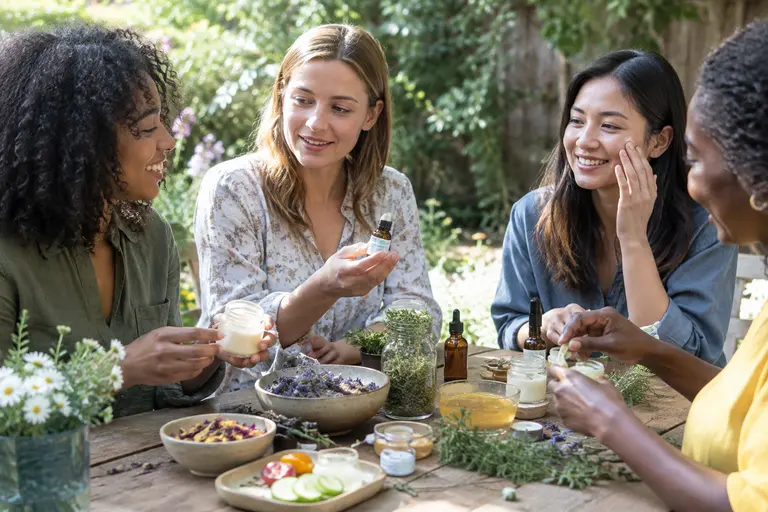
A cautious DIY approach separates skin comfort projects from sun-protection claims. For example, a person might make a plain, unscented body balm for dry skin and use it at night, while relying on a labeled commercial sunscreen during sun exposure. This respects both ingredient preferences and the limits of home formulation.
For cruelty-free shoppers, the better research question is not just whether a product is natural. Ask whether the brand provides clear active ingredients, SPF, broad-spectrum status, water-resistance information, expiration details, and animal-testing policies. A product can be plant-forward and still weak on labeling. A product can be synthetic in parts and still provide clearer performance information. Ethical beauty works best when values and evidence are both visible.
How To Read A Commercial Sunscreen Label
Commercial sunscreen labels give consumers practical signals that recipes usually cannot provide. Broad spectrum refers to UVA and UVB coverage. SPF gives a standardized measure tied to UVB exposure under test conditions. Water resistance indicates that the product met testing for a stated period, commonly 40 or 80 minutes, depending on the label. Reapplication directions are part of correct use, especially after sweating, swimming, or towel drying.
Sprays, powders, sticks, oils, creams, lotions, pastes, ointments, gels, and butters appear in the research notes as legally marketable dosage forms under FDA sunscreen rules, while wipes, towelettes, body washes, and shampoos are not allowed forms under the current monograph. That detail matters for shoppers because format can affect how much product is applied and whether coverage is even.
DIY Natural Sunscreen Questions For Your Clinician
What To Ask Before Changing Sun-Care Habits
DIY Natural Sunscreen discussions can be useful if they lead to better questions, not risky shortcuts. Sun-care needs can vary by age, skin history, medication use, pregnancy, outdoor work, activity level, and prior reactions to products. General education cannot replace personal medical advice.
- Ask whether mineral, chemical, or hybrid sunscreen options are best suited to your skin history.
- Ask how to choose SPF, broad-spectrum coverage, and water resistance for your usual outdoor activities.
- Ask what ingredients to avoid if you have allergies, irritation, photosensitivity, or a diagnosed skin condition.
- Ask whether any medication or treatment plan changes your sun-sensitivity risk.
- Ask how to combine sunscreen with shade, hats, sunglasses, and protective clothing.
The safest role for homemade recipes is supportive skin care without SPF promises. If you are considering changing your sun-protection routine, have a clinician or dermatologist review your needs, especially if you burn easily, have sensitive skin, use photosensitizing medications, are pregnant, or have a personal health concern.