The Celebrate Community Awards offers a useful case study in how lifestyle and wellness communities can recognize products, people, and planet-focused practices without reducing wellness to marketing language. Scheduled for Thursday, October 22, 2026, from 5:30–8:00 PM PDT at Adobe San Francisco, Naturally NorCal’s event is framed around community recognition, a product showcase, and awards connected to natural products and industry leadership.
As a wellness enthusiast, I find events like this most useful when they help consumers and founders ask better questions. What does a product claim? What does the label disclose? How does a brand talk about sourcing, environmental standards, or community impact? These questions matter in skincare, food, supplements, and broader wellness routines because personal choices are shaped by both ingredients and context. Still, event recognition is not the same as clinical evidence, and personal health decisions should be discussed with a qualified clinician.
Why Celebrate Community Awards Matter For Wellness
Celebrate Community Awards Signals To Read Carefully
The value of the Celebrate Community Awards is not that an award can prove a product is better for every person. Rather, the awards can point readers toward the kinds of criteria worth examining: community contribution, product quality, and environmental practices. Naturally NorCal lists three award tracks for the 2026 event: People + Community, Best Product, and Planet, with a People’s Choice Award connected to attendee voting at the showcase, according to the official Naturally NorCal event page.
That structure is relevant to lifestyle and wellness because it separates several ideas that are often blended together in marketing. A product can be innovative without being suitable for every body. A brand can have thoughtful sourcing while still needing clear ingredient disclosures. A founder can contribute to community building while consumers still need to evaluate whether a product fits their allergies, preferences, medications, skin sensitivity, pregnancy status, or medical history.
For skincare and beauty shoppers, this distinction is especially useful. “Natural” does not automatically mean gentle, hypoallergenic, or appropriate for sensitive skin. Plant extracts, fragrances, essential oils, and food-derived ingredients may be welcome in some routines and irritating in others. Ingredient literacy means reading the full label, not only the front-facing claim.
What The 2026 Event Is Set To Include
Awards Tracks And Product Showcase
The 2026 Celebrate! Community Awards + Party is expected to include the awards program, networking, and a Product Showcase. The event listing describes sampling spots for consumer packaged goods brands, visibility for participating brands, free ticket access for sampling brands, and eligibility for People’s Choice voting. It also notes that past Celebrate-style events have drawn about 150 or more industry leaders from the natural products sector, based on the registration listing.
For consumers, the Product Showcase is a reminder that sampling can be informative but limited. A taste, texture test, or first impression can tell you whether a product is appealing. It cannot confirm long-term tolerance, nutrition fit, skin compatibility, or medical suitability. This is where a careful wellness mindset helps: enjoy discovery, but keep evaluation grounded.
- People + Community: useful for seeing how founders and organizations describe social contribution.
- Best Product: useful for spotting product ideas, ingredient choices, and category trends.
- Planet: useful for reviewing sourcing, packaging, and environmental practices with care.
- People’s Choice: useful for gauging attendee interest, while remembering that popularity is not proof of health benefit.
Readers comparing community wellness education across related resources may also find insights through CPCWA wellness resources as a broader reference point. The same principle applies across settings: educational content can support clearer questions, but it should not replace professional guidance.
Past Honorees And What They Suggest
Product, People, Planet, And Choice
Past honorees show how Naturally NorCal has defined impact across different categories. In 2025, the Best Product Award went to Rivalz Snacks, described by Naturally NorCal as a brand committed to addressing malnutrition, obesity, and diabetes, designed and led by experts in food, science, and health in collaboration with UC Davis. A cautious reading matters here: that description reflects mission and positioning, not a reason to assume a snack product can treat or prevent any condition.
The 2025 People + Community Award went to Lisa Curtis, CEO and Co-Founder of Kuli Kuli Foods. Naturally NorCal describes her as founding the superfood company in her early 20s after Peace Corps service, with the company positively affecting thousands of farmers. For wellness readers, this highlights a broader point: a product’s story may include supply-chain and farmer impact, but personal nutrition choices still depend on individual needs.
The 2025 Planet Award was presented to Marianne’s Harvest for sourcing with integrity, working with multi-generational farmers, and producing avocado oils and beef tallows with high environmental standards. The 2025 People’s Choice Award went to KiuKiu, a brand launched only a few months before that offered naturally gluten-free pancake and waffle mixes in flavors such as Ube, Pandan Coconut, and Black Sesame, made from California-grown rice.
Past Planet Award examples also included compostable tea packaging from Traditional Medicinals that eliminated fossil fuel reliance, and Straus Family Creamery dairy farms reducing methane emissions by up to 90% in commercial trials through cow diets supplemented with specific red seaweed. These examples are useful for understanding environmental innovation, though consumers should still separate sustainability claims from personal health claims.
Ingredient Transparency And Ethical Wellness Choices
How To Read Recognition Without Overstating It
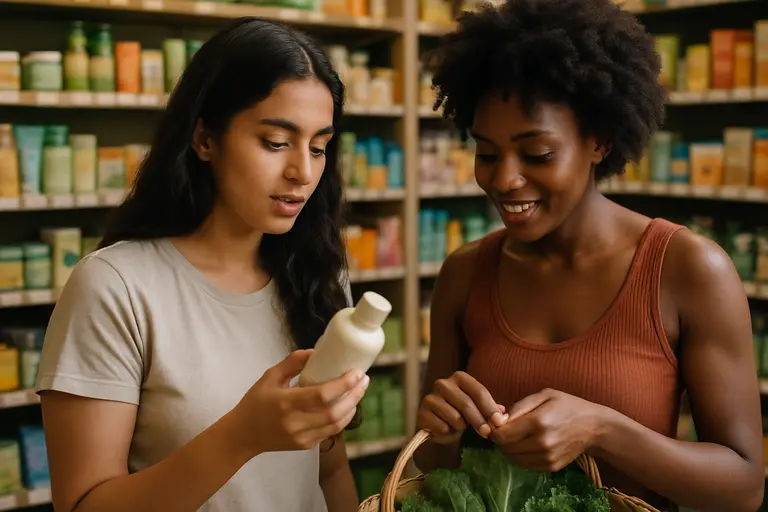
The Celebrate Community Awards can help readers see which themes are gaining attention: ingredient sourcing, environmental standards, community leadership, farmer relationships, and product originality. In skincare and beauty, those same themes translate into practical questions about INCI ingredient lists, fragrance disclosure, allergen awareness, packaging materials, and whether a brand explains why it chose specific ingredients.
Ingredient transparency should be viewed as a basic expectation, not a luxury feature. A clear label lets a person with sensitive skin, food allergies, religious dietary needs, pregnancy-related restrictions, or medication interactions ask informed questions. It also helps clinicians or registered dietitians review products when needed. This is especially relevant for supplements, functional foods, and topical products that may contain botanical ingredients.
Ethical choices can also include fairer sourcing, reduced waste, and support for farmers or regional supply chains. These values are meaningful, yet they do not make a product universally appropriate. For example, a product can be carefully sourced and still contain ingredients someone chooses to avoid. A skincare formula can be plant-forward and still cause irritation for a particular person. A food product can be thoughtfully made and still be unsuitable for someone managing a medical condition.
Celebrate Community Awards Wellness Questions
For lifestyle and wellness readers, the most useful way to approach the Celebrate Community Awards is with curiosity and caution together. The event highlights community impact and product innovation, while the reader’s task is to interpret those signals with care. Awards, showcases, and attendee voting can introduce promising brands, but they do not replace label reading, independent evidence, or personalized clinical guidance.
Before adopting a new skincare product, food, supplement, or wellness routine inspired by an event like this, consider discussing specific concerns with a clinician. Ask whether any ingredients may be relevant to allergies, pregnancy, chronic conditions, medications, skin sensitivity, digestive concerns, or nutrition goals. If a product makes a health-related claim, ask what level of evidence supports it and whether it applies to your situation.
The strongest takeaway is practical: community recognition can point toward interesting ideas, but personal wellness choices work best when they combine ingredient knowledge, realistic expectations, and professional guidance when health questions are involved.