
The promise of smooth, luminous “glass skin” has helped turn Korean-inspired skincare routines into a major social media trend. But research presented at a European dermatology conference in September 2026 found that many popular videos promoting these routines lacked reliable information about skin safety.
The findings raise questions about glass skin TikTok skincare claims, especially when influencers recommend layering several active ingredients without explaining irritation risks. The problem is not Korean skincare itself, but the gap between attractive online results and advice that accounts for individual skin needs.
What Researchers Found in Viral Glass Skin Videos
At the European Academy of Dermatology and Venereology Congress 2026, researchers presented an analysis of popular TikTok videos about Korean skincare and the glass skin trend.
The team examined 38 videos collected in May 2026 using a neutral account designed to reduce the influence of personalized recommendations.
According to the 2026 dermatology research findings, approximately 95% contained at least one potentially misleading claim.
The researchers identified several recurring problems:
- 84% failed to consider differences between skin types.
- 45% promoted excessive combinations of active ingredients without adequate safety advice.
- 32% promised immediate results.
- Only one video mentioned irritation risk.
- None recommended consulting a dermatologist.
These findings suggest that essential safety advice was frequently missing from the content researchers evaluated.
However, the study examined a small, selected sample of popular videos. It does not establish that 95% of all Korean skincare content is misleading.
The findings were presented at a scientific conference, and readers should distinguish conference research from a fully published, independently replicated body of evidence.
Why Glass Skin Routines Can Become Too Complicated
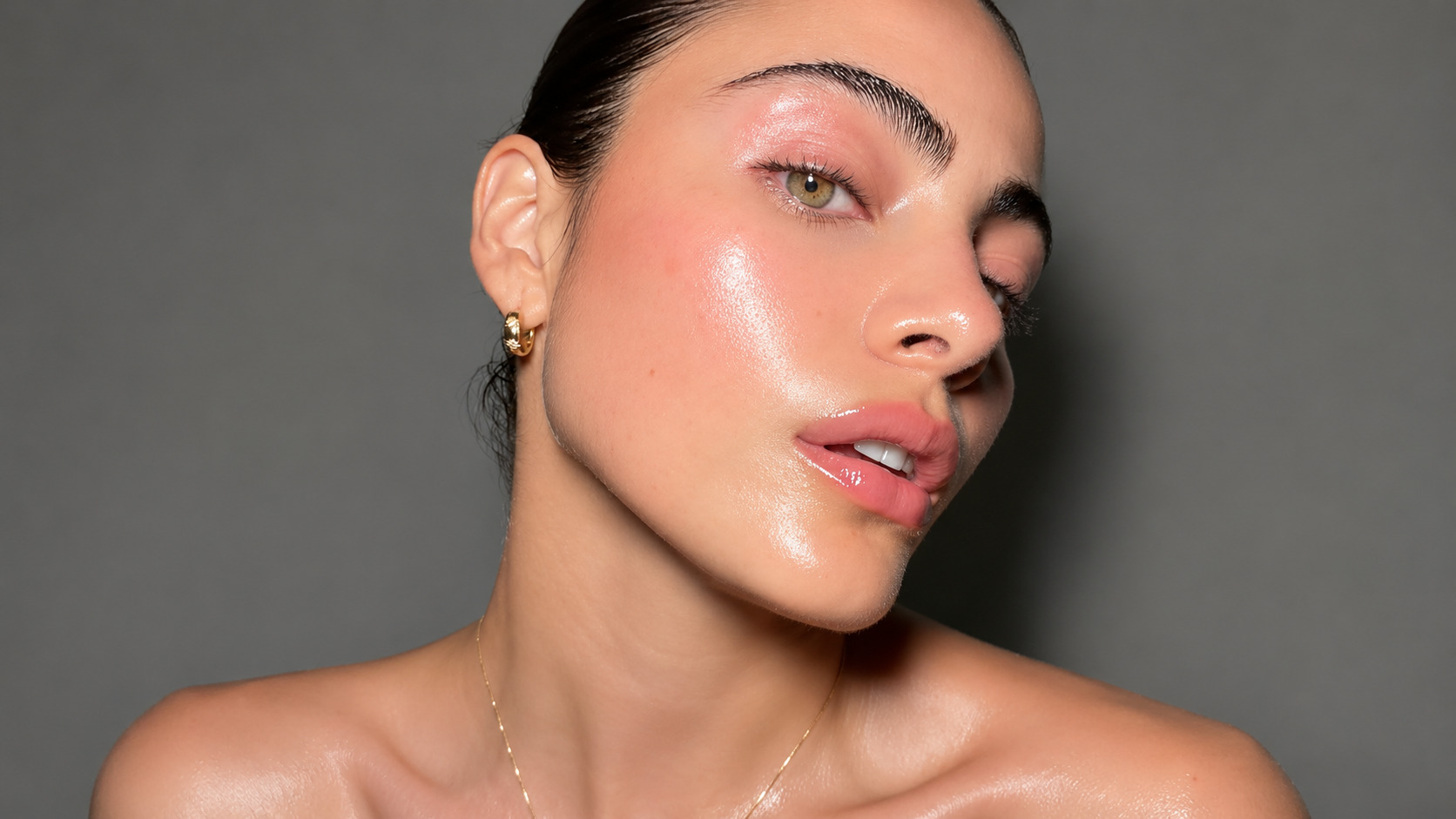
Glass skin describes a complexion that appears exceptionally smooth, clear, and hydrated.
Many routines associated with the trend emphasize gentle cleansing, moisturizing, and products designed to improve the appearance of skin texture.
Those goals are not inherently harmful.
Problems may develop when social media users assume that achieving a particular appearance requires numerous products applied in a specific sequence.
A routine might combine exfoliating acids, retinoids, vitamin C serums, toners, essences, and thick moisturizers.
Some ingredients are useful when applied appropriately. But combining several products can increase irritation risk, especially for people with sensitive skin.
The American Academy of Dermatology’s clinical guidance on skin flooding describes how repeated layering of hydrating products has become associated with the glass skin appearance.
The guidance identifies potential concerns involving acne, irritation, and excessive product layering.
This creates an important distinction: hydration does not require endless layering.
A well-formulated moisturizer may provide adequate hydration without multiple additional serums.
For people already experiencing dryness or sensitivity, simplifying a routine can be more helpful than introducing another product.
What the Separate Patient Study Revealed About Skin Reactions
A second study presented at the same 2026 dermatology congress examined 94 patients who developed new or worsening skin conditions after using products promoted on social media.
Researchers reported that chemical exfoliants containing alpha-hydroxy or beta-hydroxy acids were the most frequently implicated category, appearing in 34% of cases.
Over-the-counter retinoids were reported in 27%, followed by vitamin C serums in 14% and niacinamide-containing products in 11%.
Nearly half of the patients had adopted complete skincare routines inspired by social media.
The most frequently reported complication was irritant contact dermatitis, followed by acne worsening and rosacea-related symptoms.
These observations raise concerns about using several active ingredients simultaneously.
However, the study was observational and included patients who already experienced skin problems. It cannot establish how frequently these reactions occur among all social media skincare users.
It also does not prove that individual ingredients are unsafe when used correctly.
The stronger lesson concerns how products are combined, how frequently they are applied, and whether instructions account for different skin conditions.
How to Evaluate Glass Skin TikTok Skincare Claims
The popularity of a skincare video is not evidence that its recommendations are appropriate for everyone.
Before following a routine, consumers should examine whether the creator provides specific information about ingredients, intended use, and potential side effects.
A video promising immediate improvements from multiple active ingredients deserves particular caution.
The American Academy of Dermatology recommends introducing products thoughtfully and following a skin product testing method before applying unfamiliar formulations broadly.
Dermatologists suggest testing a product on a small area twice daily for seven to ten days, following its normal directions for application and removal.
This approach may help identify potential irritation, although it cannot guarantee that a product will never cause a reaction.
Consumers should also consider their existing skincare routine.
Adding several products at once makes it difficult to identify which ingredient caused discomfort.
People who experience recurring irritation may benefit from reviewing their routine before purchasing additional products. Ekko Naturals’ guide to reading beauty ingredient labels provides related guidance on evaluating ingredients, warnings, and product claims.

A Simpler Routine Can Still Support Healthy-Looking Skin
Consumers interested in glass skin do not necessarily need an elaborate routine.
A straightforward approach can focus on cleansing, hydration, and sun protection.
The following steps provide a practical starting point:
| Routine step | Main purpose | Consumer consideration |
|---|---|---|
| Gentle cleanser | Removes dirt and excess oil | Avoid harsh cleansing and unnecessary scrubbing |
| Moisturizer | Supports hydration and reduces moisture loss | Choose a formula appropriate for your skin type |
| Broad-spectrum sunscreen | Protects against ultraviolet exposure | Use SPF 30 or higher |
| Optional targeted treatment | Addresses a specific concern | Introduce gradually and follow product directions |
The American Academy of Dermatology’s recommended skincare application order supports a relatively simple sequence involving cleansing, treatments when needed, moisturizer, and sunscreen.
For most consumers, the routine should be adjusted according to skin type, treatment needs, and tolerability.
Someone with acne may require different products from someone managing eczema or persistent dryness.
People experiencing significant irritation, swelling, or worsening symptoms should stop using suspected products and seek professional advice when necessary.
What the 2026 Findings Mean for Beauty Influencers and Consumers
The research raises a broader issue for the beauty industry: online skincare advice often reaches large audiences without the safeguards expected from professional health guidance.
Attractive before-and-after images may encourage viewers to purchase products, but photographs cannot reliably establish long-term effectiveness or safety.
Lighting, makeup, editing, and temporary hydration can influence how skin appears on camera.
Consumers should therefore treat instant transformation promises with caution, particularly when results depend on combining several unfamiliar products.
The research also creates an opportunity for responsible skincare creators.
Instead of recommending the same routine to everyone, influencers can explain ingredient purposes, acknowledge irritation risks, and encourage viewers to consider their skin type.
Brands can improve their educational content by providing realistic usage instructions and avoiding exaggerated expectations.
Future studies involving larger samples and longer observation periods could help establish which social media skincare practices are most frequently associated with adverse reactions.
For now, the findings support a simple principle: popularity and effectiveness are different measures.
The growing scrutiny surrounding glass skin TikTok skincare claims should encourage consumers to prioritize reliable information over complicated routines. Healthy-looking skin does not require copying every viral trend, and choosing fewer suitable products may be the more practical approach.