The FDA sunscreen order activity in 2026 gives natural beauty shoppers and brands a clearer regulatory signal, but not a simple “natural versus synthetic” answer. The key changes involved active sunscreen ingredients in the over-the-counter monograph, including the addition of bemotrizinol and the removal of PABA and trolamine salicylate. This is educational context only and should not replace personal guidance from a clinician.
For people who read beauty labels closely, the shift is less about marketing language and more about ingredient status, dosage forms, concentrations, and claims. A botanical oil, mineral filter, or “clean” label statement does not carry the same meaning as an FDA monograph decision. Readers who follow consumer wellness regulation through publications such as Daily California may recognize the same theme: ingredient literacy is strongest when it separates preference from regulatory status.
Why The FDA sunscreen order Matters
FDA sunscreen order Timing
The FDA sunscreen order context is easiest to read through dates. On June 10, 2026, FDA published Final Administrative Order OTC000039, amending OTC sunscreen monograph M020 to add bemotrizinol as an active ingredient. The order permitted bemotrizinol up to 6% concentration in sunscreens for individuals aged 6 months and older, and it addressed permitted combinations with other sunscreen active ingredients, skin protectant agents, and acceptable dosage forms such as lotions and creams, according to the Federal Register notice.
On September 10, 2026, FDA issued Final Administrative Order OTC000008-1, removing aminobenzoic acid, commonly called PABA, and trolamine salicylate as active ingredients in OTC sunscreen monograph M020. FDA said the risks outweighed the benefits for those two ingredients. FDA also stated that no sunscreen products sold in the United States were known to contain PABA or trolamine salicylate, so immediate market disruption was expected to be minimal; once the order is in effect, such products can no longer be legally marketed without FDA approval, as explained in FDA’s sunscreen regulatory Q&A.
Why The Monograph System Affects Labels
The CARES Act of 2020 reorganized the OTC monograph system and created a deemed final order, OTC000006, as of March 27, 2020. That order incorporated earlier safety and labeling requirements while leaving many proposed changes unresolved. This matters for sunscreen labels because OTC sunscreens are not treated like ordinary cosmetics when active ingredients make sunscreen claims. Natural beauty packaging may sit in the beauty aisle, but a sunscreen active ingredient is evaluated under drug rules.
What Changed For Active Ingredients
Bemotrizinol Was Added To The Monograph
Bemotrizinol’s addition was a notable 2026 change because it expanded the active ingredients available under the OTC sunscreen monograph. The order allowed use up to 6% concentration and specified the age group, combinations, and dosage forms described above. For consumers, that does not mean every product containing bemotrizinol will feel the same, suit every skin type, or fit every routine. The finished formula still matters, as do inactive ingredients, texture, fragrance, and personal tolerance.
For natural beauty brands, the FDA sunscreen order is a reminder that active sunscreen ingredients should not be blurred with botanical support ingredients. Plant oils, extracts, butters, waxes, and fragrance components may be part of a cosmetic base, but they are not automatically sunscreen active ingredients under the monograph. A label that highlights botanical content should still make the regulated sunscreen active ingredients easy to identify.
PABA And Trolamine Salicylate Were Removed
The September 2026 removal of PABA and trolamine salicylate changed their monograph status. The Federal Register notice for OTC000008-1, published on September 11, 2026, formally amended monograph M020 to reflect that sunscreens with PABA or trolamine salicylate are not GRASE, meaning not “Generally Recognized as Safe and Effective.” FDA’s determination was tied to the agency’s standard for OTC sunscreen active ingredients under the Federal Food, Drug, and Cosmetic Act.
For shoppers, the practical effect may be subtle because FDA said it did not know of U.S. sunscreen products then sold with those ingredients. The label-reading lesson is still meaningful: an ingredient can have a regulatory history, and that history can change after further review. A “natural” or “old-fashioned” positioning does not answer whether an ingredient is allowed as a sunscreen active under the current monograph.
Natural Beauty Labels Need Ingredient Precision
Active Versus Inactive Ingredient Language
Ingredient transparency in sunscreen starts with separating active ingredients from inactive ingredients. Active ingredients are the components responsible for the sunscreen drug claim under the monograph. Inactive ingredients can affect feel, spread, scent, appearance, and tolerance, but they are not the same as approved sunscreen filters. This distinction is especially relevant for natural beauty products, where the front label may emphasize aloe, oils, herbs, minerals, or “free-from” claims more strongly than the Drug Facts panel.
A related Ekkonaturals explainer on natural beauty labels looks at how regulatory wording can affect brand messaging. The cautious reading is simple: attractive ingredient storytelling should not replace the required active ingredient information. If a product claims to be a sunscreen, the label should make the active sunscreen ingredients clear.
What Chemical-Free Claims Can Miss
Claims such as “chemical-free” are not a scientific shortcut. Water, zinc oxide, titanium dioxide, fragrance molecules, and plant compounds are all chemicals in the ordinary chemistry sense. In beauty marketing, the phrase often signals a consumer preference for fewer synthetic-sounding ingredients, but it does not show monograph status, concentration limits, permitted combinations, or safety evidence.
The 2021 proposed order OTC000008 proposed zinc oxide and titanium dioxide as GRASE, while data for several organic filters, including avobenzone, oxybenzone, homosalate, and octocrylene, were described as insufficient pending more safety evidence. That does not mean shoppers should assume every product with a mineral filter is automatically better for every person, nor that every organic-filter product is unsuitable. It means regulatory evaluation depends on evidence, ingredient use, and the exact standard being applied.
Practical Reading For Shoppers And Brands
A Cautious Label Checklist
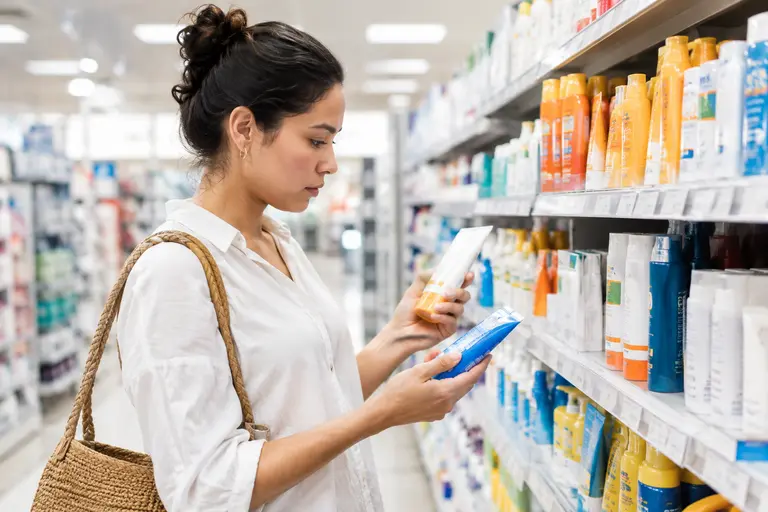
People drawn to natural beauty can still use a structured label review. The goal is not to create fear around ingredients. It is to ask better questions before relying on a product for a specific purpose, especially if the product is sold as a sunscreen and not just as a moisturizer, balm, or cosmetic.
- Check the Drug Facts panel and identify the listed active sunscreen ingredients.
- Separate active ingredients from botanical extracts, oils, butters, fragrance, and texture ingredients.
- Look for concentration language where it is provided, especially for newly added active ingredients such as bemotrizinol.
- Be cautious with broad claims such as “chemical-free,” “non-toxic,” or “natural protection” unless the regulated active ingredients are clear.
- Ask brands how they monitor FDA monograph changes and whether suppliers provide updated ingredient documentation.
Brands have a parallel responsibility. If they use natural beauty positioning, they should avoid wording that implies botanical ingredients are equivalent to monograph sunscreen actives unless the label and regulatory status support that claim. They should also watch pending FDA actions identified in the research, including labeling requirements, maximum SPF issues, broad spectrum requirements related to UVA protection, and the GRASE status of organic filters still under scientific review.
Small Brand Communication Risks
Small natural beauty brands may feel pressure to simplify technical updates into reassuring slogans. That can create problems if a slogan overstates what the order means. Bemotrizinol’s addition does not make every sunscreen newer, safer, or more suitable for every person. The removal of PABA and trolamine salicylate does not prove that every ingredient with a “natural” association is preferable. Ingredient communication should stay close to the documented change.
For consumers, cautious interpretation is also helpful. A label can be compliant and still not match personal preferences for texture, scent, skin feel, or specific ingredient avoidance. Needs may vary by age, pregnancy status, medication use, skin history, allergies, and clinical advice. That is why label literacy works best as a screening tool, not as personal medical decision-making.
FDA sunscreen order Questions For Clinicians
The FDA sunscreen order does not answer every personal skin-care question. It does clarify that some active ingredients entered or left the OTC sunscreen monograph in 2026, while other issues remained under review in the research record. For natural beauty shoppers, the practical lesson is to read the active ingredient section first, then weigh the rest of the formula and the brand’s claims with care.
If you have sensitive skin, a history of reactions, a young child, pregnancy-related questions, medication concerns, or a skin condition, discuss sunscreen choices with a qualified clinician. Useful questions include which active ingredients fit your situation, whether any inactive ingredients are worth avoiding, how to interpret a Drug Facts panel, and whether a natural beauty product’s claims match your personal health needs.